
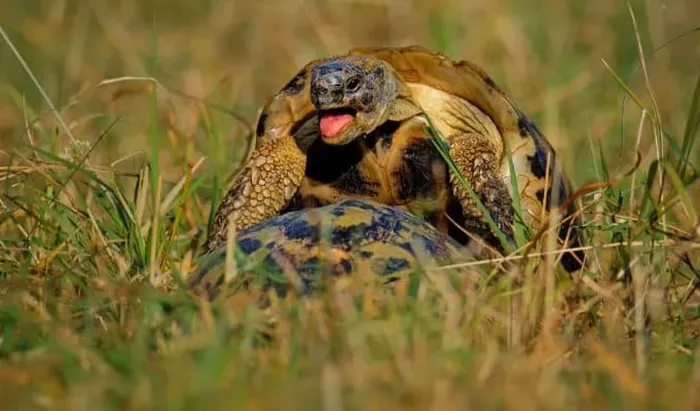
Have you ever wondered how tortoises—those slow-moving, long-lived reptiles—manage to find love and reproduce? The process is surprisingly captivating and involves more than just slow-motion romance. Tortoise mating is a crucial part of their lifecycle, ensuring the survival of these remarkable creatures. Today, as a zoologist specializing in reptiles, I’ll take you through the step-by-step journey of how tortoises mate, demystifying the process with clear explanations and relatable analogies. Prepare to unlock some amazing facts about these ancient animals!
Courtship: The First Steps to Tortoise Romance
Tortoise mating begins with a ritual called courtship. Think of it like a dance at a school party—one tortoise (usually the male) approaches another (the female), trying to get her attention. This might include gentle nudging, circling, or even tapping her shell with his own. Just as you might wave or smile to show interest in someone, male tortoises use these behaviors to say, “I’m here!”
Interestingly, some species like the Hermann’s tortoise (Testudo hermanni) may even produce squeaking sounds during this phase—a quirky trait that reptile keepers often mention with amusement (Alderton, 2020). These signals help females recognize a potential mate and set the stage for what comes next.
The Shell Challenge: Overcoming Obstacles
You might imagine that mating for tortoises would be tricky because of their hard shells. And you’d be absolutely right! It’s a bit like trying to hug someone while wearing a bulky backpack. The male tortoise needs to position himself carefully behind the female. He climbs on top of her shell—a feat that requires patience and persistence.
During this stage, males often grip the sides of the female’s shell with their front legs for stability. Some species, such as the African spurred tortoise (Centrochelys sulcata), are known for their determination; keepers often describe them as “unstoppable” once they’ve set their sights on a mate.
Copulation: The Moment of Connection
Once in position, the male extends his tail underneath the female’s shell. This is where copulation occurs—the actual transfer of sperm from male to female. It’s comparable to plugging two puzzle pieces together; everything must align perfectly for successful mating.
The entire process can last from a few minutes to over an hour depending on the species and environment. For example, red-footed tortoises (Chelonoidis carbonarius) may take longer due to their larger size and slower movements.
Unique Behaviors: Surprising Sounds and Actions
Did you know some male tortoises make loud grunting noises during mating? It’s true! These vocalizations aren’t just random—they help signal strength and intent to nearby females and sometimes ward off rival males. According to reptile expert David Alderton (2020), these sounds can be surprisingly loud given the animal’s size.
Also, you might notice some shell bumping or gentle rocking motions—these are normal parts of tortoise mating behavior. Imagine rocking gently in a hammock; it’s all about creating just enough movement for successful copulation.
After Mating: Laying Eggs and Continuing Life
Once mating is complete, female tortoises store sperm inside their bodies until they’re ready to lay eggs—sometimes months later! This ability helps them survive unpredictable environments and ensures that they only lay eggs when conditions are right.
When it’s time, females dig nests in sandy or soft soil using their hind legs—a bit like scooping sand into a bucket at the beach. They lay eggs in these nests and cover them up for protection. From here, baby tortoises begin their journey into the world.
Real-Life Anecdotes: Insights from Reptile Keepers
Veteran reptile keepers often share stories about “romantic” tortoise pairs who return year after year to mate in the same spot. One keeper noted that his Greek tortoises always prefer sunny days for courtship—a testament to how environmental factors can influence behavior.
Another keeper recounted watching his Russian tortoise pair perform an elaborate circling ritual before mating—a behavior reminiscent of ballroom dancers sizing up each other before stepping onto the floor.
Conclusion: Understanding Tortoise Mating Unlocks Reptile Wonders
Tortoise mating may look slow and awkward from the outside, but it’s a remarkable example of nature’s ingenuity and resilience among reptiles. By understanding how these ancient animals overcome challenges—from courtship signals to shell navigation—you gain a deeper appreciation for their unique lifecycle.
Next time you see a pair of tortoises interacting in your garden or at a local zoo, remember—you’re witnessing one of nature’s oldest reproductive rituals! Awesome facts like these remind us why reptiles continue to fascinate scientists and animal lovers alike. Don’t miss out on observing these extraordinary creatures; every moment holds a lesson about patience, adaptation, and survival.
Related topics: