
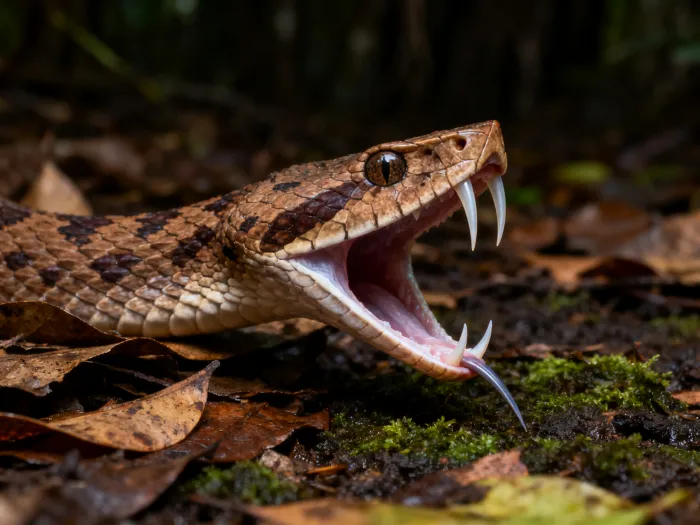
Ever wondered which snake has the longest fangs among all reptiles? This is not just a curiosity for zoologists, but an awesome fact for anyone fascinated by snakes. Today, we’re going to dive into this suspenseful question and reveal which snake wins the title—and why those fangs matter so much in nature. Don’t miss it!
What Are Snake Fangs?
Before we reveal the champion, let’s break down what fangs are. In simple terms, fangs are like hypodermic needles—think of the ones you see at a doctor’s office. For snakes, fangs are specialized teeth used to inject venom into prey. The length and shape of these fangs vary widely among species, much like how knives in your kitchen differ depending on their purpose.
Introducing the Gaboon Viper: The Fang Champion
So, which snake has the longest fangs? The Gaboon viper (Bitis gabonica) is the undisputed winner. This African reptile holds the world record with fangs reaching up to 2 inches (about 5 centimeters) in length. Imagine a fang as long as your thumb—impressive, right? According to herpetologists (reptile scientists), no other snake comes close (Greene, H.W., Snakes: The Evolution of Mystery in Nature, 1997).
Why Does the Gaboon Viper Need Such Long Fangs?
Nature’s Syringe
The Gaboon viper’s fangs work like oversized hypodermic needles. These ultra-long fangs allow it to inject venom deep into its prey, ensuring a quick and effective kill. Think of it as using a super-sized straw to sip a thick milkshake—the longer and wider the straw, the easier it is to get every drop.
Venom Delivery System
Not only are these fangs long, but they’re also hollow—allowing venom to travel straight from the snake’s venom glands into its victim. This is similar to how a pump works when you fill your bike tire; pressure pushes fluid through a tube directly where it’s needed.
Gaboon Viper Anatomy: Built for Ambush
Heavy Body and Wide Head
The Gaboon viper isn’t just about its fangs. It has a broad, triangular head and a chunky body that helps it blend into leaf litter on forest floors. When you see photos of this snake camouflaged among fallen leaves, it’s almost invisible—a real-life game of hide-and-seek.
Slow but Deadly
Unlike speedy hunters like cobras or vipers that chase prey, Gaboon vipers rely on patience. They wait quietly until an unsuspecting rodent or bird comes close, then strike with lightning speed. One reptile keeper joked that “Gaboon vipers are like couch potatoes with superpowers”—they hardly move but pack an incredible punch when they do (Smithsonian National Zoo).
Comparisons: How Do Other Snakes Measure Up?
Shorter Fanged Rivals
Most venomous snakes have much shorter fangs. For example:
- King cobra: About 0.5 inches (1.2 cm)
- Rattlesnake: About 0.4 inches (1 cm)
- Black mamba: Roughly 0.3 inches (0.8 cm)
This means Gaboon vipers have fangs more than four times longer than their closest competitors!
Why Not Longer Fangs for All?
Longer fangs can be tricky—they need strong jaws to support them and specialized muscles to fold them back when not in use. If you think about folding umbrellas versus straight sticks, you’ll realize how much more design goes into making something flexible yet functional.
Fun Fact: Reptile Keepers’ Anecdotes
One experienced reptile keeper recalled how careful he had to be when handling Gaboon vipers—even experienced professionals wear extra-thick gloves and use long hooks because these snakes can bite through regular protective gear! This adds another layer of awe to their already impressive reputation.
Conservation Status and Human Impact
Gaboon vipers play a crucial role in their ecosystems by controlling rodent populations, but habitat loss threatens their numbers in some regions. Conservationists urge respect for these reptiles—not just for their fearsome fangs but for their importance in maintaining balance.
Conclusion: Awe-Inspiring Adaptations in Reptiles
When it comes to snakes, the Gaboon viper stands out for its spectacularly long fangs—a marvel of reptilian evolution that gives it an edge both as a predator and as a survivor in dense African forests. Whether you’re new to learning about reptiles or an expert looking for fascinating details, remembering the Gaboon viper’s unique adaptation helps us appreciate just how amazing nature can be.
So next time someone asks you about snakes and their extraordinary features, you’ll know exactly who takes home the fang trophy—and why that matters so much in the wild world of reptiles.
Related topics: