
Have you ever wondered what it would be like to stumble upon a strikingly colored snake, gliding silently through a muddy swamp? The blood python, with its bold patterns and muscular physique, is one of Southeast Asia’s most captivating reptiles. In this article, we’ll unlock the secrets behind these impressive constrictors, exploring their unique appearance, behaviors, and the challenges they face. Prepare to be amazed by the world of blood pythons—don’t miss it!
What Do Blood Pythons Look Like?
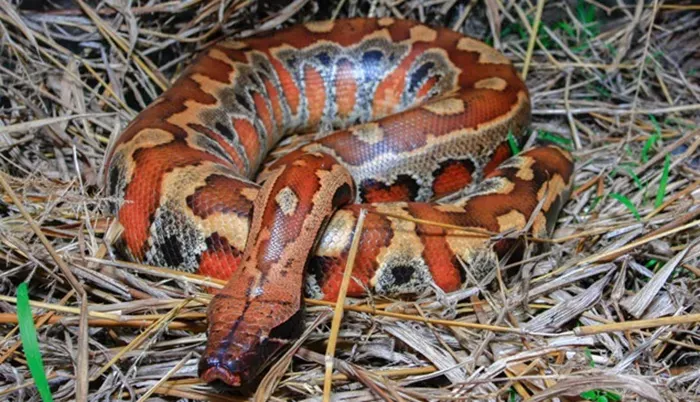
Blood pythons (Python brongersmai) are renowned for their thick, cylindrical bodies adorned with vivid shades of red, orange, or brown. Imagine a painter splashing bright colors onto a canvas—these snakes often display irregular black or yellow blotches that help them blend into swampy leaf litter. Their keeled scales feel rough to the touch, similar to sandpaper, providing grip in muddy terrain. Unlike many slender snakes, blood pythons are robust and compact, typically measuring 4–6 feet (1.2–1.8 meters) long and weighing 10–30 pounds (4.5–13.6 kilograms). Females tend to be larger and bulkier than males.
Their short, prehensile tails—like a tiny anchor—aid climbing and stability. Vertical pupils give them sharp night vision, while their forked tongue flicks out to “taste” chemical cues in the air. Compared to ball pythons or Burmese pythons, blood pythons stand out for their dazzling color and stocky build.
Habitat: Where Do Blood Pythons Live?
Native to Southeast Asia, blood pythons inhabit Sumatra, Borneo, Bangka Island, and the Malaysian Peninsula. They thrive in lowland swamps, marshes, and dense rainforests with muddy soils. Think of these areas as nature’s sponge—always damp and rich with decaying plant matter—providing perfect cover for ambush predators.
High humidity (70–90%) and warm temperatures (80–90°F/27–32°C) support their cold-blooded metabolism. These reptiles rarely migrate far; instead, they stick to prey-rich habitats that have sustained them for millions of years.
Unique Physical Characteristics: Built for Survival
Blood pythons are built like tanks: their girth-to-length ratio is higher than most other pythons. This powerful body supports their role as constrictors—they wrap around prey like a strong coil spring. Keeled scales act like tire treads on a muddy road, providing traction during movement.
Their coloration serves as camouflage against decomposing leaves and mud—a natural disguise from both prey and predators. Heat-sensitive pits beneath the eyes help detect warm-bodied animals even in pitch darkness.
Behavioral Adaptations: Masters of Stealth
Blood pythons are nocturnal ambush hunters. Picture them waiting patiently for hours under leaf litter before striking at unsuspecting rodents or birds. Their hunting style is much like a game of hide-and-seek: they rely on stealth rather than speed.
Seasonal changes drive their behavior—during the wet season (October–February), prey is abundant and mating activity peaks. In drier months, blood pythons conserve energy by reducing movement and relying on ambush tactics.
Diet: What Do Blood Pythons Eat?
Carnivorous by nature, blood pythons mainly target small mammals such as rats and mice but also consume birds and other reptiles. Their jaws expand wide—imagine stretching a rubber band—to swallow large meals whole after constriction.
Young snakes start with frogs or lizards before graduating to bigger prey as they grow. Both males and females share similar diets; feeding activity intensifies during wet months when food is plentiful.
Reproduction: From Eggs to Maturity
Blood pythons reproduce by laying eggs (oviparous). After mating in the wet season, females lay clutches of 12–30 eggs in humid nests lined with leaves. They coil protectively around their eggs—much like a parent hugging their child—to keep them warm until hatching occurs 60–70 days later.
Hatchlings emerge at 12–14 inches (30–35 cm) long and quickly begin hunting small prey. It takes about 2–3 years for them to reach maturity—a testament to their slow but steady growth in challenging environments.
Are Blood Pythons Venomous?
Here’s good news for snake enthusiasts: blood pythons are not venomous! Instead, they rely on muscle power to subdue prey through constriction. Defensive bites can be painful but are not deadly; fatalities have never been recorded in humans.
How Do Blood Pythons Move?
On land, blood pythons slither by pushing off solid surfaces—a bit like wriggling through thick pudding—with their muscular bodies aiding stability over uneven ground. In water, they swim gracefully by undulating side to side, showcasing impressive agility for such stocky creatures.
Solitary Lifestyle: Do They Live Alone?
Blood pythons are solitary animals except during mating season. They establish individual territories in the wild and generally avoid social interaction outside reproduction—a trait that helps reduce competition for food.
Threats & Conservation Status: Challenges Ahead
Despite their strength, blood pythons face major threats from humans:
- Habitat loss due to deforestation for palm oil plantations has shrunk key swamp habitats by up to 30% since 2010.
- Illegal pet trade removes up to 15% of wild individuals annually.
- Road construction increases vehicle-related deaths among local populations.
- Climate change alters rainfall patterns, affecting food availability and reproduction rates.
Natural predators are rare but include large birds of prey and monitor lizards targeting juveniles.
Currently, Python brongersmai is listed as “Least Concern” by the IUCN thanks to its wide distribution and adaptability. However, ongoing habitat loss could jeopardize local populations if left unchecked.
Conservation Efforts: Protecting Blood Pythons
Efforts include:
- Trade regulations under CITES Appendix II requiring permits for exportation.
- Indonesia’s Wildlife Protection Act bans illegal capture with hefty fines.
- Habitat restoration projects reclaim degraded wetlands (WWF-Indonesia).
- Captive breeding programs led by zoos have successfully released thousands of young pythons into protected reserves with high survival rates.
Frequently Asked Questions About Blood Pythons
Can Blood Pythons Be Kept as Pets?
Yes! With proper care—including spacious enclosures and regulated humidity—blood pythons can thrive as pets. Their temperament requires patience; regular handling can build trust over time.
Are Blood Pythons Good for Beginners?
While manageable for dedicated newcomers who research thoroughly, their size and strength mean handling experience is valuable. Always prioritize safety!
How Long Do Blood Pythons Live?
In captivity with excellent care, these reptiles may reach 20–30 years; wild individuals usually live shorter lives due to environmental stressors.
What Is the Average Size?
Adults typically reach 5–6 feet (1.5–1.8 meters), so plan accordingly if considering one as a pet!
Conclusion: Why Study Blood Pythons?
Blood pythons captivate scientists and reptile enthusiasts alike with their vibrant colors, muscular build, and remarkable adaptations for life in Southeast Asia’s wetlands. From patient ambush hunting to complex reproductive behaviors, these reptiles demonstrate nature’s ingenuity at every turn.
Whether you’re researching them academically or simply marveling at their beauty in the wild or captivity, blood pythons remind us of the delicate balance between species survival and human impact on natural habitats. Protecting these fascinating constrictors ensures that future generations can continue unlocking the mysteries hidden within Southeast Asia’s lush swamps.
Related topics: