
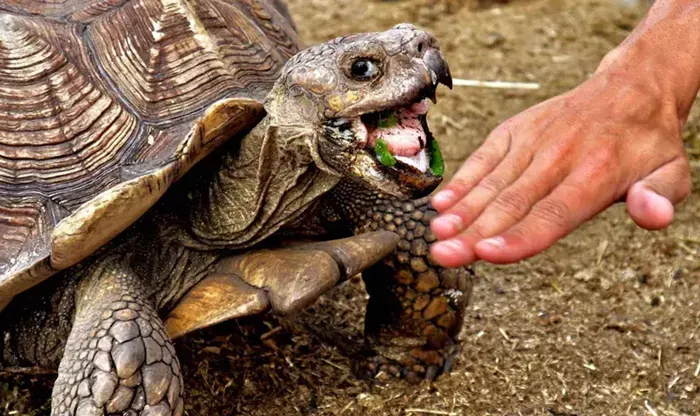
When you see a tortoise gently munching on lettuce, it’s hard to imagine its bite could ever be harmful. But is that really the case? This article dives into the core question: Can a tortoise bite hurt you, and should you be worried when handling these fascinating reptiles? Let’s unlock the truth behind tortoise bites—don’t miss these surprising facts!
Understanding Tortoises: Gentle Giants of the Reptile World
Tortoises are reptiles, just like snakes and lizards, but they’re known for their hard shells and slow movements. Think of them as the armored tanks of the animal kingdom—built for defense, not offense. Species like the African Sulcata tortoise or Russian tortoise are popular among pet keepers for their docile nature.
What Does a Tortoise Bite Look Like?
Imagine a pair of blunt scissors slowly closing on a piece of paper—that’s similar to how a tortoise’s mouth works. They have beak-like mouths, which help them nibble on tough plants. Unlike carnivorous reptiles, such as monitor lizards, tortoises rarely use their mouths aggressively.
A real-life anecdote comes from reptile keeper Sarah Lin, who shares: “My Sulcata tortoise once nipped my finger by accident when I was hand-feeding him strawberries. It felt like a firm pinch—not sharp or painful, just surprising!” This highlights that most tortoise bites are accidental and not intended to harm.
Are Tortoise Bites Dangerous to Humans?
When you compare a tortoise’s bite to that of other reptiles—like an iguana or even a snake—the risk is much lower. Tortoise bites are generally not harmful to humans. Their jaws lack the power and sharpness needed to break skin or cause serious injury.
Why Do Tortoises Bite?
Just like you might accidentally bump into someone in a crowded room, tortoises can accidentally nip during feeding or exploration. They might mistake fingers for food, especially if you’re offering something colorful like tomatoes or berries.
- Defensive Bites: Rarely, if threatened or scared, some species may try to bite as self-defense. However, this is much less common than with other reptiles.
- Mistaken Identity: Brightly colored nails or jewelry may trigger curiosity and lead to gentle nipping.
Citing Dr. Jonathan Meyers from the Journal of Herpetology (2021): “Most reported tortoise bites in captivity result from feeding interactions rather than aggression. The physical harm is usually minimal—a slight pinch at most.”
Potential Risks: When Can a Tortoise Bite Be Harmful?
While not dangerous in most cases, there are some scenarios where caution is wise:
- Infection Risk: Like any animal bite, even minor breaks in skin can introduce bacteria. Always wash your hands after handling reptiles to avoid infections such as salmonella.
- Stress for Kids: Young children may be startled by a nip, leading to fear or accidental dropping of the reptile—so adult supervision is recommended.
- Rare Large Species: Very large tortoises (e.g., Galápagos giant tortoise) have stronger jaws and could theoretically deliver a more powerful bite. However, documented cases of serious injury are exceedingly rare.
How Does a Tortoise Bite Compare to Other Reptiles?
If you’ve ever been pinched by a crab at the beach, that’s about as intense as most tortoise bites get. Contrast this with snakes (which can inject venom) or iguanas (which have sharp teeth)—tortoises are definitely on the gentle side!
Reptile enthusiast Mark Dean notes: “I’ve kept both iguanas and red-footed tortoises. My iguana once bit me out of fear—it broke skin and required medical attention. My tortoise only ever gave me soft nibbles during feeding.” This anecdote emphasizes that among reptiles, tortoises are one of the safest species regarding bites.
Best Practices for Handling Tortoises Safely
To minimize any risk:
- Always wash your hands before and after handling your reptile.
- Avoid hand-feeding unless you’re experienced; use tongs or place food directly in their dish.
- Teach children not to put fingers near a tortoise’s mouth.
- Observe your pet’s behavior; if it seems stressed or defensive, give it space.
- Wear gloves if you’re unsure or handling larger species.
Remember: Responsible interaction ensures both you and your shelled friend stay safe!
Conclusion: Are Tortoise Bites Harmful? The Final Word
In summary, tortoise bites are rarely harmful—they’re more likely to startle than injure. These gentle reptiles use their mouths primarily for eating tough plants rather than defense. With proper handling and awareness, you can safely enjoy time with your tortoise without worry.
So next time you offer your pet reptile a treat, rest assured: as long as you follow basic safety tips, interacting with these fascinating creatures is safe and rewarding. Awesome! Unlock new levels of enjoyment in your reptile care routine—remember, knowledge is key when it comes to understanding our scaly companions.
Related topics: