
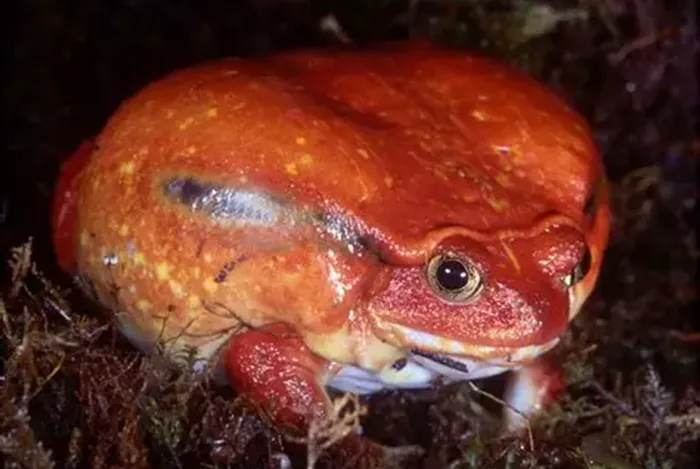
If you’ve ever seen a tomato frog puff up, you might have wondered, “What’s going on? Is this frog trying to look bigger?” Well, you’re not alone. This fascinating creature from Madagascar has a unique ability that not only intrigues reptile enthusiasts but also serves a very important purpose in the wild. So, why do tomato frogs puff up? Let’s take a closer look at this defense mechanism and unravel the mystery behind it.
In this article, we will explore how the tomato frog uses its puffing behavior to survive, how it works, and why it’s so important. You’ll also discover some interesting facts that make this frog a standout in the animal kingdom. Let’s dive right in!
The Tomato Frog: A Colorful Wonder
Before we go into the specifics of why tomato frogs puff up, it’s important to know a little about them. These frogs are famous for their bright red-orange skin with hints of yellow, making them look like a moving tomato in the forest. The scientific name of the tomato frog is Dyscophus antongilii, and they are native to the rainforests and swamps of Madagascar. Their vibrant color isn’t just for show; it plays a crucial role in their survival.
Tomato frogs have a fascinating ability to puff up their bodies, expanding them to nearly twice their normal size. This sudden change in shape is a display of their unique defense mechanism. But why do they do this?
Understanding the Tomato Frog’s Puffing Behavior
Tomato frogs puff up as a defense mechanism when they feel threatened. This puffing up serves multiple purposes:
Making themselves look larger: The increase in size can be intimidating to potential predators, like snakes or birds. Imagine a tiny object suddenly expanding in front of you – it would likely make you pause and reconsider attacking it.
To ward off predators: When the frog expands, it makes its body appear more difficult to swallow. Much like a balloon, a puffed-up tomato frog is more challenging for a predator to fit in its mouth. This behavior acts as a deterrent, giving the frog a better chance of escaping.
A warning to predators: Tomato frogs can also excrete a toxic substance from their skin when they feel threatened. This secretion, which can cause irritation or mild burns to predators, is another deterrent. This toxic secretion works even better when the frog is puffed up, as it increases the surface area from which the toxins can be released.
How Does the Puffing Mechanism Work?
When a tomato frog puffs up, it’s not just blowing air into its body – there’s a specific physiological process involved. The process is quite similar to how some animals, like pufferfish, expand their bodies.
Body structure: Tomato frogs have a flexible body that allows them to rapidly inflate. The expansion happens when air is pushed into their body cavity, particularly around the chest and abdomen. Their body can stretch to make them appear bigger than their usual size.
Toxic secretion: Along with the puffing, tomato frogs can also release a thick, sticky, and toxic secretion from their skin. This secretion, which contains toxins, serves as a deterrent to predators. The secretion doesn’t only make the frog unappealing to eat – it can cause irritation or even serious damage to the predator’s skin and mucous membranes.
See Also: Can I Hold My Tomato Frog? What You Need to Know
The puffing behavior is a quick reaction, and it typically happens when the frog senses danger. But what makes this behavior so effective is that it’s paired with their vibrant coloration, which already signals danger to potential threats.
Why Do Tomato Frogs Need Such a Defense?
Tomato frogs, like many other species, face numerous predators in the wild. They live in Madagascar’s rainforests, where they must contend with snakes, birds, and other animals. Puffing up helps to reduce the chances of becoming a meal.
Predator avoidance: Many of the predators that tomato frogs face are opportunistic feeders – they’ll eat whatever they can find. By inflating their bodies and releasing toxins, tomato frogs drastically increase the difficulty of being eaten. If the predators don’t back off, the frog can escape to safer grounds, thanks to its large and inflated body.
Habitat protection: As night-dwelling creatures, tomato frogs are most active after the sun goes down. Their habitats, primarily moist areas like rainforests and swamps, provide hiding spots in the ground and under leaves. The puffing up gives them a fighting chance if a predator stumbles upon them in their nighttime hiding spots.
Tomato Frogs: More Than Just a Puffing Act
While puffing is certainly an impressive defense, tomato frogs have other interesting characteristics that contribute to their survival.
Camouflage and coloration: Their bright, reddish-orange color acts as both camouflage and a warning signal. The color helps them blend into their environment, particularly the reddish leaves and wet grounds they often inhabit. However, this same color is also a signal to predators that the frog is toxic or dangerous. Think of it like a stop sign: it’s bright and eye-catching for a reason.
Longevity and resilience: Tomato frogs can live quite a long time in the wild, sometimes reaching up to 11 years for females and 7 years for males. In captivity, they can live even longer, sometimes up to 12 years. Their long lifespan is partly due to the effective use of their defense mechanisms, like puffing up and secreting toxins.
The Role of Puffing Up in Captivity
If you’re lucky enough to own a tomato frog as a pet, you might wonder how this puffing behavior translates into captivity. Although the frogs may not face as many predators, the puffing behavior is still a natural response to stress or fear.
In captivity, it’s important not to stress the frog by handling it too often, as this can trigger the puffing behavior. Tomato frogs are best admired from a distance. Handling them too much can cause them significant stress, and you might notice them puff up and even secrete toxins as a result.
Fun Facts About Tomato Frogs
Unique sound: Tomato frogs are not only known for their puffing behavior but also for their unique calls. They have a distinct croak that’s heard most frequently during the night, signaling their presence in their rainforest habitats.
Rare in the pet trade: While tomato frogs are increasingly becoming popular pets due to their unique appearance, they are still considered a rare species in the wild. Due to habitat loss and the pet trade, tomato frogs are listed as a species of concern by conservationists.
Conclusion
In the end, the reason why tomato frogs puff up is more than just for show – it’s a life-saving defense mechanism. By inflating their bodies and secreting toxins, these remarkable creatures can deter predators and survive in their sometimes hostile environment. Their unique puffing behavior is just one of the many incredible traits that make tomato frogs stand out in the amphibian world.
The next time you see a tomato frog puff up, remember that it’s a fascinating example of nature’s creativity in action. These frogs are much more than just their vivid colors; they are survivors, and their puffing mechanism plays a key role in their survival. Whether in the wild or as a pet, tomato frogs continue to captivate us with their unique and powerful traits.
Related topics: