
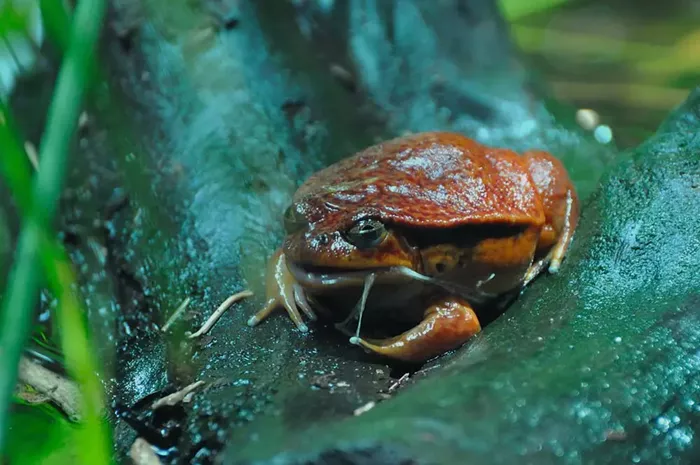
Tomato frogs are one of the most colorful and fascinating amphibians in the world. They come from Madagascar, and their bright red-orange color looks just like a ripe tomato — that’s how they got their name. But beyond their striking appearance, there’s a question that keeps many frog lovers, reptile hobbyists, and even researchers curious: When do tomato frogs breed?
If you’ve ever wondered about their breeding habits — whether you’re thinking about keeping them as pets, studying them, or simply fascinated by these “little tomatoes with legs” — this guide will walk you through everything. We’ll talk about their natural rhythm in the wild, what triggers their romantic season, how they behave when it’s time to mate, and even how you can safely recreate those conditions in captivity.
By the end of this article, you won’t just know when tomato frogs breed — you’ll understand why they breed the way they do and how their unique lifestyle ties into the ecosystems of Madagascar.
Why Timing Matters in the Tomato Frog’s World
Breeding for tomato frogs isn’t just about creating the next generation. It’s about survival. In the wild, the timing of their breeding season is carefully synced with Madagascar’s environment. Think of it like a perfectly tuned clock: if the hands move even slightly off schedule, everything from tadpole survival to adult health could be at risk.
Tomato frogs are explosive breeders, which means they breed intensely in short bursts instead of spreading reproduction over a long period. This is like how some stores only have major sales on Black Friday — short, intense, and with lots of action.
Their breeding season usually lines up with Madagascar’s rainy season. Why? Because water is life for these frogs. Rain fills ponds, puddles, and temporary wetlands where they can safely lay their eggs. Without the rain, there’s nowhere for their offspring to grow.
Many keepers and researchers point out that understanding this cycle isn’t just interesting trivia — it’s essential if you want to successfully care for or breed tomato frogs in captivity.
A Peek at Madagascar: Setting the Stage for Breeding
Tomato frogs (scientific name: Dyscophus antongilii) are found in northeastern Madagascar, a region famous for its humid rainforests, lush wetlands, and seasonal weather shifts.
Madagascar has two main seasons:
A warm, rainy season (roughly November to April)
A cooler, dry season (roughly May to October)
Tomato frogs time their breeding to this natural pattern. When heavy rains begin to pour, puddles form, streams swell, and the forest floor becomes a patchwork of shallow pools. For a tomato frog, that’s like nature putting up a big sign saying: “It’s time to start a family!”
This rain-driven schedule is common for many amphibians, but tomato frogs are especially tuned to it. They rely on ephemeral pools — temporary puddles and wetlands — to lay their eggs. These pools don’t last forever, so timing is critical. If they breed too early, the water might dry up before the tadpoles turn into frogs. If they breed too late, there might not be enough time for the next generation to grow before the dry season sets in.
When Exactly Do Tomato Frogs Breed?
The Rainy Season Connection
In their natural habitat, tomato frogs typically breed during Madagascar’s rainy season, which starts around November and can last into April or May.
- Researchers and herpetologists (scientists who study amphibians and reptiles) note that:
- Breeding peaks early in the rainy season when fresh rains create clean, shallow pools.
Males start calling to attract females as soon as the rain begins — sometimes after the very first big storm of the season.
Are They Only Rainy Season Breeders?
Not entirely. Studies have shown tomato frogs are capable of breeding year-round if the right conditions are present. This means in captivity, where conditions can be controlled, they might breed even outside the natural season.
But in the wild, nature calls the shots — and nature says “breeding time” when rain starts falling.
How Do Tomato Frogs Know It’s Time to Breed?
Imagine living in a place where rain is a signal — not just for wet roads or needing an umbrella, but for starting a family. For tomato frogs, rainfall is the ultimate cue. But why?
Rain means water for eggs and tadpoles. Without water, the eggs would dry out, and the tadpoles wouldn’t survive.
Rain changes temperature and humidity. When rain starts, the air cools slightly and humidity skyrockets — conditions tomato frogs love.
Rain brings food. Moist soil means more insects, which means more energy for adults and growing juveniles.
Males are the first to respond to these changes. When the rains arrive, they gather near water and start calling. Their call is a deep, resonant croak, almost like a distant motorbike engine. If you were in a rainforest at night, you’d hear dozens of males singing together — a chorus saying, “Ladies, we’re ready!”
What Happens During Breeding?
The breeding process for tomato frogs has some fascinating steps:
1. The Call
Males call to females from shallow water. Think of it like an online dating profile — the louder and more consistent the call, the more likely the male is to get noticed.
2. Amplexus
Once a female chooses a male, he climbs onto her back in a position called amplexus. This simply means “frog hug” — the male clings on tightly, waiting for her to lay eggs so he can fertilize them externally.
If you’re new to amphibian terms, think of amplexus like a piggyback ride, but it’s all about reproduction.
3. Egg Laying
Females lay hundreds to thousands of eggs on the surface of shallow water. These eggs are sticky and often float in clusters, looking like tiny black-and-white beads stuck in clear jelly.
4. Tadpole Stage
Within 36–48 hours, the eggs hatch into tiny tadpoles. Timing is everything — the tadpoles must grow into frogs before the pools dry up.
How Often Do Tomato Frogs Breed?
Here’s something amazing: Tomato frogs can breed multiple times a year if the conditions are right. In the wild, heavy rains might trigger more than one breeding event in a season.
In captivity, if keepers simulate the rainy season (by misting more, adding water, lowering air pressure slightly), they can prompt breeding outside the natural schedule.
Do Males and Females Breed at the Same Age?
Tomato frogs don’t start breeding as soon as they become frogs. They need time to mature.
Females: Usually breed at around 2–3 years old.
Males: Often ready a bit earlier, also around 2 years.
Females are larger (8.5–10.5 cm) while males are smaller (6–6.5 cm). That size difference matters because females need the extra body mass to produce and carry all those eggs.
The Role of Weather in Breeding Success
Rain doesn’t just signal breeding — it affects how many eggs survive. If rains are heavy and consistent, more eggs hatch successfully and tadpoles thrive. If rains are weak or short, eggs might dry or pools might disappear.
Some scientists studying Dyscophus antongilii in Madagascar noticed that climate change and habitat disruption are changing rainfall patterns. This could affect future breeding success in the wild.
See Also: When Are Tomato Frogs Most Active?
What About Captive Breeding?
If you’re a reptile or amphibian enthusiast hoping to breed tomato frogs at home, here’s the good news: they can breed in captivity, but you need to recreate the rainy season.
Breeders typically do this by:
- Increasing misting or spraying schedules
- Lowering air pressure slightly (sometimes done with air-conditioning)
- Introducing a large shallow water area
- Adjusting light cycles to mimic shorter days and longer nights
Some breeders even play recordings of frog calls to “encourage” the mood. It might sound funny, but frogs respond to sound!
Do Tomato Frogs Breed Alone or Together?
Tomato frogs are mostly solitary. They don’t live in groups like some other amphibians. But during breeding season, many males may gather in the same area to call for females.
This can lead to something like a frog “chorus line,” with dozens of males competing. Females then pick their preferred mates.
Why Is Breeding Knowledge Important for Conservation?
Tomato frogs are classified as Near Threatened by the IUCN (International Union for Conservation of Nature). Knowing their breeding cycle helps conservationists protect habitats at the right time.
For example:
- They can avoid draining wetlands during the breeding season.
- They can protect certain pools and forest areas during egg-laying time.
It also helps captive breeding programs maintain healthy populations, which is vital because wild numbers are under pressure from habitat loss.
A Real-Life Story from a Breeder
One reptile keeper from Florida shared that his first tomato frog breeding success came after an unexpected thunderstorm. He had been misting their enclosure regularly, but when a real storm hit, the air pressure dropped and the frogs suddenly began calling.
He joked, “It was like they’d been waiting for nature’s green light. As soon as the rain hit the windows, the males started singing — and by the next morning, there were eggs everywhere.”
Stories like this show just how instinct-driven and rain-sensitive these frogs are, even in captivity.
How Can You Tell If Your Tomato Frogs Are Ready to Breed?
For anyone keeping these frogs, here are some signs:
Males start calling more often — their croak will become louder and more persistent.
Females look plumper — as they prepare to lay eggs, their bodies swell slightly.
Increased activity at night — they roam more and spend more time near water.
Key Takeaways
- Tomato frogs breed mainly during Madagascar’s rainy season (November–April).
- Rain triggers calling, mating, and egg-laying because it provides water, humidity, and safety for tadpoles.
- In captivity, you can recreate rainy-season conditions to encourage breeding.
- Understanding their breeding helps with pet care and conservation.
Related topics: