
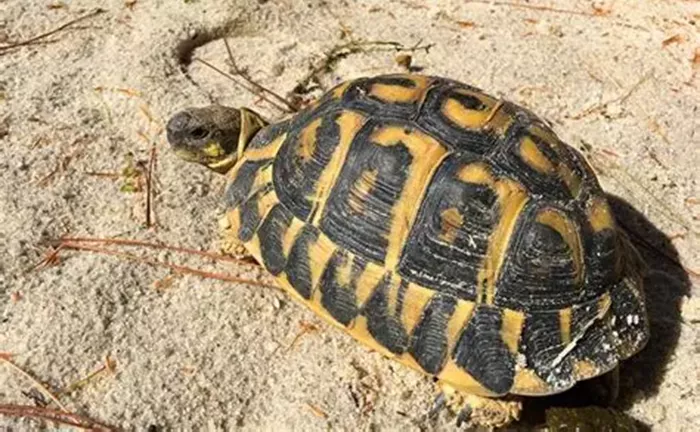
Imagine this: you’re at a pet store or researching your next reptile companion online, and you see a charming, small tortoise labeled Hermann’s Tortoise. At the same time, you’ve also heard about the desert tortoise—another tough, long-lived reptile that’s adapted to arid lands. You might ask yourself: “Is a Hermann tortoise a desert tortoise?” They seem similar, right? Small, terrestrial, tough-shelled. But here’s where things get fascinating.
The answer is no—Hermann tortoises are not desert tortoises. Though they share some lifestyle similarities, these two belong to different parts of the world and have adapted to very different environments. Don’t worry—we’ll break down all the differences and similarities for you in a clear and engaging way.
Understanding the Basics: What Is a Hermann Tortoise?
Let’s begin with the star of the question—the Hermann tortoise (Testudo hermanni). This species is a Mediterranean tortoise, naturally found in southern Europe. Its native range includes countries like Italy, Greece, Spain, and parts of the Balkans. These areas are not deserts—they have warm summers but also cooler, wetter seasons.
Hermann tortoises prefer environments with scrubland, forest edges, grassy hillsides, and rocky terrain. These spots offer a mix of sun, shade, and vegetation. In the wild, they burrow into soil and hide under bushes—not sand dunes.
They are small to medium in size, usually between 5 to 8 inches (13 to 20 cm), with some females growing slightly larger. They have distinct yellow-and-black patterned shells, which help them blend into dry grasses and low shrubs.
What Is a Desert Tortoise?
Now meet the desert tortoise (Gopherus agassizii or Gopherus morafkai), native to North America’s Mojave and Sonoran deserts. Think California, Arizona, Nevada, and parts of Mexico. This is a true desert-dweller, surviving scorching temperatures, sandy terrain, and limited water.
Desert tortoises grow larger than Hermann tortoises, reaching up to 15 inches (38 cm) in length. They have dull brown or tan shells, helping them blend into desert rocks and soil.
Their behavior is perfectly tuned to the desert. They spend most of their lives underground, hiding from the heat in deep burrows. Their diet consists of dry grasses, cactus pads, and desert flowers—a very different buffet from their Mediterranean cousins.
Let’s Break It Down: Key Differences Between the Two
Here’s where you can start to see that the Hermann tortoise is not a desert tortoise, even though some people think they might be. Let’s explore this through several lenses:
1. Habitat and Climate
Hermann Tortoise: Loves Mediterranean climates, with hot summers and cool, rainy winters.
Desert Tortoise: Lives in arid deserts with extreme heat, dry soil, and rare rainfall.
You can think of the difference like this: a Hermann tortoise is more like a lizard sunbathing on a rocky hillside, while a desert tortoise is like a survival expert hiding in the sand during the midday sun.
2. Appearance
Hermann Tortoise: Smaller, more colorful shell (yellow-black), often smooth and domed.
Desert Tortoise: Larger, duller shell, more rugged and flattened.
This helps them match their surroundings—Hermann tortoises blend with grass and shrubs, while desert tortoises camouflage with rocks and sand.
3. Burrowing and Shelter Habits
Hermann tortoises do burrow, especially during cold weather, but desert tortoises are champion burrowers. They dig deep tunnels to escape heat and conserve moisture.
One study found that desert tortoises spend over 95% of their lives in burrows—a survival tactic essential in regions where surface temperatures can exceed 120°F (49°C).
Why Do People Get Confused?
It’s understandable. Tortoises share a lot of basic features: they live on land, move slowly, and need warm environments. But confusion often comes from generalizing all tortoises as “desert animals.” That’s not always true.
Another reason is mislabeling in the pet trade. Some sellers use broad terms like “desert tortoise” to refer to any tortoise that lives in dry conditions—even if it isn’t technically a desert species. This kind of labeling can mislead new owners.
What Happens If You Treat a Hermann Tortoise Like a Desert Tortoise?
Here’s where things get serious. Caring for these tortoises improperly can lead to health problems.
Incorrect Habitat Setup
If you assume your Hermann tortoise is a desert tortoise and set up a hot, bone-dry tank without enough shade or moisture, it can cause severe dehydration, kidney issues, and stress. These tortoises need some humidity, especially at night.
A dry tank might also increase the risk of respiratory infections—yes, tortoises can get sick from bad air and dust, just like us.
Wrong Diet
Desert tortoises eat mostly dry vegetation, but Hermann tortoises benefit from leafy greens, flowers, and moist plant material. Feeding them the wrong diet could lead to MBD (metabolic bone disease), a common reptile disease caused by calcium deficiency.
How to Tell the Two Apart: A Quick Guide
If you already have a tortoise and are unsure of its species, here are some clues:
−Check the shell color and pattern. Hermann tortoises have vibrant black and yellow patterns.
−Look under the tail. Hermann tortoises have a spiked tail horn, while desert tortoises don’t.
−Ask where it came from. If it was imported from Europe, it’s likely a Mediterranean species.
Caring for Hermann Tortoises the Right Way
If you’re planning to keep a Hermann tortoise as a pet, here are some quick tips tailored to their unique needs:
1. Enclosure Setup
They thrive in outdoor pens with plenty of sunlight, secure fencing, and access to both warm sun and shady hideouts. Indoors, use a large tortoise table with UVB lamps. Think of UVB lamps as “artificial sunlight”—they help your tortoise produce vitamin D3, which is essential for calcium absorption and strong bones.
2. Temperature and Humidity
Maintain daytime temps between 75–90°F (24–32°C) with a basking spot around 95°F (35°C). At night, they can tolerate cooler temperatures but avoid freezing.
Humidity should be moderate—not bone-dry like a desert, but not swampy either. Mist the enclosure occasionally and offer a moist hide box.
3. Diet
Stick to a diet of leafy greens, dandelion, hibiscus, and herbs. Avoid fruit (except very occasionally) and never give high-protein foods like dog or cat food.
So Why Not Just Call Them All “Land Tortoises”?
Good question! While it might feel simpler to lump all these animals together, doing so overlooks the rich diversity and complexity of tortoise biology.
Just like you wouldn’t call a penguin a duck just because they both swim, you shouldn’t call a Hermann tortoise a desert tortoise just because they both walk on land and like sun.
Conservation Concerns
Both Hermann tortoises and desert tortoises are facing serious threats in the wild. Habitat loss, illegal collection, and climate change are shrinking their populations.
Hermann tortoises are listed under Appendix II of CITES, meaning their international trade is regulated. Desert tortoises, especially in the U.S., are federally protected under the Endangered Species Act.
Owning one of these animals comes with responsibility—not just to care for them properly, but also to understand and respect their natural history.
Conslusion
So, is a Hermann tortoise a desert tortoise?
Absolutely not.
They come from different continents, have different diets, need different care, and live in very different ecosystems. Understanding these differences is not just about trivia—it’s about providing the best care, promoting conservation, and appreciating the amazing diversity of life on Earth.
If you’re a tortoise lover (or soon-to-be one), this knowledge gives you the power to create the right habitat and keep your shelled friend happy and healthy for decades.
Because yes—Hermann tortoises can live 50 years or more in captivity with proper care. Now that’s a long-term commitment worth doing right.
Related topics: