
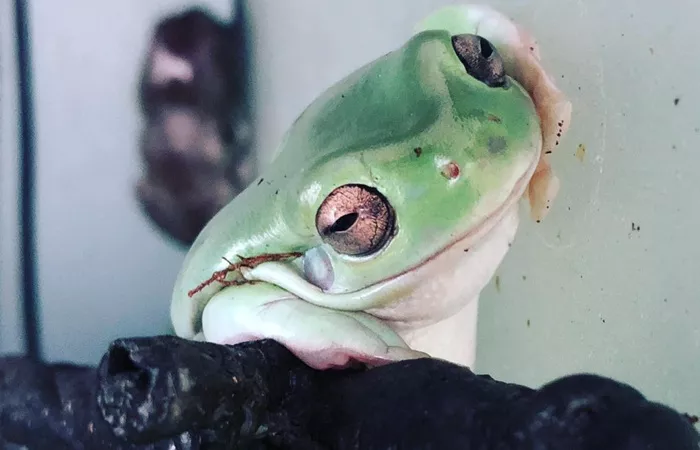
White’s tree frogs (scientific name Litoria caerulea) are fascinating amphibians known for their calm temperament and adaptive behavior. Native to Australia, New Guinea, and surrounding islands, they have become popular pets due to their docile nature and striking appearance. Their characteristic green to blue-green skin and expressive faces make them beloved among frog enthusiasts. However, to care for them properly or to understand their behavior in the wild, it is crucial to study their activity patterns.
The activity of any amphibian, especially one like the White’s tree frog, is closely tied to its environment. This includes light cycles, temperature, humidity, and even seasonal cues. For White’s tree frogs, understanding when they are most active not only helps with habitat creation and pet care but also provides insights into their ecology and survival strategies in the wild.
This article explores in-depth the daily and seasonal activity rhythms of White’s tree frogs. It delves into their behaviors during different times of the day, what stimulates or reduces their activity, and how they adapt across seasons or varying habitats. It also discusses how captivity may influence their natural patterns.
White’s Tree Frogs: An Overview of Natural Behavior
White’s tree frogs are arboreal, meaning they spend most of their time in trees. Their feet are equipped with specialized toe pads that allow them to grip and climb surfaces. In the wild, they are most commonly found in rainforests, woodlands, and even human dwellings where moisture is present. These frogs are both opportunistic and adaptable. They have learned to survive in various microclimates, including dry environments with artificial water sources.
Their behavior reflects this adaptability. While they are not extremely active compared to other frog species, White’s tree frogs have distinct periods of movement and rest. To understand when they are most active, we must look at both their daily (circadian) and seasonal (circannual) rhythms.
Circadian Rhythms: Activity During the Day and Night
White’s tree frogs are nocturnal, which means they are primarily active at night. This is a fundamental characteristic that distinguishes them from diurnal (day-active) species. In their natural habitats, they remain hidden during the daytime, often resting in shaded areas or tree hollows where they can stay cool and moist.
Daytime Behavior
During daylight hours, White’s tree frogs are typically inactive. They rest in places with high humidity and low light. In the wild, this can be inside tree crevices, under loose bark, or in shaded vegetation. In captivity, they may hide behind artificial plants, under bark hides, or inside coconut huts. Their metabolism slows down, and they enter a state of minimal activity to conserve energy and moisture.
This rest period helps them avoid the heat and desiccation risks associated with sunlight exposure. The frog’s skin plays a major role in respiration and moisture balance, so preserving its integrity is vital. Daytime inactivity helps reduce water loss through evaporation and keeps them safe from predators that hunt during the day.
Nighttime Activity
At dusk, White’s tree frogs begin to stir. As ambient light decreases, their biological clock signals them to become active. The twilight period marks the start of their foraging and exploration behavior. This is when they leap from branch to branch, seek water sources, and hunt for food.
Their diet consists mostly of insects and other invertebrates. Crickets, moths, roaches, and worms are preferred meals, and these prey items are also most active at night. This aligns the frogs’ hunting behavior with the highest availability of food.
During nighttime, they also engage in calling behavior, especially during the breeding season. Males emit deep, throaty croaks to attract females or ward off other males. The darkness provides cover and safety, allowing them to engage in such behaviors with reduced predation risk.
Environmental Factors That Influence Activity
Even though White’s tree frogs are inherently nocturnal, several environmental factors can influence their level of activity within their usual pattern.
Temperature
Temperature plays a key role in determining how active White’s tree frogs are. Amphibians are ectothermic (cold-blooded), which means they rely on external heat sources to regulate body temperature.
Ideal temperatures for activity range from 75°F to 85°F (24°C to 29°C). Within this range, they exhibit more climbing, feeding, and calling behavior.
Too cold, and they become sluggish, staying hidden and conserving energy.
Too hot, and they seek shelter and reduce movement to avoid overheating.
In captivity, providing a suitable temperature gradient helps simulate their natural rhythm. If the enclosure is too cool at night, their nocturnal activity may be limited.
Humidity and Rainfall
Humidity is another major driver of frog activity. In the wild, White’s tree frogs become most active after rainfall or during humid nights. Moist conditions protect their sensitive skin and improve their ability to hunt and reproduce.
Rainfall triggers not just movement but also breeding behaviors. Males often call more frequently during or just after rains. In many tropical ecosystems, rain signals the breeding season, making these moist nights the busiest time of the year for White’s tree frogs.
In captivity, simulating rain or maintaining high humidity (above 50%, ideally 70–80% at night) encourages normal activity. A misting schedule or fogging system can help.
Light Levels and Photoperiod
The natural light-dark cycle (photoperiod) cues the frogs’ internal clocks. As day shifts into night, their brain signals increased movement and feeding. In captivity, keeping a 12-hour light and 12-hour dark cycle helps mimic this.
Too much artificial light during the night can disrupt their natural rhythm. Bright nighttime lighting may cause stress or inactivity, which affects their health in the long run.
Seasonal Behavior: How Activity Changes Over the Year
In their native habitats, White’s tree frogs experience wet and dry seasons rather than the four seasons known in temperate zones. These seasonal changes affect their behavior significantly.
The Wet Season (Breeding Season)
The wet season brings increased rainfall, higher humidity, and more abundant food. It is also the peak period of activity for White’s tree frogs. During this time, they:
−Call frequently, especially males.
−Mate and lay eggs in water-filled cavities.
−Move greater distances in search of mates or food.
This is the time when they are most visible and vocal. Frogs may emerge in large numbers, gather near water sources, and spend significant energy on reproductive behaviors.
The Dry Season
During the dry season, moisture levels drop. Water becomes scarce, and food is harder to find. In response, White’s tree frogs enter a state of aestivation, which is similar to hibernation but occurs during hot or dry periods.
They reduce activity, seek cooler and damper microhabitats, and may appear to “disappear” for weeks. Metabolic processes slow down to conserve water and energy. While they are not completely inactive, their movement and feeding are greatly reduced.
Captive frogs may show a milder version of this seasonal pattern. Even with stable humidity and temperature, some frogs reduce their appetite or movement during parts of the year, indicating an ingrained seasonal rhythm.
Captive vs. Wild Activity Patterns
White’s tree frogs in captivity often show similar nocturnal behaviors, but their patterns can differ based on enclosure conditions.
Captive Frogs
In captivity, many frogs follow a predictable schedule. They rest or remain motionless during the day, often in elevated corners or behind foliage. As the room darkens, they start to climb, vocalize, and explore.
If conditions are ideal (correct temperature, humidity, photoperiod), they may even follow a very consistent routine. However, pet owners may notice slight variations:
−Some frogs adapt partially to human routines and may show short bursts of daytime activity.
−Frogs in rooms with irregular lighting or excessive noise may alter their behavior to reduce stress.
Wild Frogs
In contrast, wild frogs adhere more strictly to natural cues. Their activity is closely tied to actual sunset and sunrise times, ambient humidity, rainfall, and food availability.
The contrast lies in stimuli richness. Wild frogs experience predators, changing weather, and competition—factors that influence activity in ways not replicated in captivity.
Key Activities During Active Periods
When White’s tree frogs are active, they engage in several specific behaviors:
Hunting: Moving stealthily to capture insects.
Exploring: Climbing surfaces, checking water levels, and navigating branches.
Calling: Vocalizing to attract mates or assert territory.
Mating: Engaging in courtship and amplexus (grasping position during breeding).
Grooming: Cleaning themselves with their front limbs.
Each of these behaviors peaks during the early hours of the night, shortly after dusk, and continues until the early morning.
Signs Your Frog Is Active and Healthy
To ensure your frog is exhibiting healthy activity levels, watch for:
Evening movement: They should become more alert after lights dim.
Regular feeding: An active frog eats regularly at night.
Vocalizations: Males should call during the breeding season or wet months.
Exploration: They should move across their habitat and interact with features.
If your frog remains inactive for prolonged periods, it could be due to stress, low temperatures, illness, or improper lighting.
Conclusion:
White’s tree frogs are most active during the night, especially when environmental conditions—such as humidity and temperature—are ideal. Their activity also peaks during the wet season in the wild, as this is the time for feeding and reproduction. Understanding their natural rhythms is essential for providing proper care in captivity or for studying their behavior in the wild.
From dusk to dawn, White’s tree frogs leap into action, guided by instinct, environment, and evolution. Whether hidden in the canopy of an Australian rainforest or resting in a terrarium in someone’s home, these charming amphibians follow a precise internal clock that governs their nocturnal lifestyle.
Related topics: