
Southern California provides a perfect environment for many reptile species. The region includes several ecosystems, such as:
−Coastal scrubland
−Chaparral
−High and low deserts
−Mountain slopes
−Urban gardens and parks
These environments vary in temperature, elevation, and humidity. Lizards are ectothermic, meaning they rely on external heat to control their body temperature. The sunny and dry climate of Southern California suits them well. Rocks, sand, and open land provide basking spots and hunting grounds.
While some species are generalists that live in many habitats, others are highly specialized. This variety in environment leads to the wide diversity of lizards in the region.
Why Lizards Thrive in Southern California
Lizards are survivors. They have adapted to some of the harshest environments on Earth. In Southern California, their success can be explained by several important factors:
Sunlight and Warmth: Lizards need the sun to regulate their body temperature. The consistent sunlight in the region gives them plenty of chances to bask and stay active.
Open Terrain: Lizards are quick movers. Open areas with low vegetation help them avoid predators and find food.
Insects and Plants: Insects are abundant in warmer months. Many lizards feed on ants, beetles, spiders, and flies. Some herbivorous species also feed on leaves and flowers.
Shelter and Camouflage: Rocks, shrubs, and burrows help lizards hide from predators. Their skin patterns often match the environment.
Over time, these reptiles have developed impressive adaptations. Some can detach their tails to escape predators. Others change color to control body heat or blend in better. These traits help them survive in Southern California’s sometimes extreme climate.
How to Spot Lizards in the Wild
Finding lizards is not hard if you know where to look. The best times to see them are late morning and early afternoon, especially during spring and summer. Here are a few tips for spotting them:
−Look for sunlit rocks or logs where lizards bask.
−Watch for quick movements in dry grass or under bushes.
−Avoid sudden noises; move slowly and observe quietly.
−Use binoculars to spot species that stay far from trails.
Lizards are most active when the temperature is between 75°F and 95°F. Early morning or late evening can be too cool for most species. In extreme heat, they may hide in shaded areas or underground.
Common Lizards of Southern California
Let’s now look at the species most commonly seen in Southern California. Each of these lizards has its own behavior, habitat, and role in the ecosystem.
Western Fence Lizard (Sceloporus occidentalis)
One of the most recognized lizards in the region is the Western Fence Lizard. This medium-sized reptile has rough, spiny scales and a bold personality. It often appears gray or brown, with males showing blue patches on their belly and throat.
Habitat: Common in woodlands, grasslands, and suburban areas. Often seen on fences, rocks, and walls.
Diet: Eats ants, beetles, grasshoppers, and spiders.
Behavior: Quick and alert. When threatened, it may flee or perform push-up displays.
Interesting Fact: It helps reduce Lyme disease risk. A protein in its blood kills the bacteria carried by ticks.
Side-blotched Lizard (Uta stansburiana)
This small lizard is fast and common in deserts and open areas. It is usually tan or brown with small dark spots along the sides of the body.
Habitat: Found in deserts, coastal scrub, and open rocky areas.
Diet: Small insects and spiders.
Behavior: Very active and quick. Males display head-bobbing behaviors.
Interesting Fact: Males come in three colors, each using a different mating strategy. This “rock-paper-scissors” dynamic keeps the population stable.
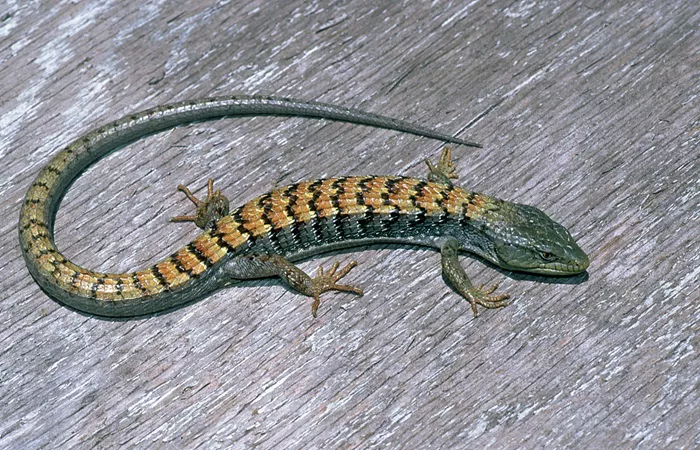
Southern Alligator Lizard (Elgaria multicarinata)
This species has a long body and tail, with smooth, overlapping scales. Its color varies from brown to gray, sometimes with stripes or spots.
Habitat: Found in forests, grasslands, and suburban yards. Often near leaf litter or logs.
Diet: Feeds on insects, slugs, baby mice, and even smaller lizards.
Behavior: Can bite if handled. When threatened, it may shed its tail.
Interesting Fact: Despite its name, it’s not closely related to alligators but gets the name due to its body shape.
Desert Iguana (Dipsosaurus dorsalis)
This large, herbivorous lizard lives in some of the hottest areas of Southern California. It has a pale body with dark spots, and a long, round tail.
Habitat: Low desert areas like the Mojave and Colorado deserts.
Diet: Primarily flowers, leaves, and fruits.
Behavior: Active in the heat of the day when other animals seek shade.
Interesting Fact: It can tolerate body temperatures up to 115°F.
Common Chuckwalla (Sauromalus ater)
Chuckwallas are big-bodied lizards with loose skin and a calm nature. They often rest on hot rocks and will hide in crevices when scared.
Habitat: Rocky deserts, especially near lava beds or boulder piles.
Diet: Mostly plants, including leaves and flowers.
Behavior: When threatened, it wedges itself into a rock crevice and inflates its body.
Interesting Fact: Despite their size, they are shy and hard to approach.
Rare and Elusive Lizards of Southern California
Not all lizards are easy to find. Some are rare due to limited habitats or declining populations.
Coachella Valley Fringe-toed Lizard (Uma inornata)
This species is listed as endangered. It is found only in fine sand dunes of the Coachella Valley. Its pale body helps it blend into the sand, and it uses fringe-like scales on its toes to run across loose surfaces.
Habitat: Sand dunes of the Coachella Valley.
Diet: Ants, beetles, and other small insects.
Behavior: Burrows under sand during extreme heat or danger.
Interesting Fact: It relies on wind-shaped dunes, making it vulnerable to habitat loss.
Granite Spiny Lizard (Sceloporus orcutti)
Similar in size to the Western Fence Lizard, this species has deep blue or violet colors. It lives in granite outcrops and rocky hillsides.
Habitat: Mountain foothills and rocky terrain.
Diet: Insects and small invertebrates.
Behavior: Basks on warm rocks and flees quickly when disturbed.
Interesting Fact: It prefers higher elevations than other spiny lizards.
Banded Rock Lizard (Petrosaurus mearnsi)
This sleek lizard lives in rocky canyons and is well-adapted to vertical cliffs.
Habitat: Rock walls, canyons, and boulders.
Diet: Insects and occasional plant material.
Behavior: Excellent climber; will scale vertical surfaces with ease.
Interesting Fact: Its striped tail may act as a distraction to predators.
Conservation Concerns for Lizards in Southern California
While many lizard species are thriving, others face serious threats. These include:
Urban development: Expanding cities destroy natural habitats.
Off-road vehicle use: Damages fragile desert environments.
Climate change: Alters temperatures and rainfall patterns.
Invasive species: Non-native predators like cats or Argentine ants disrupt ecosystems.
Conservation groups are working to protect key habitats. Sand dune preserves, wildlife corridors, and public education all play important roles.
The Role of Lizards in the Ecosystem
Lizards are not just passive residents. They play active roles in Southern California’s ecosystems:
Insect control: By feeding on pests, they help balance insect populations.
Prey animals: They serve as food for birds, snakes, and mammals.
Seed dispersers: Some species help spread seeds through their droppings.
Their presence indicates a healthy environment. A decline in lizard numbers often signals ecological imbalance.
Final Thoughts
Lizards are more than just common reptiles—they are survivors, adaptors, and important members of the ecosystem. Southern California, with its unique climate and diverse landscapes, provides a stage for one of the richest reptile populations in North America.
Whether you are out in the Mojave Desert or in your backyard in San Diego, these fascinating creatures are never too far away. Take the time to observe them, appreciate their behavior, and help protect their habitats. As we’ve seen, each species tells a different story about survival, adaptation, and the beauty of nature.
Related topics: