
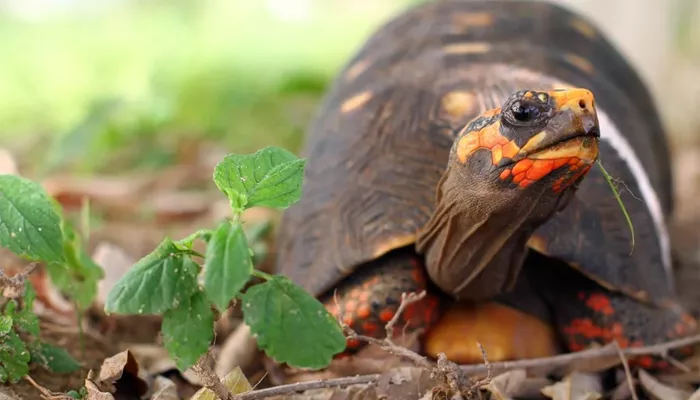
Red-foot tortoises (Chelonoidis carbonarius) are among the most recognizable tortoise species in the pet trade. With their dark shells, bright red or orange scales on their legs, and generally gentle behavior, they have become popular choices for reptile enthusiasts. These tortoises are native to South America, particularly in countries like Brazil, Colombia, Venezuela, and surrounding areas. They thrive in a variety of habitats, including tropical forests, grasslands, and even dry savannahs.
Understanding the size of a red-foot tortoise is important for several reasons. First, it helps owners provide the right enclosure and environment. Second, size influences the animal’s dietary needs, health care, and long-term growth expectations. Third, knowing how large a red-foot tortoise can grow contributes to better husbandry and more responsible pet ownership.
In this article, we will explore the size range of red-foot tortoises from hatchlings to adults, factors that influence their growth, how to measure them properly, and how to ensure they reach a healthy adult size. We will also discuss size differences between males and females, and how to assess the health of a growing tortoise.
Basic Size Range of Red-Foot Tortoises
The size of a red-foot tortoise varies throughout its life. Hatchlings are relatively small, while adults can grow significantly larger. Most red-foot tortoises grow slowly but steadily, with noticeable increases each year if kept in optimal conditions.
Hatchling Size:
When red-foot tortoises hatch from their eggs, they are small and vulnerable. A newly hatched tortoise usually measures between 1.5 to 2 inches (about 4 to 5 centimeters) in length. Their shells are soft at first but harden within a few weeks. Hatchlings weigh between 40 to 60 grams.
Juvenile Size:
As juveniles, which typically range from 6 months to 3 years old, red-foot tortoises grow more quickly than at any other stage. By the end of their first year, many will measure around 3 to 6 inches (7 to 15 cm) in shell length. By age 3, some may reach up to 8 or 9 inches (20 to 23 cm), depending on care, diet, and genetics.
Adult Size:
Fully grown red-foot tortoises generally reach between 10 to 14 inches (25 to 36 cm) in shell length. However, in rare cases, some individuals can grow larger, reaching up to 16 or even 18 inches (40 to 45 cm). Adult weights can range from 10 to 20 pounds (4.5 to 9 kilograms), though some particularly large specimens may exceed this.
This growth process can take 10 to 15 years or more. It depends heavily on diet, enclosure size, temperature, humidity, and overall health.
Sexual Dimorphism and Size Differences
Sexual dimorphism refers to the physical differences between males and females of a species. In red-foot tortoises, this includes differences in size, shell shape, and tail length.
Males tend to have longer, thicker tails and a more concave plastron (the underside of the shell). This concavity helps them mount females during mating. In terms of size, males are often slightly smaller or more slender than females, although this is not always the case.
Females usually grow larger than males in both length and weight. This size difference helps them carry and lay eggs more effectively. Females tend to have a flatter plastron and shorter tails.
While these differences are noticeable in mature adults, young tortoises are difficult to sex based on size alone. Size divergence becomes more apparent after about 5 to 6 years of age, when sexual maturity is reached.
Factors That Influence Growth and Final Size
Not all red-foot tortoises grow at the same rate or reach the same adult size. Several biological and environmental factors influence growth, including genetics, nutrition, habitat, health status, and activity level.
Genetics
Genetic makeup plays a key role in determining the eventual size of a red-foot tortoise. Some tortoises are predisposed to grow larger due to hereditary traits. For example, tortoises descended from parents of larger size often reach above-average adult lengths and weights.
There are also regional variations in the species. Red-foot tortoises from different geographic regions may differ in coloration and maximum size. For instance, tortoises from the southern parts of their range may grow slightly larger than those from northern regions.
Nutrition
A balanced, nutritious diet is critical for proper growth. Red-foot tortoises are omnivores, although they lean toward a plant-based diet. Their diet in captivity should include:
−Leafy greens such as collard greens, dandelion greens, and kale
−Vegetables like squash, bell peppers, and carrots
−Occasional fruits like papaya, mango, and strawberries
−Protein sources such as hard-boiled eggs, earthworms, or low-fat dog food, offered sparingly
−Calcium and vitamin D3 supplements for healthy shell development
Overfeeding can lead to obesity, which negatively impacts growth and lifespan. Undernutrition or improper feeding may result in stunted growth, deformities, or illness.
See Also:What Do Redfoot Tortoises Eat?
Enclosure Size and Space to Move
Physical activity is another important factor. Tortoises that live in small, cramped enclosures tend to grow more slowly. Those with access to large outdoor pens or spacious indoor habitats have better muscle development and healthier bone structures.
Outdoor environments, when safe and warm enough, can also promote natural foraging behaviors and UVB exposure, both of which support healthy growth.
Temperature and Humidity
Red-foot tortoises come from tropical environments and require warm, humid conditions. Daytime temperatures should range from 80°F to 90°F (27°C to 32°C), with a basking spot of about 95°F (35°C). Nighttime temperatures should not fall below 70°F (21°C). Humidity should remain around 70% to 80%.
These environmental factors help with digestion, metabolism, and immune function. Inadequate temperatures can slow digestion and reduce appetite, leading to reduced growth.
Health and Parasites
A tortoise’s health has a direct impact on its size. Chronic illnesses, infections, or parasitic infestations can hinder growth. Respiratory infections, shell rot, and internal parasites like worms can all sap energy and nutrients from the tortoise’s body.
Routine checkups by a veterinarian who specializes in reptiles can help detect these problems early. Fecal tests, blood work, and shell inspections are key components of tortoise healthcare.
Measuring a Red-Foot Tortoise’s Size
To understand how big your red-foot tortoise is or how it compares to others, it’s important to measure its size correctly.
Shell Length (Straight Carapace Length – SCL):
The most reliable method for measuring a tortoise is from the front edge of the carapace (top shell) to the back edge, using a straight ruler or caliper. Do not measure the curve of the shell, as this will give an inflated result.
Shell Width and Height:
These dimensions are useful but less commonly referenced than shell length. Shell width can vary due to genetics and shell shape, while shell height indicates overall mass and maturity.
Weight:
Weighing your tortoise on a digital scale provides a good sense of health and growth. It’s helpful to track both shell length and weight to ensure the tortoise is gaining weight proportionally.
Growth Timeline: What to Expect by Age
While growth rates vary, most red-foot tortoises follow a general pattern.
0 to 1 Year: 2 to 5 inches in shell length
1 to 3 Years: 5 to 8 inches
3 to 6 Years: 8 to 11 inches
6 to 10+ Years: 11 to 14+ inches
Some tortoises may grow more quickly in early years, especially with optimal conditions. Growth slows after sexual maturity but continues at a gradual pace.
Dangers of Abnormal Growth
While some growth variation is normal, abnormally fast or slow growth can signal problems.
Pyramiding:
One of the most common issues in captive tortoises is pyramiding, where the shell develops bumpy, pyramid-like scutes. This is usually caused by poor humidity, lack of calcium, or overfeeding. Though not always fatal, it indicates improper care and can lead to skeletal issues.
Stunted Growth:
Tortoises that do not grow as expected may be suffering from malnutrition, parasites, or metabolic bone disease. They may appear underweight, with soft shells or weak legs.
Obesity:
An overweight tortoise may show rolls of flesh around the legs and neck. Obesity can strain the tortoise’s internal organs and affect lifespan. It often results from overfeeding protein or sugary fruits.
Ensuring Healthy Growth
To help your red-foot tortoise reach its full potential size, consider these guidelines:
−Provide a varied diet with correct nutrient balance
−Offer calcium and vitamin D3 supplements regularly
−Maintain proper temperature and humidity levels
−Ensure access to UVB lighting or natural sunlight
−Create a spacious and enriching enclosure
−Schedule regular health checks with a reptile veterinarian
−Track weight and shell length over time
With proper care, red-foot tortoises can live for 40 to 50 years or longer, and reach their full size within the first 10 to 15 years.
Comparison with Other Tortoise Species
It’s helpful to compare red-foot tortoises with other commonly kept tortoises to appreciate their size.
Russian Tortoise: 5 to 8 inches
Greek Tortoise: 6 to 10 inches
Leopard Tortoise: 10 to 18 inches
Sulcata Tortoise: 24 to 30 inches
Compared to giants like the sulcata, red-foot tortoises are medium-sized. This makes them manageable for keepers who want a larger tortoise without the space needs of a true giant.
Conclusion
Red-foot tortoises are captivating animals that reward their keepers with decades of companionship. Their medium size makes them an excellent choice for those seeking a tortoise that is neither too small nor too massive. Most red-foot tortoises reach a length of 10 to 14 inches, although some can grow larger with ideal conditions.
Reaching this size is not automatic—it requires responsible care. By offering proper nutrition, sufficient space, correct temperature and humidity, and regular veterinary oversight, owners can ensure that their red-foot tortoise grows to its natural size in a healthy, balanced way.
Understanding their size potential is essential for making long-term plans for housing, diet, and enrichment. A well-cared-for red-foot tortoise not only thrives in size but also in behavior, health, and longevity. With the right knowledge and commitment, your red-foot tortoise can grow into a beautiful, strong, and healthy adult.
Related topics: