
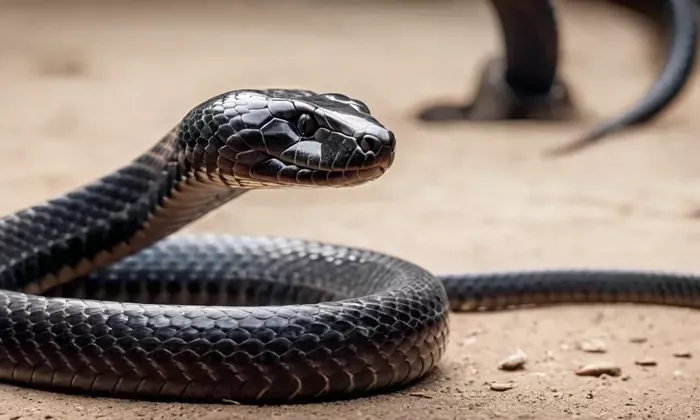
Have you ever wondered if a human could escape the deadly pursuit of a black mamba? As a zoologist specializing in reptiles, I am frequently asked this suspenseful question. Today, let’s break it down step by step, using simple terms and vivid analogies to help you understand what might happen if you ever found yourself face-to-face with this legendary snake.
Meet the Black Mamba: Africa’s Speedy Serpent
The black mamba (Dendroaspis polylepis) is one of the fastest and most feared reptiles in the world. Native to parts of sub-Saharan Africa, this snake can grow up to 14 feet long—about as long as a small car! But what truly sets the black mamba apart is its speed. Imagine your pet dog sprinting across your yard; now, picture something even faster. Black mambas have been clocked at speeds up to 12 miles per hour (19 km/h), which is roughly as fast as a bicycle cruising down the street (Whitaker & Captain, 2004).
How Fast Can Humans Run? Let’s Compare!
The average person runs at about 8 miles per hour (13 km/h) for short bursts. Elite athletes, like Usain Bolt, can reach nearly 27 miles per hour (43 km/h)—but only for a few seconds! For most of us, running away from a black mamba would be like trying to outrun your neighbor’s energetic dog. Unless you are an Olympic sprinter, your top speed will likely be less than that of a determined black mamba.
Black Mamba Behavior: Will It Chase You?
Here’s some good news: black mambas are shy and prefer to avoid humans. Most encounters happen when someone accidentally gets too close. Unlike what movies might show, these reptiles don’t actively chase people for long distances. Instead, they use their impressive speed to escape threats or strike quickly when cornered. Think of it like a cat darting away when startled—it wants safety more than confrontation.
Venom and Danger: Why Escape Matters
The black mamba’s venom is among the most potent in the reptile world. A bite can be fatal without prompt medical treatment. This is why understanding its behavior is crucial for anyone living or traveling in regions where this species is found. According to professional reptile keepers, most bites occur when someone accidentally steps on or tries to handle these snakes (National Geographic). So, if you spot one, keeping your distance is absolutely essential.
Anecdotes from Reptile Experts
Many reptile enthusiasts share stories of encountering black mambas during fieldwork. One keeper from South Africa recalled seeing a mamba glide away so quickly that it seemed almost magical—a reminder that these reptiles are more interested in escape than attack. Another expert mentioned that, “If you stand still and remain calm, most mambas will slither off rather than confront you.” These real-life experiences highlight how understanding reptile behavior can keep you safe.
Simple Tips for Staying Safe Around Reptiles
- Stay alert: If hiking in black mamba territory, watch where you step and avoid tall grass.
- Don’t provoke: Never try to catch or corner any wild snake.
- Back away slowly: If you see a black mamba, move away calmly and steadily—no sudden movements!
- Seek help: If bitten, get medical attention immediately.
Analogy Time: Outrunning vs Outmaneuvering
Think of escaping a black mamba like avoiding a speeding car on an open road. You probably won’t outrun it in a straight line—but you can sidestep, dodge behind obstacles, or simply stay out of its path. The key is not speed alone but awareness and smart decision-making.
Conclusion
In summary, while the idea of outrunning a black mamba may sound thrilling—like something out of an action movie—the reality is more nuanced. Most humans cannot outrun these speedy reptiles in a straight race. However, by understanding their behavior and keeping calm during encounters, you can greatly reduce your risk. Remember: knowledge about reptiles like the black mamba empowers you to stay safe while appreciating their fascinating place in nature. Awesome facts like these remind us just how incredible—and sometimes intimidating—the world of reptiles can be!
Related topics: