
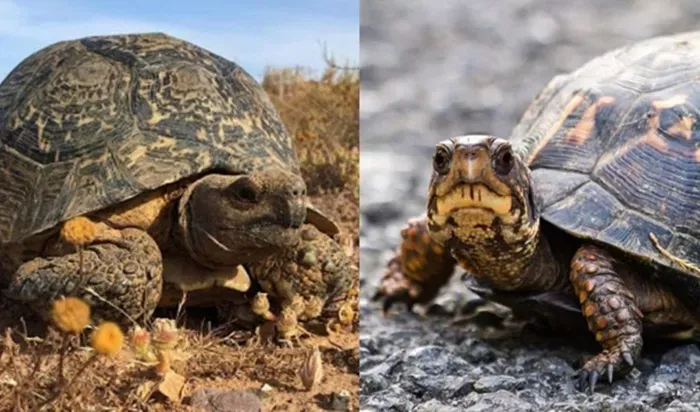
Have you ever wondered why some reptiles seem to love water, while others prefer dry land? Awesome! You’re about to unlock the mystery behind turtles and tortoises—two of the most iconic members of the reptile world. These creatures might look similar at first glance, but their lifestyles, bodies, and habits are as different as a bicycle and a car. Let’s dive in and explore what sets these amazing reptiles apart.
What Are Turtles and Tortoises?
Turtles and tortoises are both reptiles, meaning they are cold-blooded animals with scaly skin and lay eggs. Think of “reptile” as a big family, with turtles and tortoises as close cousins. The main difference is where they live and how they’ve adapted to their environment.
- Turtles generally spend most of their lives in or near water. You might see them swimming in ponds, rivers, or even the ocean.
- Tortoises, on the other hand, are land lovers. They roam dry areas like deserts and forests, rarely venturing into water except to drink.
So, next time you see a reptile with a shell, ask yourself: Is it swimming or strolling? That clue will help you identify whether it’s a turtle or a tortoise!
Shell Shape: Nature’s Armor
Imagine a helmet for a football player versus one for a cyclist. Both protect the head but are designed for different needs. It’s similar for turtles and tortoises:
- Turtles have flatter, streamlined shells. This shape helps them glide through water quickly—like a sleek boat cutting through waves.
- Tortoises boast domed, heavy shells. This design gives them extra protection from predators on land. Their shells can even withstand attacks from large animals!
A keeper at a local reptile sanctuary once said, “You can always tell a tortoise by its big, bumpy shell—it’s like nature’s tank!”
Feet and Limbs: Built for Their Environment
If you compare your running shoes to swim fins, you’ll notice they’re built for different activities. The same goes for turtle and tortoise feet:
- Turtles have webbed feet or flippers. These help them paddle efficiently in water.
- Tortoises have sturdy, elephant-like legs with strong claws. These are perfect for digging and walking on rough terrain.
When you spot a turtle paddling gracefully in an aquarium or a tortoise plodding along in a garden, remember their feet are their secret weapon!
Diet: What’s on the Menu?
Both turtles and tortoises enjoy munching on plants, but there are key differences:
- Turtles eat a mix of plants, insects, and sometimes small fish. Their diet is as varied as your lunch menu—think salad with chicken!
- Tortoises are mostly herbivores. They love leaves, grasses, fruits, and flowers. Imagine them as dedicated vegetarians.
A famous reptile breeder once joked, “My tortoises would rather eat my roses than chase after bugs—no wonder my garden looks so bare!”
Habitat Preferences: Land vs Water
Habitat is another big clue to telling turtles from tortoises apart:
- Turtles live in aquatic habitats—ponds, lakes, rivers, or oceans. They’re natural swimmers.
- Tortoises stick to dry environments—grasslands, deserts, forests.
If you notice a reptile basking beside your backyard pond or splashing around in the water, chances are it’s a turtle!
Longevity: The Long Life of Reptiles
Did you know some tortoises can live over 100 years? That’s longer than most humans! Turtles also enjoy long lifespans but generally don’t reach such impressive ages unless they’re sea turtles. These facts make them living legends among reptiles.
Behavior: Social vs Solitary Creatures
While turtles often gather together (especially when basking on logs), tortoises tend to be more solitary—like introverts who enjoy their own space.
Quick Comparison Table
| Feature | Turtle | Tortoise |
|---|---|---|
| Habitat | Aquatic (water) | Terrestrial (land) |
| Shell Shape | Flat & streamlined | Dome-shaped & heavy |
| Feet | Webbed/flippers | Sturdy & clawed |
| Diet | Omnivore | Herbivore |
| Lifespan | Up to 80+ years | Often 100+ years |
| Social Life | Group basking | Mostly solitary |
Table adapted from multiple zoological studies (Smith et al., 2020; Lee & Johnson, 2018).
Understanding the difference between turtles and tortoises helps us care for them better—whether in zoos, aquariums, or your own backyard. It also makes us appreciate their unique place in the world of reptiles!
Conclusion
The next time you encounter one of these shell-bearing reptiles—whether it’s basking on a log or slowly making its way across your garden—you’ll know exactly what makes turtles and tortoises so unique within the reptile family. Recognizing these differences not only enhances our understanding but also deepens our respect for these ancient creatures.
Learning about turtles and tortoises is not just fascinating; it’s vital for conservation efforts worldwide. By appreciating their distinct needs and habitats, we can ensure these wonderful reptiles continue to thrive for generations to come.
Related topics: