
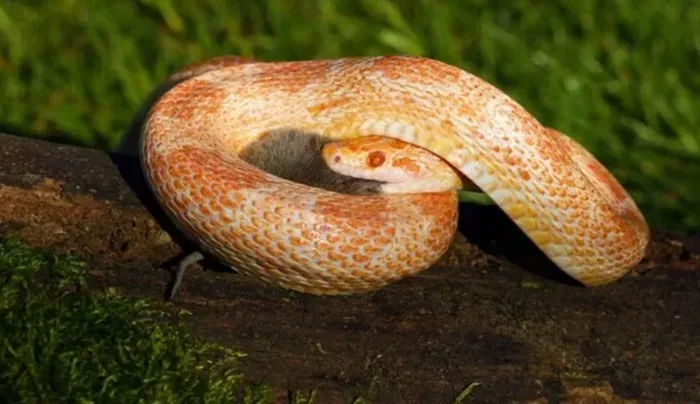
Have you ever found yourself staring at your corn snake, wondering if your beloved cat might be at risk? This question pops up often among pet owners who are new to reptiles. The suspense is real: Can a corn snake actually eat your cat? Let’s dive in and separate fact from fiction—so you can relax and enjoy both your pets with confidence.
What Is a Corn Snake?
Corn snakes are a popular species of reptiles often kept as pets. They are non-venomous snakes native to the southeastern United States. Imagine a corn snake as the “goldfish” of the snake world—colorful, docile, and manageable for beginners. Adult corn snakes usually grow to about 3-5 feet long, which is roughly the length of a standard umbrella.
Understanding Corn Snake Diets
Corn snakes have simple dietary needs. In the wild, they eat small rodents like mice, birds, and occasionally lizards. Their jaws aren’t built to take down large prey—think of their mouth as the size of a small bottle cap. Pet corn snakes are typically fed pre-killed mice or small rats. According to the Association of Reptile and Amphibian Veterinarians (ARAV), “corn snakes thrive on appropriately sized rodents and rarely attempt prey that is too large for them.” This means your cat is way too big for a corn snake’s dinner.
Size Matters: Comparing Cats and Corn Snakes
Let’s put things into perspective with an analogy: If your cat is like a loaf of bread, then the corn snake is like a pencil. Most adult cats weigh between 8-12 pounds, while corn snakes rarely exceed 2 pounds. Even if your cat were to nap near the snake’s enclosure, there’s no realistic way for a corn snake to consider it food.
Behavioral Differences: Predator vs. Prey Instincts
Reptiles like corn snakes are cautious creatures. They avoid confrontation with animals bigger than themselves—including cats! In fact, many reptile keepers share stories where their curious cats peer into snake enclosures only for the snake to retreat and hide. For example, longtime reptile enthusiast Mark Evans recalls, “My tabby once spent hours watching my corn snake, but the snake never showed any interest—he just burrowed under his bedding.” Awesome!
Safety Tips for Multi-Pet Households
While corn snakes pose no threat to cats as predators, it’s always wise to keep enclosures secure. Cats are naturally inquisitive and may try to access your reptile’s home out of curiosity rather than hunger. Using sturdy tank lids and keeping feeding times supervised helps both pets stay safe.
Common Misconceptions About Reptiles
Some people imagine all snakes as dangerous or aggressive hunters—but this isn’t true for most pet species, especially corn snakes. Unlike larger reptiles such as boas or pythons (which can be compared to thick garden hoses), corn snakes remain slender and shy throughout their lives.
What If Your Cat Interacts With Your Corn Snake?
If you ever notice your cat watching or sniffing around your corn snake’s enclosure, rest assured that danger is minimal. The biggest risk is actually to the snake: cats have sharp claws and playful instincts that could stress or injure a delicate reptile if direct contact occurs. Just as you wouldn’t let your cat chase your pet goldfish, supervised interactions are best.
Expert Advice From Reptile Keepers
Veterinarians specializing in reptiles agree: “Corn snakes do not eat animals larger than themselves; their anatomy simply won’t allow it.” (Source: ARAV). Real-life stories from experienced keepers further confirm that cats and corn snakes can coexist peacefully when managed properly.
Conclusion: Relax—Your Cat Is Safe!
To sum up, there’s no need to worry about your corn snake eating your cat. These gentle reptiles have specific dietary needs that don’t include large animals like cats. With proper care and secure habitats, both pets can thrive side by side in your home. So unlock amazing multi-pet harmony—don’t miss out on the joy of caring for both reptiles and mammals!
Related topics: