
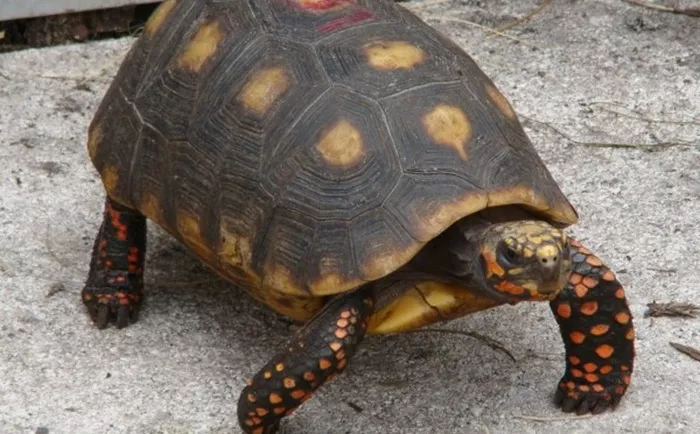
Red-footed tortoises (Chelonoidis carbonarius) are fascinating reptiles, renowned for their colorful shells and calm personalities. As a pet or a creature in the wild, you may find yourself wondering: Do these tortoises shed their scaly armor? It’s an intriguing question because, unlike many animals, tortoises carry their “homes” with them in the form of their hard, protective shells. So, if you’re a first-time tortoise owner or a reptile enthusiast, you’re not alone in asking whether red-footed tortoises shed.
This article will take you through the fascinating process of shedding in red-footed tortoises, explaining it in easy-to-understand terms with some fun analogies and practical tips to help you care for your beloved pet.
Let’s dive into the reptilian world and unlock the mystery of whether red-footed tortoises shed their shells!
What Is Shedding in Tortoises?
Before we can understand if red-footed tortoises shed, we must first clarify what “shedding” means. In the animal kingdom, shedding refers to the process where an animal sheds its outer layer of skin or shells. It’s something you might already be familiar with, as many reptiles, like snakes, shed their skin to grow.
However, tortoises are a bit different. When you think of shedding in animals, you might picture snakes or lizards, but tortoises are a special case. Their “shed” isn’t like the skin sloughing off from a snake, but more about gradual growth. But does this process happen with red-footed tortoises? Let’s find out.
Do Red-Footed Tortoises Shed Their Shells?
Here’s the answer you’ve been waiting for: No, red-footed tortoises do not shed their shells. Unlike a snake, which sheds its skin in one go, a tortoise’s shell is a permanent part of its body, growing as the animal matures.
Think of it like this: Imagine if you were wearing a suit of armor, but instead of taking it off when you grew bigger, the armor grew with you over time. The tortoise’s shell is attached to its spine and ribs, meaning it can’t simply peel off like a snake’s skin.
But while their shell doesn’t fall off, the tortoise’s shell does undergo a gradual process of growth and renewal over time.
The Shell and Its Growth
As your red-footed tortoise grows, its shell gets larger, and it must shed its outer layers to allow for continued growth. This process is not like peeling skin but more of a slow, gentle sloughing of the outer scutes (the hard, scaly plates on the shell). The scutes naturally exfoliate, much like how your fingernails grow and shed small layers.
Here’s where it gets cool: Tortoises don’t shed all at once. Instead, they shed in small patches over time. It’s like when you replace the outer layer of a tree’s bark bit by bit rather than in one big chunk.
So, while your tortoise’s shell isn’t going to “fall off” anytime soon, you may notice scutes slowly lifting and falling off as the shell expands. This is a natural part of their life cycle.
Why Do Tortoises Shed Their Scutes?
You might wonder: why does a red-footed tortoise need to shed these scutes? The purpose of this shedding is mainly related to growth and health. As a tortoise ages, its shell expands. Shedding the outer layers of scutes allows the tortoise to make room for newer, stronger ones underneath, ensuring that the shell grows properly.
This process also helps maintain the shell’s health. The new scutes help to protect the tortoise from environmental damage, disease, and external pressures. Think of it as maintaining your house by cleaning out the old and bringing in fresh, new materials.
Analogies to Understand the Shedding Process
To make this clearer, let’s consider an analogy. Picture a tree growing. As it matures, the bark on the tree grows, and the outer layers shed, leaving behind a smooth, healthy layer. Similarly, the red-footed tortoise’s shell grows in layers, allowing for new growth and protection over time.
The scutes that shed are like the tree’s old bark: they’re part of the natural cycle, but their job is done, and it’s time for new, stronger layers.
What Does Red-Footed Tortoise Shell Shedding Look Like?
Now that we understand why it happens, let’s dive into what shedding looks like. When a red-footed tortoise sheds, it might not be as dramatic as you might expect. You won’t find pieces of shell lying around like fallen leaves in the autumn. Instead, the process is subtle.
Signs of Healthy Shedding
Here’s what you may observe during shedding:
Small pieces of scutes may fall off: These are usually the outer layers, and they will be replaced by newer, thicker scutes underneath.
New scutes form: The newly formed scutes will look smoother and shinier than the old ones.
Pale or discolored spots on the shell: As the outer layer sheds, you might notice lighter spots or areas where the scute is being lifted off.
How to Tell If It’s Normal Shedding or a Problem
While shedding is natural, you’ll want to be aware of whether your tortoise’s shell shedding is healthy. If you notice the following, it may indicate a problem:
Excessive or uneven shedding: If large portions of the shell are coming off at once, this might indicate a health issue, such as an infection or improper humidity levels.
Cracks or soft spots on the shell: If the shell becomes soft or cracked, it could mean the tortoise is not getting enough calcium, which is essential for shell health.
If you’re ever uncertain, it’s best to consult a reptile veterinarian.
What Can You Do to Help a Red-Footed Tortoise Shed?
While your red-footed tortoise doesn’t need a whole lot of help with the shedding process, there are a few things you can do to ensure their shell stays healthy:
1. Maintain Proper Humidity Levels
Humidity plays a big role in the health of your tortoise’s shell. Too dry, and the shedding process might be disrupted. Too wet, and the scutes might become soft and prone to disease.
2. Offer a Balanced Diet
A diet rich in calcium and other nutrients will help support the growth of a healthy shell. Foods like dark leafy greens, fruits, and calcium supplements can make a difference.
3. Provide Proper UVB Lighting
UVB lighting is essential for the production of vitamin D3, which helps with calcium absorption and shell development.
Conclusion
In conclusion, red-footed tortoises don’t shed their shells the way snakes shed their skin. However, they do go through a slow and steady process of gradual shell renewal, shedding small scutes over time as they grow. This process is natural and essential for their continued growth and health.
Remember, while this shedding might seem subtle, it’s a sign of a thriving, well-cared-for tortoise. So if you’re a tortoise owner, it’s time to celebrate the little victories as your pet grows and flourishes!
Related topics: