
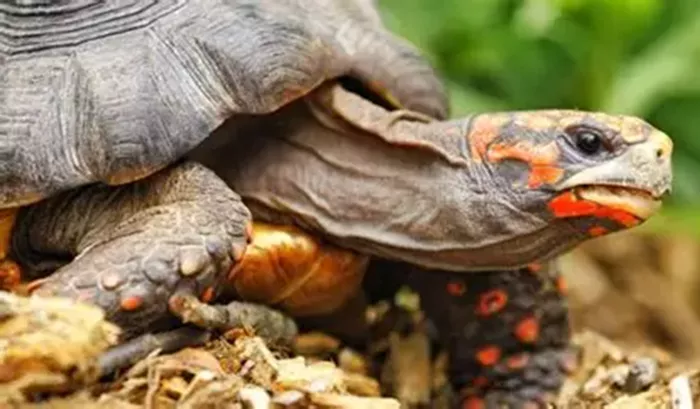
When you see a red-footed tortoise slowly moving through the grass, you might think it looks defenseless. It does not have sharp claws like a hawk, or teeth like a jaguar. So, the big question is: how does such a slow reptile survive in the wild full of predators? This question surprises many first-time reptile keepers and nature lovers. The answer is both simple and fascinating. The red-footed tortoise has developed several defense mechanisms that allow it to live safely in the tropical forests and grasslands of South America.
In this article, we will explore these strategies in detail. We will break them down in simple words, compare them with everyday examples, and explain why they work. You will see how the shell, behavior, colors, and even the slow lifestyle of this tortoise act like natural shields. If you are a reptile enthusiast, a pet owner, or simply curious about wildlife, this deep dive will not only give you knowledge but also admiration for this humble species.
Introduction to the Red-Footed Tortoise
The red-footed tortoise (Chelonoidis carbonarius) is one of the most recognizable tortoise species in South America. It gets its name from the red or orange scales that appear on its legs and sometimes on its head. Adults usually reach about 30–40 cm in length, although some can grow larger. They are commonly found in Venezuela, Brazil, Bolivia, and surrounding countries.
Unlike some reptiles that can escape predators with speed (like lizards that dart into cracks), the red-footed tortoise relies on a different survival strategy. Its body structure and behavior have evolved to match its slow lifestyle. That is what makes their defense system so interesting.
Before we look at each defense mechanism in detail, let’s remember this: survival in nature is not always about fighting or running. Sometimes, it’s about avoiding danger altogether or simply being too tough to eat. The red-footed tortoise is a perfect example of this principle.
The Shell: Nature’s Built-In Armor
The most obvious defense mechanism of the red-footed tortoise is its shell. You can think of the shell like a personal fortress. It is made of bone covered by keratin (the same material in human nails). This double structure makes it extremely strong.
Predators such as jaguars, large birds, or even dogs may try to bite or claw at the tortoise. However, the shell absorbs most of the impact. Imagine you are wearing a helmet made of steel when something falls from above. That helmet takes the blow and protects your head. In the same way, the shell keeps the tortoise’s vital organs safe.
How Strong Is the Shell?
Scientific measurements show that tortoise shells can withstand forces much higher than what most small predators can produce. For example, a red-footed tortoise shell can resist several hundred pounds of pressure. This means even if an animal bites hard, it may not succeed in breaking it.
The Design Advantage
The shape of the shell also matters. It is slightly domed, which distributes pressure more evenly—just like how an arch in architecture can hold more weight than a flat surface. This prevents cracks and makes it harder for predators to grip.
In short, the shell is the first line of defense and probably the most important. If you compare it with human life, it is like walking around with a permanent bulletproof vest.
Retraction: The Hiding Trick
Having a shell is useful, but the tortoise also knows how to use it properly. When danger approaches, the red-footed tortoise pulls its head, legs, and tail into the shell. This behavior is called retraction.
Think of it like pulling your hands inside a thick winter coat when it’s freezing outside. The tortoise hides every vulnerable part of its body so that a predator cannot easily reach it.
Some species of turtles have hinged shells that close completely like a box. The red-footed tortoise does not have this advanced feature, but it still reduces its exposed areas enough to discourage attackers.
Why Is Retraction Effective?
Most predators lose interest if they cannot quickly access soft tissue. For a jaguar or raccoon, spending too much time and energy on a hard shell is not worth the effort when easier prey is available. This is why “playing dead” or “being boring” can sometimes be the smartest strategy in the animal kingdom.
Camouflage and Coloration
At first glance, the red-footed tortoise does not seem camouflaged. Its legs and head show bright orange or red patches, which stand out. However, the rest of its shell is brown, black, or olive with lighter patterns. In the dappled light of the forest floor, this blends surprisingly well with leaves, soil, and shadows.
This kind of camouflage is called disruptive coloration. The bright spots break up the outline of the tortoise, making it harder for predators to recognize its shape. It is like wearing patterned clothes that blend into a crowd instead of a single-color shirt that makes you stand out.
Interestingly, the bright spots may also act as a warning signal. In nature, red or orange often means “danger” or “not tasty.” Even though the red-footed tortoise is not poisonous, predators may hesitate before attacking. This trick is called mimicry—pretending to be more dangerous than you really are.
Slow and Steady: A Defense in Itself
You might think being slow is a weakness. But for tortoises, it is part of their defense system. Moving slowly means they waste less energy and attract less attention. Predators often notice movement more than still shapes. If the tortoise freezes, it can blend with the environment and avoid being seen at all.
For example, if you have ever tried to spot a lizard sitting perfectly still on a tree trunk, you know how hard it is until it moves. The red-footed tortoise uses the same principle. Its calm lifestyle is not just about being lazy; it is about reducing risk.
Behavioral Defense: Staying Hidden and Alert
Besides physical defenses, behavior plays a big role. Red-footed tortoises spend much of their time under vegetation, inside burrows, or near logs. By keeping close to cover, they reduce their chances of being caught in the open.
They are also surprisingly alert for such slow reptiles. If they sense vibration or hear movement, they often stop eating and pull back slightly into their shells. Owners often notice this when approaching a pet tortoise—the animal freezes before relaxing again.
This “better safe than sorry” attitude helps them avoid surprise attacks. In the wild, being cautious is often the difference between survival and death.
Chemical Defense: The Scent Factor
While not as famous as skunks, red-footed tortoises can release a musky odor when threatened. This comes from glands near their cloaca (the opening used for both waste and reproduction). The smell is unpleasant and may deter small predators or at least make the tortoise seem less appealing.
Think about it this way: if you open a fridge and smell spoiled food, you quickly lose your appetite. The same idea applies here. For many predators, a smelly tortoise is not worth the trouble.
Size as a Shield
As red-footed tortoises grow, their size becomes another defense mechanism. A hatchling only a few centimeters long is vulnerable to birds, rodents, and snakes. But an adult, weighing 5–15 kg, is too large for most predators to swallow or carry away.
This is why survival rates increase dramatically once tortoises reach adulthood. Size, combined with the shell, makes them nearly untouchable to all but the largest predators like jaguars. Even then, jaguars often choose easier prey.
The Role of Longevity in Defense
Another fascinating fact is that red-footed tortoises can live for 40–50 years, and some even longer in captivity. Longevity itself is a kind of defense. Why? Because the longer an animal lives, the more chances it has to reproduce over its lifetime. Even if a few individuals fall to predators, the species as a whole survives because the survivors keep producing offspring for decades.
This strategy is called “bet-hedging” in ecology. Instead of trying to produce thousands of babies that mostly die young (like insects), tortoises invest in being long-lived and steady. It is another way nature balances survival.
Stories from Keepers and the Wild
Many reptile owners share stories of their red-footed tortoises withdrawing into shells when startled by pets or even by vacuum cleaners. One owner reported that his tortoise gave off a strong musky odor after being handled by a curious dog, which immediately lost interest.
In the wild, researchers in Brazil have observed jaguars attempting to bite tortoises, only to abandon them after several minutes of frustration. These real-life stories confirm that the defenses we discussed are not just theoretical—they work in practice.
Comparison with Other Reptiles
It is also useful to compare the red-footed tortoise with other reptiles. Snakes often rely on venom, lizards may drop their tails, and crocodiles fight aggressively. Tortoises, on the other hand, are masters of passive defense. They simply make themselves too tough or unappealing to bother with.
This diversity in reptile defense mechanisms shows how evolution finds many different solutions to the same problem: avoiding predators. The red-footed tortoise stands out because it relies on patience and toughness rather than aggression.
Conclusion
So, what is the defense mechanism of the red-footed tortoise? It is not just one thing but a combination of strategies. The shell is the most visible shield, but camouflage, retraction, chemical odor, cautious behavior, and sheer size all play roles. Together, they create a survival package that allows this reptile to thrive despite being slow and seemingly vulnerable.
The next time you see a red-footed tortoise in the wild or in captivity, remember that behind its calm appearance lies a carefully crafted set of defenses. It is living proof that survival does not always require speed or aggression. Sometimes, being tough, patient, and cautious is the ultimate weapon.
Related topics: