
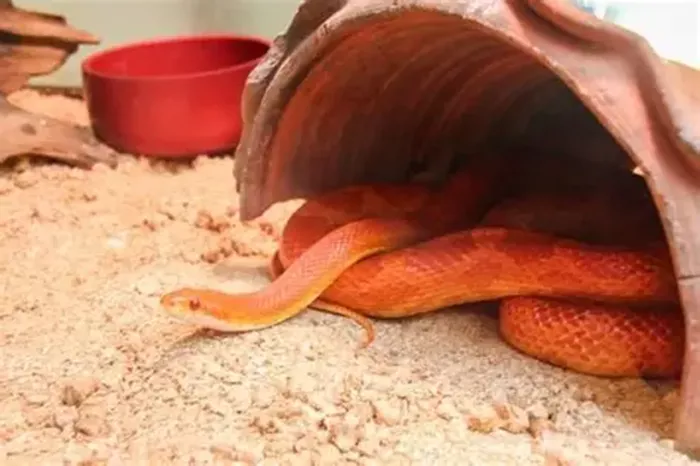
Corn snakes, also known as Pantherophis guttatus, are some of the most popular pet snakes worldwide. With their stunning color patterns and calm demeanor, they have captured the hearts of many reptile enthusiasts. But there’s a question that often lingers in the minds of new owners: Are corn snakes smart?
At first glance, these snakes may not seem like the sharpest creatures. After all, their primary instinct is to hunt, slither, and survive, right? But is there more to their intelligence than meets the eye? In this article, we’ll explore the cognitive abilities of corn snakes, their learning capabilities, and how they interact with their environment. By the end, you’ll understand the depths of their intelligence, whether you’re a new snake owner or a seasoned reptile enthusiast.
What Does “Smart” Mean for Reptiles?
Before diving into whether corn snakes are smart, let’s first clarify what we mean by “smart.” In the animal kingdom, intelligence doesn’t look the same for all species. For mammals, it may involve problem-solving, emotional connection, or social interaction. But for reptiles like corn snakes, intelligence is often linked to survival skills, memory, and adaptability.
For example, when a corn snake successfully finds its prey or navigates its enclosure, it’s using a form of problem-solving. It’s not the same as a dog solving a puzzle or a chimpanzee using tools, but it’s a kind of intelligence adapted to its environment.
Instinct vs. Intelligence
In reptiles, much of what appears to be “intelligent behavior” is driven by instincts. Instincts are hardwired, automatic behaviors that help an animal survive. For instance, a corn snake’s ability to sense its prey through vibrations and its instinct to constrict its prey are natural behaviors that do not require learning.
However, intelligence in animals is often more than just instinct. It can involve learning from experience, adapting to new environments, or even using simple tools. While corn snakes may not engage in the complex behaviors seen in some mammals, they do exhibit intelligence through their ability to interact with their surroundings and make decisions that enhance their survival.
The Learning Capabilities of Corn Snakes
Although corn snakes may not perform tricks or follow commands like dogs, they are capable of learning. In fact, one of the key components of reptile intelligence is their ability to learn from experience. Let’s break this down further.
Learning by Association
Corn snakes can learn through associative learning. This means they can connect certain cues with outcomes. For instance, if you regularly feed your corn snake at a particular time each day, the snake will eventually learn to associate that time with food. It may become more active as the feeding time approaches, anticipating the reward. This type of learning, known as classical conditioning, is something that corn snakes share with many other reptiles.
Environmental Awareness
Corn snakes are highly aware of their environment. They can remember the layout of their enclosure, including hiding spots and basking areas. If you rearrange the decor or move their hides, they may take some time to adjust. This is because they are using spatial memory to navigate and feel secure in their space. Such spatial awareness indicates a level of cognitive processing beyond basic instinct.
Problem Solving
Although corn snakes aren’t known for solving puzzles, they do show problem-solving abilities in other ways. For example, if a corn snake encounters a barrier, it may try different strategies to get around it, such as climbing, burrowing, or slithering over it. This type of problem-solving shows that the snake can think creatively within the constraints of its environment.
Learning by Trial and Error
Like many animals, corn snakes can also learn through trial and error. If they encounter something new in their enclosure, such as a new type of food or a new object, they may initially investigate it with caution. Over time, they will figure out what is safe and what is not, learning through experience.
Corn Snake Behavior and Interaction with Humans
One of the fascinating aspects of corn snake intelligence is their ability to interact with humans. While they are not as social as dogs or cats, corn snakes do exhibit certain behaviors that suggest they recognize their owners and can respond to human presence.
Recognition of Owners
Corn snakes are capable of recognizing their owners by scent and routine. Many snake owners report that their corn snakes become more active and curious when they approach the enclosure. This behavior is a form of recognition. Although they may not form emotional bonds in the way mammals do, corn snakes can recognize who handles them and may behave differently depending on past interactions.
Handling and Tolerance
Corn snakes are generally calm and tolerant of handling, making them great pets for first-time reptile owners. However, some corn snakes may display more tolerance than others. This could be linked to past experiences—snakes that have been handled regularly tend to show less stress and more interest in human interaction. Over time, they may even become accustomed to being handled in certain ways, showing that they can learn from their experiences.
Stress and Comfort Levels
Corn snakes are creatures of habit. They can become stressed if their environment is suddenly altered in ways that they don’t understand. For instance, a change in temperature or lighting can cause them to hide more or become inactive. This shows that corn snakes are aware of their surroundings and can adapt to changes, but they may take time to learn how to cope with those changes.
The Complexity of Snake Intelligence: Are Corn Snakes the Exception?
Corn snakes are not the most intellectually complex reptiles, but they do exhibit a range of intelligent behaviors that go beyond simple instincts. When compared to other reptiles, corn snakes are relatively advanced in terms of their ability to learn from experience, adapt to new environments, and interact with their human caregivers.
However, it’s essential to understand that reptile intelligence is different from that of mammals. Reptiles, including corn snakes, are often driven by survival instincts more than curiosity or social interaction. Their intelligence is more focused on self-preservation, finding food, and avoiding danger.
Do Corn Snakes Show Emotional Intelligence?
One of the most debated aspects of animal intelligence is emotional intelligence—the ability to perceive, understand, and respond to emotions. While corn snakes don’t exhibit emotional intelligence in the way mammals or even birds might, they do show stress responses, such as increased hiding when they feel threatened. This shows that they have a basic understanding of their emotional state, but it is very different from the complex emotions seen in higher animals.
Are Corn Snakes as Smart as Other Reptiles?
When comparing corn snakes to other reptiles, they are not necessarily the smartest. However, they rank higher than many other snakes when it comes to their ability to learn and adapt. For example, species like ball pythons or boa constrictors tend to be less interactive and more passive in their behavior. In contrast, corn snakes are more likely to explore their environment and show interest in their surroundings, suggesting a higher level of environmental awareness.
Conclusion
In conclusion, while corn snakes may not possess the same level of intelligence as mammals, they are far from “dumb.” These reptiles demonstrate a range of intelligent behaviors, including learning from experience, remembering their environment, and interacting with their human caregivers in meaningful ways. Their intelligence is centered around survival and adaptation, with the ability to recognize patterns, navigate their surroundings, and adjust to changes.
Corn snakes may not be able to solve puzzles or follow commands, but they are certainly capable of learning and adapting to their environment. Their behavior shows that, like many other animals, they are more complex than we might initially think.
Related topics: