
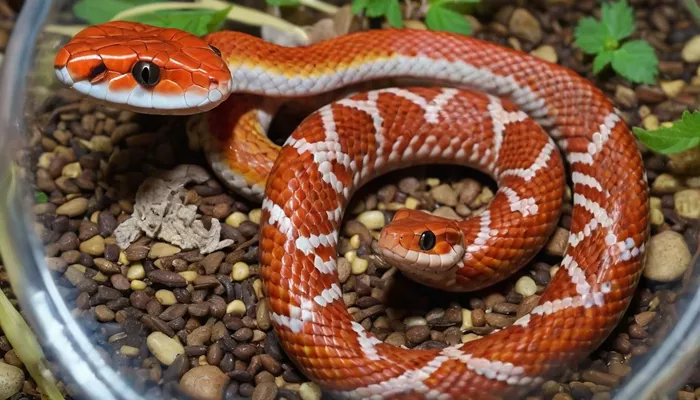
So, you’ve decided to bring a corn snake into your home—awesome! But now, you might be wondering: what does your new snake buddy need to feel comfortable and happy in its new cage? Let’s cut to the chase: setting up a perfect environment is key to keeping your corn snake healthy and stress-free.
Corn snakes are fairly easy to care for, but like any pet, they do need a few specific things in their habitat to thrive. Imagine their cage as their “home,” and just like we need a cozy space with the right temperature, food, and comfort, your snake needs the same. Keep reading to learn everything you need to know about what to include in your corn snake’s cage, from temperature and humidity to substrate and hiding spots.
Why the Right Setup Matters?
Before diving into the specifics, let’s talk about why a properly set up cage is so important. Corn snakes are sensitive creatures, and their health depends on a comfortable living environment. A poorly set up cage can lead to stress, illness, and even a shorter lifespan. But don’t worry! With a bit of knowledge and the right supplies, you can create a space where your corn snake will feel at home and thrive.
1. Cage Size and Type: More Space for Happiness
What Size Cage Does a Corn Snake Need?
First things first—let’s talk about size. Your corn snake needs room to stretch out and explore. A good rule of thumb is that the cage should be at least one and a half times the snake’s length. For example, if your snake is 4 feet long, aim for a cage that’s at least 6 feet in length. While corn snakes don’t need an enormous enclosure, they do need one that gives them enough space to move around comfortably.
For juvenile corn snakes, a 20-gallon tank is often sufficient. As they grow, you’ll need to upgrade to a larger space. Most adult corn snakes thrive in 40-gallon tanks or larger. The more room, the better!
Tank or Terrarium: What’s the Difference?
When it comes to choosing a cage, you’ll generally be looking at two options: a tank or a terrarium. Tanks are great for beginners because they’re affordable, easy to clean, and secure. If you’re looking to create a more visually stunning habitat, a terrarium may be the way to go. They offer excellent ventilation and can look like a slice of the wild, making your corn snake’s cage feel more natural.
2. Temperature and Heating: Your Snake’s Personal Climate
Corn Snake Temperature Needs
Corn snakes, like most reptiles, are cold-blooded. This means they rely on external heat sources to regulate their body temperature. In the wild, they bask in the sun or hide in warmer spots to maintain their heat levels. In your home, you’ll need to replicate this with a heating system in their cage.
What’s the Right Temperature?
Corn snakes need a temperature gradient—this means there should be a warmer side and a cooler side to their cage. The warm side should be between 80-85°F (27-29°C), and the cool side should be between 70-75°F (21-24°C). During the night, temperatures can drop slightly, but they shouldn’t fall below 65°F (18°C).
To achieve this, use a heat mat or a ceramic heat emitter (CHE). Heat mats are placed under the cage, while CHEs can be installed on the ceiling or side of the tank. Be sure to monitor the temperature regularly with a reliable thermometer to ensure it stays within the ideal range.
Don’t Forget the Basking Spot
Create a basking spot by placing a heat source on one side of the cage. This allows your snake to warm up when needed. Just like you enjoy a warm spot to relax, your corn snake loves its basking area!
3. Humidity: The Right Balance for Health
Why Is Humidity Important for Corn Snakes?
While corn snakes aren’t as sensitive to humidity as some other species, they still need a balanced level. If the humidity is too low, your snake may have trouble shedding its skin, a process called “ecdysis.” Too high, and you may encourage the growth of mold or bacteria, which can lead to respiratory problems.
Ideal Humidity for Corn Snakes
Aim for a humidity level of around 40-50%. To achieve this, you can use a hygrometer to monitor the moisture level. During shedding, you may want to increase the humidity a bit to around 60%. You can do this by lightly misting the cage or adding a shallow water dish.
It’s important to provide good ventilation in the cage to prevent the humidity from getting too high or causing mold. If you notice excessive moisture, consider adjusting the water dish or ventilation.
4. Substrate: A Cozy Bed for Your Snake
What Is the Best Substrate for Corn Snakes?
Substrate refers to the material you use to cover the bottom of your snake’s cage. It serves several purposes: comfort, humidity control, and even a bit of enrichment for your snake. The right substrate allows your corn snake to burrow and feel secure while maintaining a clean environment.
Good Substrate Options
Aspen Shavings: One of the best options for corn snakes. It’s absorbent, easy to clean, and provides a good surface for burrowing.
Coconut Husk: Another great option that helps retain humidity and looks natural.
Reptile Carpet: This can be a good choice if you prefer something reusable. It’s easy to clean and doesn’t create a mess, but your snake won’t have the same burrowing experience.
Avoid using sand or cedar wood shavings, as they can irritate your snake’s respiratory system.
5. Hiding Spots: Secure and Safe
Why Does Your Snake Need Hiding Spots?
Corn snakes are naturally shy creatures. They feel safest when they can hide, especially after eating or during shedding. In the wild, they often hide in crevices or burrows, so it’s crucial to provide a similar experience in captivity.
What Type of Hiding Spots Are Best?
Caves and Hide Boxes: These are essential. Place one on the warm side of the cage and another on the cool side. The hide on the warm side allows your snake to rest comfortably after basking, while the one on the cool side gives your snake a place to retreat when it needs a break from the heat.
Plants and Branches: Adding some fake plants or branches to the cage can make your snake feel more at home. These provide additional hiding spots and give your snake some enrichment to explore.
6. Water Dish: Essential for Hydration
How Much Water Does a Corn Snake Need?
Corn snakes drink water regularly. Make sure to provide a shallow water dish that’s large enough for your snake to drink from but not so large that your snake could accidentally drown in it.
Change the water daily to keep it fresh. A clean water source is essential for your snake’s overall health, so don’t skip this step!
7. Lighting: Not Just for Show
Does a Corn Snake Need Light?
Corn snakes don’t require special UVB lighting like some reptiles, but they do need a regular day-night cycle. This helps them maintain their natural rhythm and feel secure. Use a standard light bulb to create a day/night cycle, ensuring that the light is on for about 12-14 hours each day.
If you’re using a heat mat, it should be on 24/7, but the lighting can be on a timer to simulate natural day and night conditions.
8. Feeding: How to Feed Your Corn Snake
What Do Corn Snakes Eat?
Corn snakes are carnivorous and primarily eat small rodents, such as mice or rats. You can feed your snake pre-killed or frozen-thawed rodents, as live feeding can be dangerous for both the snake and the prey. Make sure to feed your corn snake about once every 5-7 days, depending on its age and size.
9. Cage Maintenance: Keeping the Habitat Clean
How Often Should You Clean Your Corn Snake’s Cage?
A clean cage is a happy cage! Spot-clean the substrate daily by removing any waste, and give the entire enclosure a full clean every 2-4 weeks. Change the substrate completely and scrub the surfaces to ensure everything stays hygienic.
Conclusion: Building the Best Home for Your Corn Snake
By now, you should have a good idea of what your corn snake needs in its cage. A proper environment will keep your snake healthy, active, and content. Remember, the basics are key: good temperature, proper humidity, hiding spots, and clean water. With these essentials in place, you’re well on your way to becoming a great snake owner. Your corn snake will thank you for it!
Related topics: