
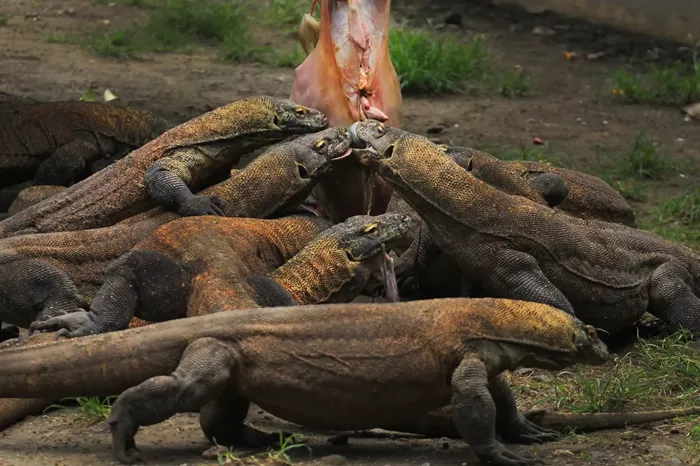
Komodo dragons are truly magnificent creatures. With their massive size, intimidating presence, and legendary hunting skills, they are considered some of the most powerful predators on the planet. But how do these ancient reptiles track, hunt, and capture their prey? In this article, we will explore the fascinating hunting techniques of Komodo dragons, revealing the intricate strategies that make them formidable hunters.
The Komodo Dragon: A Quick Overview
Before we dive into the specifics of how Komodo dragons hunt, let’s first take a moment to understand who they are. Native to the Indonesian islands of Komodo, Rinca, and Flores, Komodo dragons are the largest living species of lizard. They can grow up to 10 feet in length and weigh over 300 pounds, making them the kings of their domain.
These reptiles are not just large; they are apex predators. With a strong sense of smell, powerful jaws, and a cunning hunting strategy, they dominate their environment. But what makes them truly fascinating is their unique hunting method, which combines patience, stealth, and powerful physical traits.
How Komodo Dragons Hunt: Patience and Stealth
If you’ve ever watched a nature documentary, you know that Komodo dragons don’t rush their meals. Unlike lions or cheetahs that rely on speed and power to catch their prey, Komodo dragons are masters of patience.
The Waiting Game: Stealth and Ambush
Imagine being a hunter who doesn’t rush to grab your prey. Instead, you sit quietly, blending into the environment, waiting for the perfect moment to strike. That’s exactly how a Komodo dragon hunts. These creatures often use the element of surprise to their advantage, lurking in the shadows or on elevated ground, waiting for an unsuspecting animal to wander too close.
Their hunting technique resembles that of a predator in the wild who relies on ambush rather than pursuit. They don’t need to chase down prey because they use their incredible patience to wait until the right opportunity arises.
Tracking Prey with the Tongue
One of the most fascinating aspects of a Komodo dragon’s hunting technique is its sense of smell. Komodo dragons have an extraordinarily keen sense of smell, which they use to track prey over long distances. They don’t just use their nose like we would. Instead, they flick their forked tongue in and out, capturing scent particles from the air. This behavior, known as “flicking”, allows them to detect the presence of prey from miles away.
You can think of it like how a bloodhound uses its nose to track a scent trail. The Komodo dragon’s tongue acts as a tool that helps it interpret its environment and locate potential meals. When the dragon catches the scent of an animal, it can follow that trail, eventually getting close enough to launch its attack.
The Komodo Dragon’s Bite: A Deadly Weapon
Once a Komodo dragon has located its prey, it uses its deadly bite to subdue the animal. But it’s not just any bite—it’s a bite with a twist. Komodo dragons have specialized teeth and powerful jaws that allow them to inflict severe damage. But there’s something else that makes their bite especially dangerous.
Venom: The Hidden Killer
For years, scientists believed that Komodo dragons killed their prey with brute force alone. However, recent studies have revealed something even more sinister. Komodo dragons actually have venomous saliva. This saliva contains a combination of toxins that can cause shock, paralysis, and blood poisoning in their prey. When a Komodo dragon bites its victim, the venom works quickly, shutting down the animal’s body.
Imagine being bitten by something so powerful that within minutes, your body starts to shut down—this is the fate of most animals that cross a Komodo dragon’s path. The venom makes it almost impossible for prey to escape once bitten, ensuring that the dragon gets its meal. Even large animals like deer or wild boar don’t stand a chance.
Post-Strike Behavior: Following the Scent
What happens after the initial bite? Unlike many other predators, Komodo dragons don’t immediately finish off their prey. Instead, they use a strategy called “tracking”. Once the victim has been bitten and the venom begins to work, the Komodo dragon simply follows the scent trail left behind by its dying prey.
In some cases, the Komodo dragon may have to wait hours—or even days—before the animal succumbs to the venom. This technique allows the dragon to track the injured animal over long distances. Once the prey collapses, the dragon pounces and finishes the job.
A Unique Group Hunt: Komodo Dragons and Cooperation
Komodo dragons are mostly solitary hunters, but there are instances where they may work together to catch larger prey. In these rare group hunts, dragons may coordinate their efforts to chase down larger animals, such as wild boars or even water buffalo. However, these group hunts are not the norm, and most Komodo dragons prefer to hunt alone.
The Komodo Dragon’s Hunting Impact on the Ecosystem
Komodo dragons play a critical role in their ecosystem as apex predators. By hunting a wide range of prey, including deer, wild boar, and smaller reptiles, they help keep the population of other species in check. This hunting behavior helps prevent overgrazing of vegetation and ensures that the balance of the ecosystem remains intact.
In fact, Komodo dragons are so important to their environment that their presence is crucial for maintaining the health of the entire food chain. Without them, smaller predators could overpopulate, leading to an imbalance that would negatively impact the entire ecosystem.
Conclusion
Komodo dragons are truly one of nature’s most awe-inspiring predators. From their patient stalking and venomous bite to their ability to track and follow prey, they are a model of efficiency and power in the animal kingdom. Their unique hunting techniques ensure they remain at the top of the food chain, and their role in maintaining ecological balance cannot be overstated.
If you ever find yourself lucky enough to witness a Komodo dragon in action, consider yourself in the presence of one of nature’s most remarkable predators. Their hunting skills are not just about brute force—they’re about strategy, patience, and a deep understanding of their environment. These traits make them an iconic symbol of survival in the harsh world of the reptilian kingdom.
Related topics: