
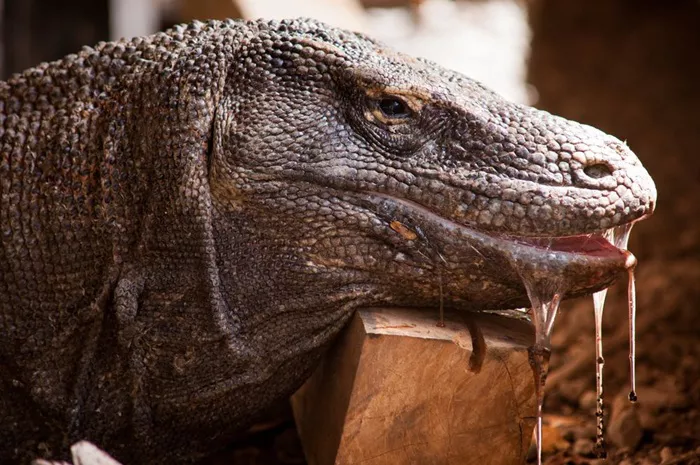
When you think of a Komodo dragon, the first thing that probably comes to mind is their immense size, power, and the fact that they’re one of the few apex predators still roaming the earth today. But have you ever wondered how such a mighty creature manages to digest its meals, often including large prey like deer and water buffalo? The process is fascinating and unique. In this article, we’ll delve deep into the digestive system of the Komodo dragon, uncovering its impressive digestive process, and understanding how it manages to digest such large and difficult meals.
The Digestive Power of a Komodo Dragon: A Sneak Peek
Komodo dragons are not only skilled hunters but also masters of digestion. They can consume massive amounts of meat in one sitting—sometimes up to 80% of their body weight—and yet their bodies process this food slowly. This slow and deliberate digestion is key to their survival. Understanding how they digest can help us appreciate the complexity of their evolutionary design.
Before diving into the details, let’s look at a fundamental question: What makes the Komodo dragon’s digestive system so effective at processing large meals? The answer lies in its stomach, enzyme secretion, and a bit of help from bacteria.
Komodo Dragons’ Stomach: A Unique Organ of Digestive Might
Komodo dragons have a powerful stomach, which is both a muscular organ and a chemical powerhouse. When the dragon eats, its stomach works similarly to a pressure cooker, breaking down the food through both mechanical and chemical means.
Stomach Structure:
The stomach of a Komodo dragon is highly acidic, with a pH similar to that of hydrochloric acid, which is vital for breaking down tough, fibrous tissues like those found in the skins and muscles of their prey. This acidity helps break down the protein and other nutrients they consume.
It’s a bit like how vinegar can break down the cell walls of vegetables, making them tender, only much stronger and more specialized. Imagine you’re boiling a tough piece of meat—you would add heat and some vinegar to soften it up. For the Komodo dragon, their stomach does this naturally, using acid.
Digestive Enzymes:
After the stomach acid starts breaking down the food, digestive enzymes further assist in the process. These enzymes are like tiny workers that break down proteins, fats, and carbohydrates, making nutrients available for absorption into the bloodstream. The Komodo dragon’s stomach has an impressive ability to process large meals slowly, allowing it to efficiently extract nutrients over time. This is why, after feasting, a Komodo dragon can go without eating for weeks.
Komodo Dragons and Their Slow Digestion: What Makes It Special?
Unlike humans or many other animals that have relatively quick digestive processes, Komodo dragons take their time. Their digestion process is much slower, sometimes taking weeks for them to fully digest a large meal.
Why the Slow Pace?
Komodo dragons are cold-blooded reptiles, which means their metabolism is slower compared to warm-blooded animals. The slower metabolic rate results in a slower digestive process. For instance, while a human might digest a meal in about 24-48 hours, a Komodo dragon might take several days—or even weeks—for the food to pass through their system.
Think of it like how a slow cooker works. Instead of cooking food in a few hours, a slow cooker takes several hours, slowly breaking down and tenderizing tough cuts of meat. The Komodo dragon’s digestive system acts similarly, letting it break down its food at a pace that suits its needs.
Digesting Large Prey:
When a Komodo dragon eats a large animal, like a deer, the process becomes even more interesting. These animals are big, and a Komodo dragon can eat them in one sitting, sometimes consuming up to 80% of its body weight. But because it’s such a large meal, the digestion can be sluggish. The Komodo dragon’s stomach can expand to accommodate the meal, and its slow metabolism ensures that the nutrients are extracted over a long period.
Analogous Example:
Think about how a bear might hibernate through winter, storing up fat and energy. When a Komodo dragon eats, it’s essentially “storing” a large meal, allowing its digestive system to work on it over an extended period. This is one of the reasons why Komodo dragons don’t need to eat daily; their bodies are designed to go without food for extended periods while still digesting the large meals they’ve consumed.
Bacterial Help: The Hidden Digestive Helpers
Komodo dragons owe a lot of their digestive prowess to the bacteria in their stomachs. These bacteria are capable of breaking down large and tough substances in prey that even the dragon’s acidic stomach can’t handle alone.
The Role of Bacteria:
Komodo dragons are known to have a host of digestive bacteria in their stomach that break down tough collagen and other fibrous tissues in their prey. These bacteria help the Komodo dragon process large amounts of meat and other organic matter that would otherwise be too tough for its stomach acid to break down.
Just as your gut uses bacteria to help digest fiber and certain foods, the Komodo dragon’s stomach relies on these bacteria to ensure that it can fully process the meal. It’s a mutualistic relationship—without these bacteria, the dragon wouldn’t be able to digest such large and tough meals effectively.
Scientific Discoveries:
In recent years, scientists have discovered that Komodo dragons have a particularly strong strain of bacteria in their gut, which helps them break down meat that would be nearly impossible for other predators to consume. These bacteria essentially “help” the dragon by breaking down parts of the prey that even their strong stomach acid can’t handle, making digestion even more efficient.
The Intestinal Process: Absorbing Nutrients and Energy
After the food is processed in the stomach, it moves into the intestines, where the majority of nutrient absorption occurs. In this part of the digestive system, the broken-down food is absorbed into the bloodstream, where it is transported to various organs for energy and growth.
Small Intestine:
The small intestine of a Komodo dragon works in a similar way to that of other reptiles, like lizards and snakes. The food is broken down further, and nutrients like sugars, proteins, and fats are absorbed into the bloodstream. The walls of the small intestine are lined with villi, which increase the surface area for absorption.
Large Intestine:
Any remaining waste moves into the large intestine, where water is reabsorbed, and any leftover material is prepared for excretion. The large intestine of a Komodo dragon, like in many other animals, helps conserve water, which is vital in the dry environments they inhabit.
Komodo Dragon’s Ability to Survive Without Food: An Evolutionary Masterstroke
One of the most remarkable aspects of a Komodo dragon’s digestive system is its ability to go without food for extended periods, sometimes up to a month. This is largely due to the slow digestion process and their ability to store large amounts of energy from a single meal.
Adaptation to Scarcity:
Komodo dragons live on islands where food can be scarce, especially during the dry season. Their ability to digest large meals slowly and survive without food for extended periods is a critical survival trait. It allows them to go days—or even weeks—without having to hunt again. This is a remarkable evolutionary adaptation that has helped Komodo dragons thrive in a harsh environment.
Conclusion
The digestive process of the Komodo dragon is an intricate and impressive system that has evolved to allow these magnificent creatures to survive in tough conditions. Their ability to consume large prey and digest it slowly over time, with the help of strong stomach acids and helpful bacteria, makes them one of nature’s most formidable predators.
Their digestive system is not just about survival, but it’s an evolutionary advantage that ensures they can go without food for weeks, making the most of every meal. It’s a perfect example of how nature works in mysterious and efficient ways.
Related topics: