
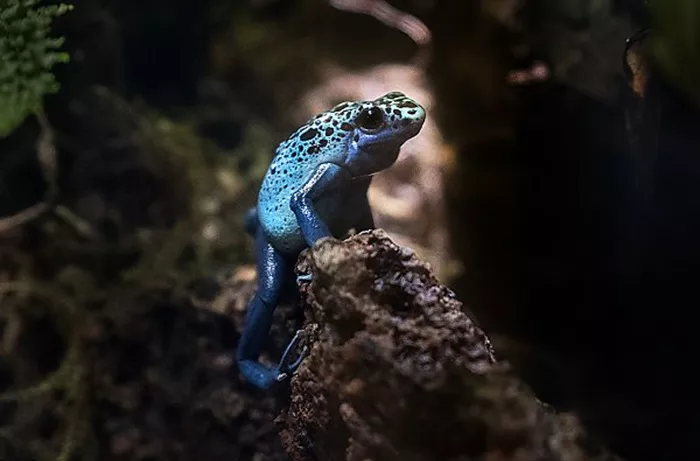
Blue poison dart frogs, scientifically known as Dendrobates tinctorius “azureus”, are a vibrant species that captivate both enthusiasts and researchers alike. These frogs, native to the rainforests of Suriname in South America, have evolved remarkable adaptations that help them thrive in their unique environment. From their striking colors to their survival strategies, these adaptations allow the frogs to navigate a world full of challenges, from predators to harsh climates. So, how do they manage to live and survive in such an environment? Let’s dive into the core of their fascinating survival mechanisms.
Introduction: A Stunning Survival Story
Imagine walking through the humid, dense rainforest, surrounded by tall trees, thick underbrush, and the constant hum of wildlife. Amongst this natural beauty, you might spot a flash of bright blue — a blue poison dart frog. These little creatures, barely 4.5 cm (1.8 inches) long, seem out of place in their stunning color, but in reality, this vibrant blue hue is their ticket to survival. They have evolved to survive in one of the most competitive ecosystems on Earth.
Their survival is a true testament to nature’s ingenuity. Through their colorful appearance, unique behaviors, and physical features, they have adapted to the harsh conditions of the rainforest in ways that are both amazing and sometimes difficult to comprehend. Ready to learn how they do it?
1. Bright Colors: Warning to Predators
The most obvious feature of the blue poison dart frog is its striking, vibrant blue color. But why such a bold color? The blue serves as a warning signal to potential predators. This is known as aposematism — a survival tactic where an animal uses bright colors to signal danger, in this case, its toxicity.
Think of it this way: If you’ve ever seen a wasp or a brightly colored snake, you know that the color tells you to stay away. For the blue poison dart frog, its blue skin is a neon sign that screams, “I’m toxic!” If you were a hungry bird or reptile, you’d think twice before nibbling on one of these frogs, thanks to its intense color signaling the presence of potent toxins.
2. Toxic Skin: A Natural Defense Mechanism
You might be wondering: How does this little frog manage to be so toxic? The answer lies in its diet. These frogs do not produce the toxins themselves. Instead, they “sequester” or “store” toxins from the insects and other small creatures they consume. Specifically, they obtain pumiliotoxins from ants, mites, and termites. These compounds are stored in their skin and can paralyze or even kill predators that attempt to eat them.
In the wild, this is a perfect defense mechanism. The more toxic the frog, the fewer animals will dare to eat it. However, the toxicity of captive blue poison dart frogs is much lower because they are often fed a different diet — one that doesn’t contain these toxic insects. So, in captivity, the frogs lose their deadly weapon. Still, they retain their stunning blue coloration, which continues to serve as an effective deterrent.
3. Small Size: Perfect for Camouflage
While it may seem that the frog’s bright colors would make it an easy target, their small size plays a crucial role in their survival. Blue poison dart frogs are relatively small, with females reaching up to 4.5 cm (1.8 inches), while males are slightly smaller. Their small size allows them to hide in crevices, under leaves, and in the moist undergrowth of the rainforest.
This ability to hide is especially important when faced with larger predators, such as birds, snakes, or larger mammals. Despite their vivid blue appearance, these frogs are masters of hiding in plain sight, blending in with the natural environment. They often perch on leaves, rocks, or the forest floor, their blue bodies standing out just enough to send predators a clear signal: “Don’t mess with me.”
See Also: Who Threatens the Blue Poison Dart Frog? Discover Its Natural Enemies
4. Strong Territorial Instincts
Blue poison dart frogs are fiercely territorial. They exhibit aggressive behaviors when defending their homes, whether it’s a rock, a patch of ground, or even a specific leaf. Their territorial nature helps reduce the competition for resources, such as food and mates. The males will engage in loud calls, chase intruders, and sometimes even wrestle to establish dominance. These behaviors ensure that only the strongest frogs get access to the best territories.
Interestingly, their territorial calls are unique to each frog, and their individual vocalizations help establish their personal space in the dense rainforest. So, when you hear a male frog calling out in the wild, you’re hearing its way of saying, “This is my space. Keep out!”
5. Diet and Poison: How It All Ties Together
As mentioned earlier, the blue poison dart frog’s toxins are linked to its diet. But it’s not just about survival in the face of predators; their diet also helps them thrive in an environment where food sources can be scarce. In the wild, these frogs are insectivores. They primarily eat ants, termites, beetles, and other small invertebrates.
The more variety in their diet, the more potent their toxicity becomes. This ability to metabolize toxic substances from their prey is a key adaptation to living in the rainforest, where they have to compete with other species for food. Their diet is a balancing act: eat the right insects to survive and maintain toxicity, but not too much to go overboard.
6. Reproduction: A Seasonal Ritual
The reproduction cycle of the blue poison dart frog is tied closely to the seasonal rains of the rainforest. During the rainy season, which typically occurs from December to March, the frogs breed. Males call out to attract females, and after mating, females lay eggs in moist, sheltered areas, such as under leaves or in small depressions in the ground. Once the eggs hatch, the male frog carries the tadpoles to water sources, like bromeliad pools, where they continue to develop.
This reliance on water sources for the tadpoles is another clever adaptation. The tiny pools in the rainforest provide a safe and isolated environment where the tadpoles can grow without the threat of larger predators. This life cycle strategy helps maximize the survival of their offspring in an environment full of dangers.
7. Adaptations to Environmental Challenges
The blue poison dart frog’s environment presents a number of challenges. The rainforest is humid, dense, and full of dangers, from predators to competition for resources. To survive in such a place, these frogs have developed some key physiological adaptations that help them thrive.
For example, their skin is moist and permeable, which allows them to absorb water directly from the air and surrounding environment, an essential trait for amphibians. This adaptation helps them maintain hydration and survive in the humid, wet conditions of the rainforest, where rain is frequent, but dry spells still occur.
Conclusion
The blue poison dart frog is a living example of how nature can craft amazing creatures that are perfectly suited to their environment. From their dazzling colors and potent toxins to their territorial behaviors and diet, these frogs have evolved numerous strategies to not just survive but thrive in one of the world’s most challenging ecosystems.
Related topics: