
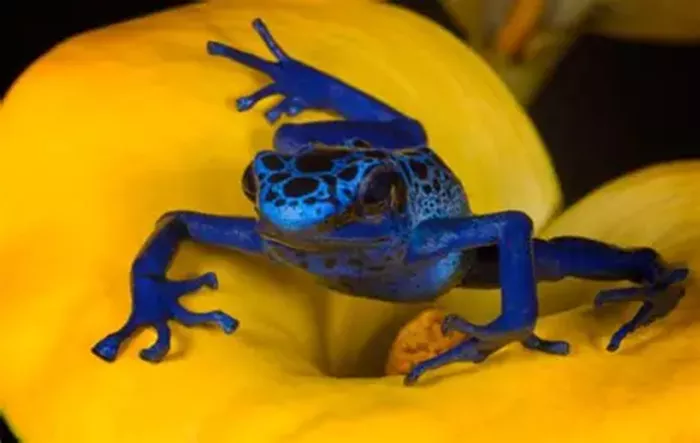
The blue poison dart frog, known scientifically as Dendrobatoides tinctorius azureus, is one of the most striking amphibians on the planet. Its bright blue coloration is a warning to predators that it is highly toxic. These small creatures, which hail from the rainforests of Suriname and parts of the Amazon Basin, have intrigued both scientists and enthusiasts alike for years. But what about their anatomy? One of the most common questions asked about these fascinating creatures is whether they have teeth. Let’s dive in and explore the truth behind this query, uncovering more about the biological wonders of blue poison dart frogs.
The Anatomy of a Blue Poison Dart Frog
Before addressing the question of teeth, it’s important to understand the anatomy of the blue poison dart frog. These frogs are small, typically measuring between 2 to 4 centimeters in length, and are most famous for their vibrant blue color, which can vary from bright sky blue to deep indigo. Their skin secretes potent toxins, making them one of the most poisonous creatures on Earth.
The body of a blue poison dart frog is finely adapted to its environment. Its powerful hind legs help it leap away from danger, and its skin provides a means of defense by secreting toxic compounds like batrachotoxin, which is harmful to most predators. But how do these tiny frogs feed, and do they need teeth to survive?
The Role of Teeth in Frogs: Do They Need Them?
When we think of teeth, we usually picture carnivorous animals that need them for hunting, chewing, and breaking down food. But frogs are different. Unlike humans, frogs do not need teeth to chew their food. In fact, most frogs, including the blue poison dart frog, do not use their teeth for eating. So, do blue poison dart frogs have teeth? The short answer is: No, they do not.
Frogs, in general, have very different dietary and feeding habits compared to mammals. They are known for being opportunistic feeders, meaning they will eat whatever is readily available and suitable for their size. Blue poison dart frogs primarily feed on small invertebrates like ants, termites, and small beetles, which they catch with their long, sticky tongues.
Instead of teeth, frogs like the blue poison dart frog have a specialized tongue that allows them to catch prey with incredible precision. The tongue is not only sticky but also quick, allowing the frog to snatch insects from a distance.
Why Don’t Blue Poison Dart Frogs Need Teeth?
To understand why blue poison dart frogs don’t need teeth, we need to look at their eating habits in greater detail. Unlike carnivores, which need to tear and chew their food into smaller pieces, blue poison dart frogs ingest their food whole. Their prey, such as ants and termites, is small and soft enough that they can swallow it whole without needing to break it down with teeth.
The absence of teeth is not an evolutionary disadvantage for these frogs. Their feeding strategy is all about efficiency. Their long tongues, combined with their quick reflexes, allow them to catch and swallow their prey with ease.
In fact, their digestive system is designed to process whole insects without the need for chewing. Their stomachs and intestines are able to break down the food without the aid of teeth. This allows them to spend more time focusing on hunting and less time chewing their meals.
Teeth in Other Frog Species: A Closer Look
While blue poison dart frogs do not have teeth, some other frog species do. For example, the Ceratophrys genus, known as horned frogs, has small teeth-like structures that help them hold onto their prey. However, these frogs have a very different feeding strategy compared to the blue poison dart frog. Horned frogs are ambush predators that wait for their prey to come to them, whereas the blue poison dart frog actively hunts for insects with its specialized tongue.
In comparison, most frogs, including the blue poison dart frog, have very limited or no teeth at all. The reason for this varies, but it mainly comes down to the fact that frogs do not need teeth to survive in their environments. Instead, they rely on their tongues and digestive systems to handle the food they consume.
Do Blue Poison Dart Frogs Ever Use Their Mouths for Defense?
It’s important to remember that while the blue poison dart frog doesn’t have teeth, it has other means of defense. Their vibrant blue coloration is a warning to potential predators that they are toxic. The toxins produced by their skin are highly potent, and in some species, they can be deadly to other animals.
The blue poison dart frog’s main defense mechanism is its skin secretion, which contains alkaloids. These toxins are derived from the frog’s diet in the wild, primarily from the ants and termites they consume. When raised in captivity, however, blue poison dart frogs do not produce these toxins because their diet is different from the one they would have in the wild. This fact highlights the importance of the frog’s diet in the production of toxins, and it also underscores the notion that their toxicity is linked to their natural environment.
The Unique Behavior of Blue Poison Dart Frogs
Despite their lack of teeth, blue poison dart frogs have some fascinating behaviors that help them survive in the wild. These frogs are not only good hunters but also exhibit a complex social structure. They are known to be territorial and will defend their patch of land against other frogs. Their bright blue color helps them stand out, signaling to other frogs and potential predators that they are not to be messed with.
One interesting aspect of their behavior is their method of reproduction. Male frogs will call out to attract females, and once a mate is found, the male will lead the female to a suitable location for laying eggs. The eggs hatch into tadpoles, which then undergo metamorphosis into adult frogs. Throughout this process, the tadpoles feed on smaller creatures, which helps them grow and develop.
Conclusion
In conclusion, blue poison dart frogs do not have teeth. Instead, they rely on their long, sticky tongues to catch prey and swallow it whole. Their digestive system is well-adapted to process food without the need for chewing, making teeth unnecessary for their survival. While they may lack teeth, they are far from defenseless. Their vibrant color and potent toxins serve as a powerful deterrent to predators, and their efficient hunting skills help them thrive in the rainforest ecosystem.
Next time you come across a blue poison dart frog, you’ll know a little more about its fascinating anatomy and survival strategies. These incredible amphibians have evolved to live in harmony with their environment, using their unique physical traits to survive and flourish. Their lack of teeth is just one of the many adaptations that make them a true marvel of nature.
Related topics: