
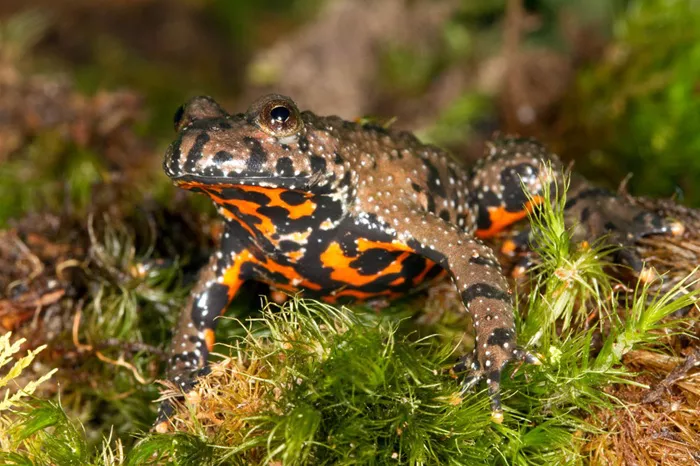
Ever seen a toad flash bright orange like a warning sign? That’s no accident. The European fire-bellied toad isn’t just a quirky amphibian with vivid looks—it’s a living example of nature’s smart defense system.
A Bright Warning in the Wild
At first glance, the European fire-bellied toad (Bombina bombina) looks like a cute, clumsy creature with warty skin and a squat little body. But flip it over, and you get a surprise: its belly is splashed with brilliant orange and black, like a Halloween costume. Why the drama? Because these colors scream “I’m toxic! Stay away!”
This warning display is part of what scientists call aposematism — a natural way for animals to tell predators, “I’m dangerous.” And it works. Many predators think twice before biting a toad that glows like a hazard sign.
Where Do They Live?
You can find European fire-bellied toads in parts of Central and Eastern Europe, including Germany, Poland, Ukraine, and the Balkans. They love wetlands — shallow ponds, marshes, and slow-moving streams. In other words, if there’s water and mud, you’re likely to find one.
But here’s the twist: these toads are also great at surviving seasonal changes. When winter hits, they hibernate underground or hide in rotting logs, waiting for the sun to come back.
What Do They Look Like?
Imagine a toad no bigger than your palm. The European fire-bellied toad grows to about 4 to 5 centimeters (1.5 to 2 inches). Their top side is olive green or brown with dark spots, making them blend in with the ground. But their bellies? Bright orange with black patches that look like flames.
Their skin is covered in small warts, but don’t worry—those aren’t dangerous to humans. They just help with water retention and contain tiny poison glands. It’s their way of saying, “Look, but don’t touch.”
A Sound You Can’t Miss
Have you ever heard a toad sing? These little guys have a soft, melodic call that sounds like someone blowing gently through a straw. In the wild, their chorus fills the air during spring and summer evenings. It’s not just for fun—they’re trying to find a mate.
Males inflate their vocal sacs like balloons under their chins to produce these sounds. It’s like their version of a love song, and the louder and smoother it is, the better their chances of attracting a female.
Daily Life of a Fire-Bellied Toad
European fire-bellied toads are diurnal, which means they are active during the day (unlike most frogs and toads that are nocturnal). They spend most of their time in water, floating like lazy swimmers with just their heads sticking out. They love warm days, basking near the water’s edge.
But don’t let their calm looks fool you. When threatened, they strike a dramatic pose: the unken reflex. They arch their backs, stretch their limbs, and show off their bright bellies. It’s their way of shouting, “Back off! I’m dangerous!”
What Do They Eat?
These toads aren’t picky eaters. They feed on insects, spiders, worms, and even small crustaceans. Their hunting style is simple: ambush and gulp. They wait quietly and then lunge when prey comes close. If you ever keep one as a pet (yes, they can be kept in captivity), you’ll be amazed at how fast they can snap up a cricket.
Young fire-bellied toads (called tadpoles) eat algae, plant matter, and small aquatic organisms until they grow legs and lungs.
Reproduction: A Splashy Affair
When spring arrives, it’s time for romance. Males gather in water and start calling. Once a female chooses a mate, the male climbs on her back in a position called amplexus. He fertilizes the eggs as she lays them.
A single female can lay 100 to 300 eggs in shallow water. These eggs stick to plants and hatch into tadpoles within a week. After about 6 to 8 weeks, they grow legs and turn into tiny toads, ready to explore the world.
Lifespan and Survival
In the wild, European fire-bellied toads can live around 10 to 12 years. In captivity, with proper care, they can reach up to 15 years. But life isn’t always easy. Habitat loss, pollution, and disease (like chytridiomycosis, a fungal infection) threaten their populations.
A Pet with Personality
Thinking about keeping one? Great! European fire-bellied toads are popular in the pet trade. They’re small, hardy, and have amazing colors. But remember, they still need the right setup:
−A semi-aquatic terrarium with water and land areas
−Clean, dechlorinated water
−A filter or regular cleaning to keep water fresh
−A heater or lamp to keep the temperature around 22-26°C (72-79°F)
−A diet of crickets, worms, and small insects
And wash your hands after handling them—they have mild toxins that can irritate your skin.
Fun Facts That’ll Blow Your Mind
−They don’t have tongues like frogs do. Instead, they use their hands to shove food into their mouths. Yes, it’s as funny as it sounds.
−Their skin toxin is called bombinins, named after their scientific name. It’s not deadly, but it’s enough to discourage predators.
−Some scientists believe their color patterns are unique to individuals, like fingerprints!
Conservation Status
According to the IUCN (International Union for Conservation of Nature), the European fire-bellied toad is listed as Least Concern, but that doesn’t mean we can ignore their problems. Wetland destruction, farming chemicals, and invasive species are putting pressure on their numbers.
In some countries, they’re now protected by law, and breeding programs help reintroduce them into safe habitats.
Why Should You Care?
These toads are more than just cute faces. They’re part of a fragile ecosystem. They help control insect populations and serve as food for other animals. When their numbers drop, it’s a warning that something’s wrong with the environment.
Also, they’re great ambassadors for conservation. Their bright colors and dramatic behaviors make them perfect for teaching kids (and adults) about amphibians, ecosystems, and the importance of wetlands.
Conclusion
The European fire-bellied toad is a small creature with a big story. From its warning colors to its survival tricks, it shows how evolution shapes life in amazing ways. Whether you’re a nature lover, a student, or someone just curious about colorful critters, this toad has something to teach you.
So next time you’re near a pond in Eastern Europe, listen for that soft call. You might just spot a little orange belly glowing beneath the water’s surface.
Related topics: