
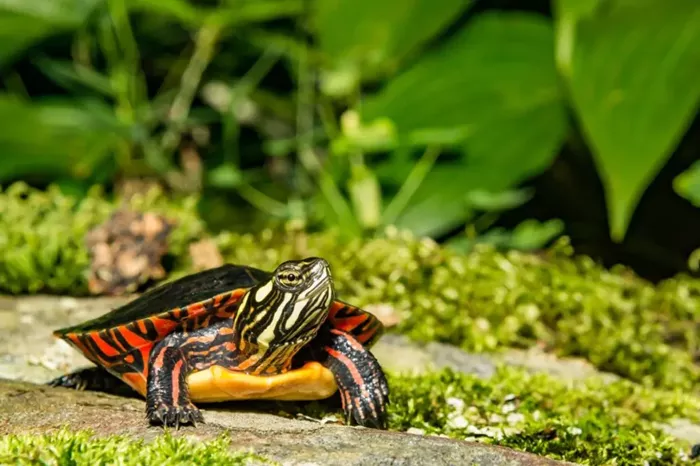
When we think of turtles, we often imagine slow-moving creatures, with their hard, protective shells and serene glides through water. But one question that might have popped into your mind is this: Do painted turtles make noise? It’s an interesting query, as many people aren’t aware that animals such as reptiles can actually produce sounds.
Unlike dogs or birds, where their vocalizations are more obvious, the sounds of reptiles often fly under the radar. But painted turtles, like many other species, have their ways of communicating. While these turtles don’t “talk” in the way we might expect, they do make some noises in certain situations.
In this article, we’ll dive deep into the world of painted turtles, exploring whether they make noise, why they might do so, and what it all means in the grand scheme of their behavior and communication. If you’re a turtle enthusiast—or simply curious—don’t miss out on this fascinating topic! Let’s unlock the mysteries together.
Do Painted Turtles Make Noise?
You might be surprised to learn that painted turtles, just like many other reptiles, do in fact produce sounds—though they are often subtle and harder to detect compared to mammals or birds. The question is: Why don’t we hear them much? This article aims to explore the reasons behind this quiet nature and shed light on the rare instances when these turtles do communicate through sound.
Why Are We Surprised That Turtles Make Noise?
When you think of “noise-making animals,” turtles are probably not the first creatures that come to mind. Unlike dogs, cats, or even birds, turtles are known for their relatively silent and solitary nature. However, this doesn’t mean they don’t have a voice in their world.
To understand why this question even arises, it’s helpful to remember that animals make sounds for a variety of reasons: to communicate, to warn, to attract mates, or to defend themselves. While most reptiles, including turtles, aren’t as vocal as some of their mammalian counterparts, they still have their ways of expressing themselves.
The Anatomy of Turtle Sounds: How Do They Make Noise?
If you’re wondering how exactly a painted turtle produces sound, you’re not alone! Turtles don’t have vocal cords like mammals do. Instead, they rely on other methods to communicate. Some sounds are produced through vibrations and body movements. Let’s break down how this works.
Air Expulsion: Turtles have an ability to force air through their body, which can sometimes result in a noise. This is commonly referred to as “hissing.” When they exhale forcefully, especially in moments of stress or fear, it can create a sound that resembles a hiss, similar to a snake.
Mouth Claps or Chomps: Some species of turtles, including painted turtles, may also make chomping sounds when they are eating. These sounds aren’t loud but are still noticeable in close proximity.
Body Vibrations: Certain vibrations, such as when a turtle moves rapidly or shakes its body, can produce low, almost inaudible sounds. These vibrations aren’t really “noises” in the traditional sense but are still ways turtles communicate with their surroundings.
While turtles don’t “talk” like mammals, they still have a set of tools at their disposal to communicate through sound, even if it’s more subtle and rare. So, what are these sounds really trying to say?
Why Do Painted Turtles Make Noise?
Now that we know they can make sounds, the next question is: Why do painted turtles make noise at all? To answer this, we need to look at the different situations in which a painted turtle might vocalize.
1. Defense Mechanisms: Hissing as a Warning
When threatened, painted turtles may use sound as a defensive mechanism. For instance, if they feel cornered by a predator or intruder, they may emit a hissing noise as a warning. It’s not a scream or a roar, but a sharp, forceful exhalation of air designed to intimidate or signal danger.
Just as a dog might bark to warn you to stay away or a bird might squawk to protect its territory, a turtle’s hiss acts as its own method of communication in moments of tension. It’s the turtle equivalent of saying, “Back off!”
2. Social Interactions and Mating Calls
Painted turtles, especially males, might use sounds as part of their courtship rituals. While these noises aren’t as prominent as those of birds or frogs, they still have their place in the reproductive cycle. Males may hiss or make other subtle sounds to attract a mate, signaling their presence in the hopes of gaining attention.
This kind of behavior is common in the animal kingdom, where males in particular use sound to indicate their fitness as a potential partner.
3. Stress and Anxiety
In moments of stress or anxiety, painted turtles may produce noises as a form of emotional expression. This could happen when they are placed in an unfamiliar environment, when they are frightened by sudden movements, or even when they are being handled.
For example, if you have ever handled a turtle, you might have noticed it exhaling sharply or even making a quick motion with its head. This isn’t just a movement; it’s a stress response. They’re expressing their discomfort, and the noise is one of the ways they signal their unease.
As we’ve seen, painted turtles use sounds in a variety of situations—from warning predators to attracting mates and expressing stress. Now, let’s explore how these sounds compare to other reptile species and their vocalization habits.
How Do Painted Turtles Compare to Other Reptiles?
While painted turtles may not be the loudest animals, they aren’t the only reptiles that make noise. Many reptiles, such as crocodiles, snakes, and lizards, have developed unique ways to communicate.
Comparing Turtles and Snakes: A Shared Hissing Trait
Snakes are probably the most famous reptiles for making noise, particularly through hissing. But did you know that turtles also use hissing as part of their defensive toolkit? The sound may differ slightly, but the principle is the same: both species use air expulsion to warn others and protect themselves.
This commonality shows how similar some reptiles are when it comes to vocalizations, despite the vast differences in species and behavior. Even though turtles don’t “speak” like mammals or birds, they still rely on sound to convey certain messages in their world.
Do Other Turtle Species Make Noise?
Painted turtles are just one species in the vast turtle family. Other turtle species, like snapping turtles and box turtles, also produce noises, but the frequency and nature of these sounds can differ. Some may produce louder hissing noises when threatened, while others may stay quieter.
Painted turtles may not be the most vocal of the reptile world, but they aren’t alone in their ability to make noise. Whether it’s hissing, chomping, or other subtle sounds, these creatures have a variety of tools in their communication toolkit.
Conclusion
In conclusion, while painted turtles may not be the loudest or most expressive creatures in the animal kingdom, they do have a range of ways to communicate through sound. Whether it’s the subtle hiss of a stressed-out turtle, the exhalation of air when threatened, or the occasional chomp when eating, these sounds serve as important forms of communication.
So, next time you see a painted turtle, don’t be too quick to assume it’s completely silent. It might just be waiting for the right moment to make its presence known—quietly but effectively.
Related topics: