
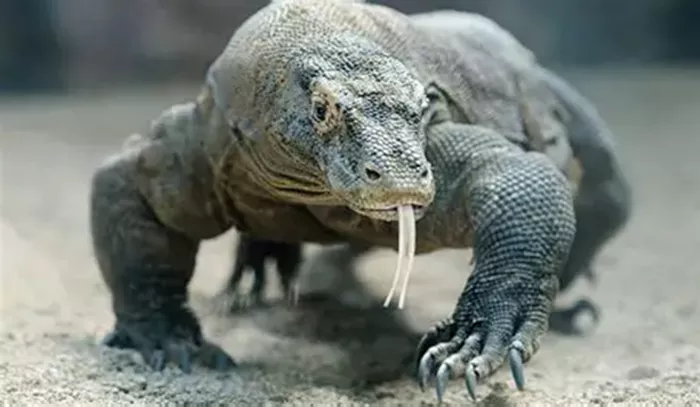
Imagine a creature so powerful it can take down deer with a single bite. A lizard so unique it doesn’t exist anywhere else in the world naturally, except a handful of islands. Now, imagine this animal as the living emblem of a country made up of thousands of islands. That animal is the Komodo dragon, and the country is Indonesia. But have you ever wondered why this giant reptile was chosen as the national animal of Indonesia?
It might surprise you that this fearsome reptile is more than just a big lizard. The Komodo dragon carries deep biological, ecological, cultural, and symbolic value for Indonesians. In this article, we will explore these reasons in detail. From ancient myths to modern conservation, from raw power to fragile ecosystems, the story of the Komodo dragon is also a story about Indonesia itself. So, buckle up and get ready to meet the world’s largest living lizard, the one and only Varanus komodoensis.
A Living Dinosaur: Evolutionary Uniqueness
First things first. The Komodo dragon is not just a big lizard. It is often called a “living dinosaur” — and for good reason. It belongs to a family of reptiles called monitor lizards. But it stands out because of its size, strength, and isolation.
Scientists believe the Komodo dragon has been evolving separately from other species for millions of years. Fossil records suggest its ancestors once roamed across Australia and Asia. Today, it survives only on a few Indonesian islands like Komodo, Rinca, Flores, Gili Motang, and Padar.
Why does that matter? Think of it this way: if most modern cars evolved from the same blueprint, but suddenly you found a working steam engine car in your garage, you’d be amazed. That’s how scientists feel about the Komodo dragon. It is a surviving relic of an ancient world.
Endemic to Indonesia: Nowhere Else on Earth
One reason the Komodo dragon is the national animal is simple but important: it only lives in Indonesia. In biology, when an animal is found in just one place on Earth, it is called endemic. The Komodo dragon is endemic to Indonesia. That means the whole world depends on Indonesia to protect and preserve this unique species.
This gives Indonesia a kind of guardianship. It’s like having the only copy of a rare book. You wouldn’t want to lose it, and you’d probably want to tell the world, “Hey, look what we have!”
This geographic exclusivity makes the Komodo dragon a national treasure, not just biologically but also diplomatically. It symbolizes Indonesia’s rich natural heritage.
Cultural Significance: Myths and Legends
The Komodo dragon is more than just an animal in Indonesian culture. For generations, it has been part of local myths and legends.
On Komodo Island, one story tells of a dragon princess named Putri Naga. She gave birth to twins — one human and one dragon. The story goes that the two were raised together and taught to respect one another. This tale encourages people to treat Komodo dragons as family. Pretty poetic, right?
These myths shape how people think about the animal. Instead of just seeing it as a dangerous predator, locals often see it as a spiritual being. That emotional connection builds national pride.
A Symbol of Strength and Resilience
When you look at a Komodo dragon, the first word that comes to mind might be “strong.”
It can grow up to 10 feet (about 3 meters) long and weigh over 150 pounds (70 kilograms). Its bite is both powerful and venomous. Yes, you read that right: the Komodo dragon has venom glands that cause shock and bleeding in its prey.
Now ask yourself: what country wouldn’t want to be represented by such a creature? The Komodo dragon stands for raw power, independence, and adaptability. These are all qualities that Indonesians value and see in themselves.
Much like the dragon, Indonesia has weathered many storms — colonization, natural disasters, economic hardships — and still stands strong. The Komodo dragon is a perfect metaphor for that spirit.
Ecological Importance: Top of the Food Chain
In the ecosystem, the Komodo dragon plays a role like that of a lion on the savannah. It is an apex predator, meaning it’s at the top of the food chain. It helps balance the populations of prey animals like deer, wild boar, and even water buffalo.
When the Komodo dragon population is healthy, it means the entire food chain beneath it is probably healthy too. That’s why scientists consider it a keystone species — remove it, and the whole ecological structure might collapse.
So when you protect the Komodo dragon, you’re not just saving one species. You’re helping to preserve an entire ecosystem. That’s pretty great, don’t you think?
Tourism Magnet: The Dragon Effect
Komodo National Park, a UNESCO World Heritage Site, attracts tourists from all over the world. People travel thousands of miles just to catch a glimpse of this modern-day dragon in its natural habitat.
Tourism has a big impact. According to Indonesia’s Ministry of Tourism and Creative Economy, Komodo National Park helped bring in over 170,000 visitors in a single year before the pandemic. This generated millions of dollars in local income and boosted jobs for local people.
So, when the Komodo dragon is promoted as the national animal, it’s also good business. It puts Indonesia on the map for wildlife lovers, photographers, scientists, and curious travelers like you.
Conservation Symbol: A Call to Action
The Komodo dragon isn’t just a symbol of strength. It’s also a symbol of what’s at risk.
Despite its fearsome image, the Komodo dragon is actually vulnerable to extinction. Climate change, habitat loss, and illegal hunting threaten its survival. In fact, the International Union for Conservation of Nature (IUCN) lists it as a “Vulnerable” species.
By making it the national animal, Indonesia sends a powerful message: “We must protect what makes us unique.” It’s a reminder to the world that even the strong need protection.
And here’s the cool part: when you support conservation efforts for the Komodo dragon, you’re also helping protect forests, coral reefs, and other wildlife in the region. It’s all connected.
National Identity: A Modern-Day Emblem
Symbols matter. They help define who we are. Just like the bald eagle in the United States or the panda in China, the Komodo dragon has become a symbol of Indonesia’s identity.
It appears on coins, stamps, and even government emblems. It is featured in school books, documentaries, and national events. When children in Indonesia learn about their country, one of the first animals they meet is the Komodo dragon.
Choosing this animal as the national symbol isn’t just about biology or tourism. It’s about pride. It’s about telling the world: “This is us. This is Indonesia.”
Conclusion
So, why is the Komodo dragon the national animal of Indonesia?
Because it’s rare, powerful, and unique. Because it’s rooted in the land, the legends, and the lives of the Indonesian people. Because it inspires pride and demands protection. And because it perfectly captures the spirit of a nation made up of islands, cultures, and stories waiting to be told.
The Komodo dragon isn’t just a big lizard. It’s a national icon, a natural marvel, and a reminder of the wild beauty that still exists in our world.
Next time you see a picture of this mighty reptile, remember: it represents an entire country and a message to protect the wild. Don’t miss your chance to learn more, see more, and support the ongoing story of the Komodo dragon.
Related topics: