
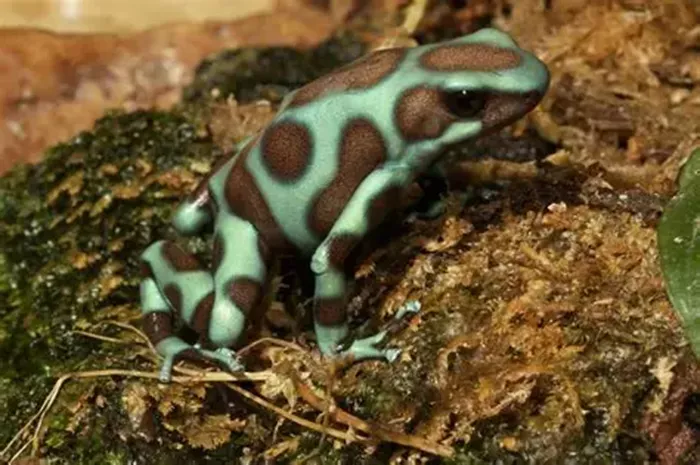
Let’s start with a question. If someone told you there’s a frog out there that’s as striking as a neon sign, smaller than your thumb, but nearly impossible to spot in the wild — would you believe them? That’s exactly what we’re talking about with the green and black poison dart frog (Dendrobates auratus). These tiny amphibians are brightly colored, boldly patterned, and utterly fascinating. But locating them in the wild is not as simple as it sounds.
In this article, we’ll dive deep — like rainforest-deep — into where green and black poison dart frogs live, how their environment shapes their behavior, and why it matters for their survival. Along the way, we’ll keep things easy to understand, a bit conversational, and packed with “Aha!” moments.
By the end, you’ll not only know where these frogs live — you’ll feel like you’ve been there.
Getting to Know the Green and Black Poison Dart Frog
Before we talk about where they live, let’s quickly go over what they are.
These frogs are a species of poison dart frog, a group of amphibians known for their vibrant colors and, yes — their poison. But here’s a twist: not all dart frogs are equally dangerous, and the green and black ones aren’t exactly deadly to humans in the wild. Why? We’ll explain shortly.
The “green and black” name comes from their base colors — usually a lime green or turquoise body covered in irregular black splotches. Their skin looks almost as if someone splashed paint across it in wild, artistic strokes.
They grow up to about 4 to 6 centimeters (1.5–2.5 inches), and what they lack in size, they make up for in personality. In fact, if you ever see one in a terrarium, they often seem just as curious about you as you are about them.
What’s the Deal With Their Poison?
You may be wondering, “Should I be worried about touching one?” In the wild, it’s true that green and black poison dart frogs can secrete toxins from their skin. These chemicals act as a defense against predators — think of it as the frog’s built-in alarm system.
But here’s the cool part: these frogs get their poison from their diet. That means if they grow up in captivity (where they eat things like fruit flies), they’re not poisonous at all. This fact becomes super important when we talk about their habitats, because what they eat is tied directly to where they live.
Native Range: Where Are They Found in the Wild?
Let’s answer the big question: Where are green and black poison dart frogs found?
The natural habitat of the green and black poison dart frog is the tropical rainforests of Central and South America — more specifically:
Costa Rica
Nicaragua
Panama
And even Colombia in some cases.
These areas are hot, humid, and densely packed with trees and plant life — the perfect environment for small amphibians. If you’ve ever walked through a greenhouse full of tropical plants and felt that warm, sticky air, you’ve already gotten a taste of what these frogs experience every day.
Now, let’s explore these areas one by one.
Panama: The Frog Capital of Central America
Panama is often considered the heartland of the green and black poison dart frog. The species is thought to have originated here, and it’s where the largest wild populations are still found today.
You can find them in lowland rainforests, especially in places like:
Bocas del Toro (a province with islands and mainland rainforests)
Darién National Park (close to the Colombian border)
Soberanía National Park (not far from Panama City)
These frogs prefer humid, shaded forest floors. Imagine walking on a muddy jungle path, with towering trees above you and thick vines hanging down. Somewhere nearby, under a leaf or beside a mossy root, one of these frogs might be resting or hunting.
Panama’s year-round warm temperatures (usually between 24–30°C / 75–86°F) and heavy rainfall make it a five-star hotel for moisture-loving amphibians. And the biodiversity? Absolutely staggering. These frogs are just one of thousands of species calling this ecosystem home.
Costa Rica: A Tourist Haven for Frog Watchers
Green and black poison dart frogs are also native to Costa Rica, particularly in the Caribbean lowlands. If you’re ever lucky enough to visit places like Tortuguero National Park, La Selva Biological Station, or Sarapiquí, keep your eyes and ears open.
Here’s a tip: They often call during the day. Unlike most frogs that are active at night, these little guys are diurnal — meaning they’re active when the sun is up. That’s right. If you’re hiking in a Costa Rican rainforest and hear a soft “chirp” or high-pitched squeak, don’t ignore it — you might be closer to a dart frog than you think.
Nicaragua and Colombia: The Lesser-Known Homes
Nicaragua and Colombia also have native populations of this frog, but they’re not as well documented. In Nicaragua, they tend to be found near the eastern coast, close to the border with Costa Rica.
In Colombia, they’ve only been found in a few select lowland rainforests — mostly in regions that share ecological characteristics with Panama. Some scientists believe the frogs migrated across what’s now the Darién Gap, a wild and nearly impassable stretch of rainforest between Colombia and Panama.
How Their Habitat Affects Their Behavior
It’s not just about where these frogs live. It’s also about how they live in those places.
Because green and black poison dart frogs are small and moisture-dependent, they tend to stay close to:
Leaf litter
Small streams
Rotting logs
Tree roots
Think of them like rainforest ninjas — quick, quiet, and well-camouflaged when needed. But when they want to stand out, their bright colors do all the talking. These colors signal “Hey! I’m toxic. Don’t eat me.” And surprisingly, that strategy works. Most rainforest predators — birds, snakes, and even other frogs — quickly learn to avoid them.
Another fun fact? These frogs don’t hop as much as they walk. If you’ve ever seen them in a terrarium, you’ll notice they’re kind of strutting around rather than leaping. That walking style helps them navigate slippery leaves and complex forest terrain.
What About Introduced Populations?
Here’s something fascinating: green and black poison dart frogs were introduced to Hawaii in the 1930s. Yes — Hawaii.
Why? The short answer is pest control. People thought these frogs could help manage insect populations in greenhouses and agricultural areas. Today, they’ve formed wild colonies in some parts of Oahu.
These Hawaiian populations aren’t considered invasive (yet), but they’ve adapted surprisingly well to the island’s moist, tropical conditions. It’s like they found a second home.
How Do They Survive in Such Moist Environments?
These frogs need to stay moist. Their skin is semi-permeable, which means water can pass through it — kind of like a sponge. If they dry out, they die. That’s why they stick to humid, shaded areas and avoid dry, open ground.
In the wild, green and black poison dart frogs spend most of their time near small water sources — not to swim in, but to reproduce. They lay their eggs on damp leaves, and once they hatch, the tadpoles are carried (often on the backs of their parents) to water-filled plant axils or small pools.
So, if you’re looking for these frogs in the wild, start by looking where water gathers.
Conservation Concerns: Are They Safe in the Wild?
Sadly, not all is well in the rainforest.
Like many amphibians, green and black poison dart frogs are facing threats, including:
Habitat destruction (deforestation for agriculture and development)
Climate change (changing rainfall patterns)
Pet trade (although this has decreased due to successful captive breeding)
According to the IUCN Red List, they are currently classified as Least Concern, but their populations are fragmented. That means while they’re not endangered yet, they’re not out of the woods either.
If you ever decide to keep one as a pet (and they are common in the reptile trade), make sure it’s captive-bred, not wild-caught. That’s better for the frog and better for the forest.
What Can You Do to Help?
It’s easy to feel powerless when it comes to rainforest conservation, but there are a few real things you can do:
Support eco-tourism in places like Costa Rica and Panama
Avoid buying exotic pets from sketchy sources
Donate to conservation groups focused on amphibians and rainforest habitat
And if you’re an educator or parent, teach kids about frogs! The more people know and love them, the more likely we are to protect them.
Conclusion
So, where are green and black poison dart frogs found? Now you know they live in the heart of tropical Central America — especially Panama, Costa Rica, Nicaragua, and parts of Colombia. You’ve walked through their rainforests, peeked under their logs, and maybe even imagined one hopping (well, walking) right past your boot.
They are small but mighty, bright but hidden, and fragile yet resilient. These frogs are more than just jungle decorations — they’re part of a living, breathing ecosystem that depends on balance, moisture, and respect.
Next time someone brings up poison dart frogs, you won’t just know where they live. You’ll know what makes their home so special — and maybe, just maybe, you’ll want to help protect it.
Related topics: