
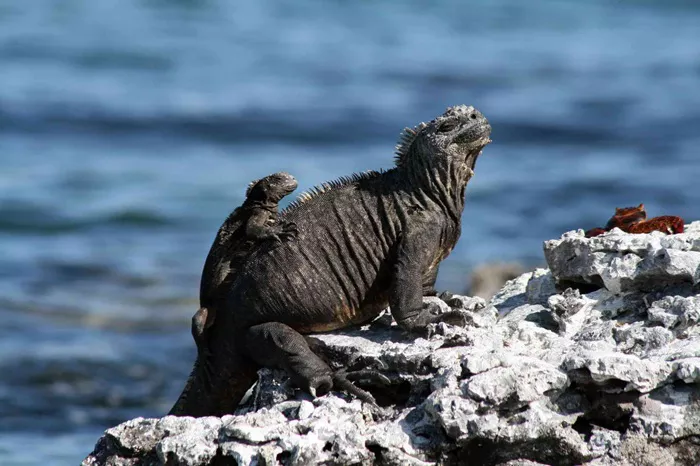
Have you ever imagined a lizard diving deep into the ocean, grazing on seaweed like a miniature sea dragon? That isn’t a scene from a fantasy novel. It’s a real-life reptile called the marine iguana. Native only to the Galápagos Islands, this creature has fascinated scientists, nature lovers, and travelers for centuries. But beyond its exotic charm lies a complex, resilient animal that has evolved in ways you may find hard to believe. Ready to take the plunge into its story? Let’s dive into the world of the marine iguana.
Where Do Marine Iguanas Live? A Life Bound to the Galápagos
If you’re hoping to spot a marine iguana, you won’t find it anywhere but the Galápagos Islands, about 600 miles (1,000 km) off the coast of Ecuador. These islands are like a natural laboratory, and the marine iguana is one of its star residents. Why the Galápagos? Because this isolated group of volcanic islands provides just the right mix of rocky shores, ocean access, and minimal predators. It’s the perfect spot for a lizard that has decided to turn aquatic.
The marine iguana spends much of its time basking on sunlit rocks, but it is just as comfortable underwater. You’ll often see them crawling down to the shore, slipping into the waves, and swimming like a miniature alligator with a strong, side-to-side tail motion.
Built for the Sea: The Marine Iguana’s Unique Body
At first glance, the marine iguana might look like any other large lizard, but there are some amazing adaptations under the surface. Their body is designed to thrive in both hot, dry land and cold, salty water.
Their tails are flattened on the sides, acting like paddles to help them swim efficiently. Their sharp claws allow them to grip slippery rocks underwater, and their snouts are blunt—a perfect shape for scraping algae off stones. Their dark skin absorbs heat quickly, which is crucial because the ocean water is often cold. Like a solar panel, they soak up warmth after each dive.
Here’s something incredible: they have specialized glands near their noses that help them “sneeze” out excess salt. This adaptation is essential because drinking ocean water would otherwise dehydrate them. If you’ve ever seen an iguana sneeze a white spray, that’s it—they’re literally blowing out the salt.
What Do Marine Iguanas Eat? A Vegetarian Diet from the Sea
You might assume that a large, tough-looking lizard would be a carnivore. But marine iguanas are strict vegetarians. Their main food? Algae. They swim down, often several meters below the surface, and graze on marine algae that grow on rocks.
Younger and smaller iguanas tend to stay close to shore, where they nibble on algae during low tide. Older males, however, can dive more than 30 feet (about 10 meters) and stay underwater for up to 30 minutes. It’s not just their body that helps them do this—their heart rate slows down dramatically, conserving oxygen much like a seal does.
Think of them like underwater lawnmowers, trimming the algae that coat the rocks. It’s not an easy meal, but it’s one they’ve mastered over millions of years.
Social Behavior: Basking, Fighting, and Snuggling
Marine iguanas are not exactly social butterflies, but they do spend time around each other. You can often see dozens of them basking together on lava rocks. This isn’t just for fun—it’s a way to stay warm and conserve energy after swimming in cold water.
Male iguanas can be territorial, especially during mating season. They engage in head-bobbing contests and sometimes even clash in physical battles. These battles can look intense, but they rarely cause serious injury. Instead, they’re about showing off strength and dominance.
Females lay their eggs in sandy nests, often digging several feet down to find a warm, safe spot. After laying about one to six eggs, they cover the nest and leave. The young iguanas must fend for themselves from the moment they hatch.
Survival in Harsh Conditions: The Art of Adaptation
One of the most fascinating aspects of marine iguanas is their ability to adapt. During El Niño years, when warmer waters reduce algae availability, their bodies actually shrink. That’s right—scientists have observed marine iguanas shrinking by up to 20% during food shortages. It’s like your body temporarily downsizing to need less energy.
That’s not something you see every day in reptiles. This extreme flexibility makes the marine iguana a true survivor. However, their environment is becoming more unpredictable with climate change. Warmer oceans, rising sea levels, and increased human activity are starting to take a toll.
Threats to Their Survival: It’s Not Just Nature Anymore
Despite their toughness, marine iguanas face growing threats. Climate change is disrupting their food supply and breeding patterns. Introduced species like rats and cats eat their eggs and young. Oil spills and ocean pollution also harm their delicate habitat.
As of today, the IUCN (International Union for Conservation of Nature) lists the marine iguana as vulnerable. That means they face a high risk of extinction in the wild if current trends continue.
But there’s hope. Conservation programs in the Galápagos are working to monitor populations, reduce invasive species, and protect nesting areas. You can help too—if you ever visit the Galápagos, follow the rules, respect wildlife, and support eco-friendly tourism.
The Role of Marine Iguanas in the Ecosystem
Marine iguanas aren’t just interesting to look at; they play an important role in the Galápagos ecosystem. By feeding on algae, they help keep the underwater environment balanced. If algae grows too thick, it can choke out other marine life. Think of the marine iguana as nature’s underwater gardener.
Their droppings also provide nutrients to coastal plants, helping vegetation grow on these volcanic islands. Even after they die, their bodies return vital minerals to the ecosystem.
This balance supports not just iguanas but a wide range of species, from birds to insects to marine animals. In a way, the survival of one weird, ocean-diving lizard helps maintain an entire network of life.
Scientific Discovery and Charles Darwin
You might be surprised to learn that the marine iguana was one of the animals that caught Charles Darwin’s attention during his voyage on the HMS Beagle. He was fascinated—and a little repulsed—by the sight of these lizards sunbathing and sneezing salt.
Darwin’s observations of marine iguanas, along with finches and tortoises, helped him develop his ideas about natural selection. Even today, the marine iguana remains a subject of scientific study for understanding evolution, adaptation, and ecology.
Can You Keep a Marine Iguana as a Pet?
This question comes up more than you’d think: Can you keep a marine iguana as a pet? The answer is no, and for good reason.
First, it’s illegal to capture or export them. They’re a protected species, and removing them from the wild would seriously damage their population.
Second, their needs are incredibly complex. You’d have to replicate oceanic conditions, provide live algae, and offer a huge space for basking and swimming. It’s nearly impossible to do this outside their natural habitat. So, if you’re into reptiles, try green iguanas or bearded dragons instead. The marine iguana is best appreciated in the wild, where it can live and thrive as nature intended.
Conclusion
The marine iguana is a one-of-a-kind creature that challenges our understanding of what reptiles can be. With their aquatic lifestyle, vegetarian diet, and ability to adapt to extreme conditions, they are a true marvel of evolution. They’re not just another lizard—they are living testaments to the power of natural selection and the importance of preserving unique ecosystems.
If you ever get the chance to visit the Galápagos, don’t miss the opportunity to see these animals in their natural habitat. Watch them dive, bask, sneeze, and thrive. It’s a sight that stays with you for life.
Related topics: