
Komodo dragons are among the most powerful reptiles in the world. They are often seen as the closest living animals to mythical dragons. But why exactly are they called dragons? This article explains in detail.
Ancient connections: The origin of the name
The Komodo dragon got its name because of how it looks and behaves. When early explorers and scientists first saw it, they were shocked by its size and strength.
In the early 20th century, Dutch explorers came to Indonesia. They heard stories from locals about giant lizards that lived on remote islands. These lizards were said to breathe fire, eat deer, and even attack humans. The stories reminded them of dragons from myths and fairy tales.
When they finally saw these creatures, they didn’t breathe fire, but they were large and scary. This made the name “dragon” stick.
Fearsome appearance: What makes them look like dragons
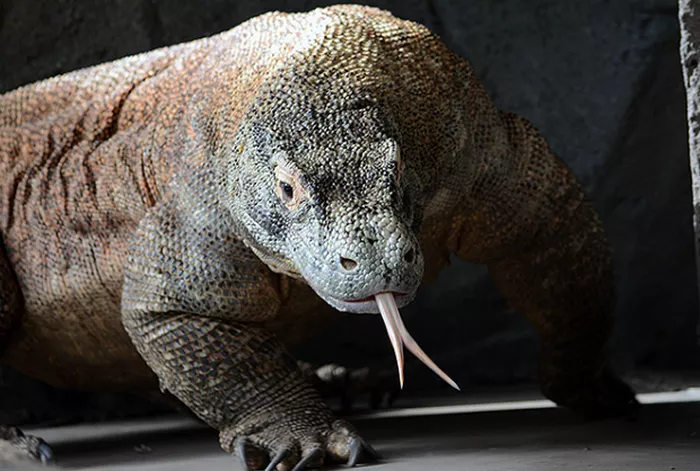
Komodo dragons look very different from other lizards. They have strong bodies and long, thick tails. Their skin is covered with rough scales, and they have strong claws. Their sharp teeth can tear into meat easily. All these features make them look like the dragons people imagine in myths.
Their faces are long and narrow. Their eyes are piercing and alert. Their tongues are forked, just like a snake‘s. This makes them seem even more like creatures from legends.
Large size: The biggest lizard in the world
One reason why the Komodo is called a dragon is because of its size. Komodo dragons are the largest lizards alive today. A fully grown male can be more than 10 feet long and weigh over 150 pounds. Some of the biggest ones can weigh nearly 200 pounds.
Their great size gives them a commanding presence. When they walk slowly across the land, they look powerful and ancient. Many people who see them say they resemble dinosaurs or dragons from books and movies.
Deadly bite: Poison and bacteria
Another reason why they are called dragons is their bite. In stories, dragons have deadly breath or powerful jaws. The Komodo dragon has something just as dangerous.
For a long time, scientists thought Komodo dragons had bacteria in their mouths that made their bite deadly. But more recent studies show they actually have venom glands. These glands release poison when they bite. The venom can lower blood pressure, stop clotting, and cause shock in their prey.
This powerful bite helps them kill animals much larger than themselves, like deer and wild boar. It adds to their dragon-like image.
Hunting behavior: Like a real beast
Komodo dragons are hunters. They use stealth and patience to stalk their prey. Once close enough, they strike fast. Even if their prey escapes, the venom will weaken it. The Komodo dragon can follow it for hours until it collapses.
This type of hunting is not seen in most lizards. It makes them more like wolves or big cats. But because they are reptiles and so large, their behavior reminds people of dragons. They are cold, clever, and deadly.
Myths and legends: Stories that add to the name
Local people in Indonesia have told stories about these creatures for hundreds of years. In some myths, the Komodo dragon is sacred. In others, it is a monster to be feared.
One popular story says that a Komodo dragon once gave birth to a human child and a lizard. The human grew up and became a man, while the lizard stayed wild. But the people believed they were still brothers and should live in peace.
Stories like this make the Komodo dragon more than just an animal. It becomes part of local culture and mystery, just like a dragon in old legends.
Living on remote islands: A land of mystery
Komodo dragons live on a few islands in Indonesia. These include Komodo Island, Rinca Island, Flores Island, and Gili Motang. These places are remote and not easy to reach. They have wild forests and mountains. The environment adds to the dragon-like feel.
When people visit these islands and see Komodo dragons in the wild, it feels like stepping back in time. The landscape, the isolation, and the ancient creatures make the name “dragon” feel just right.
Long tongues: A strange and scary feature
One reason people compare Komodo dragons to mythical dragons is their long, forked tongues. They flick their tongues in and out to sense smells in the air. It looks strange and even scary.
The way they do this is similar to snakes. But because the Komodo is much larger and more powerful, the effect is even more dramatic. This adds to the dragon image.
Strong tail: A weapon in itself
Komodo dragons have thick, muscular tails. They use their tails as weapons. When they feel threatened, they swing their tails hard. This can knock down animals and even hurt people.
Dragons in stories often have long tails that they use in fights. The Komodo’s tail fits this picture perfectly. It helps explain why people think of them as dragons.
Ancient origin: Living fossils
Komodo dragons are part of a very old family of reptiles. Scientists believe they have been around for millions of years. They are sometimes called “living fossils” because they have not changed much over time.
Their ancient history makes people think they are survivors from a different age. Like dragons in stories, they come from a time when nature was wild and untamed.
Powerful sense of smell: Like a hunting dragon
Komodo dragons use their tongues to detect smells. They can smell blood from miles away. This powerful ability helps them find prey that is hurt or dying.
In stories, dragons can smell humans or treasure from far away. The Komodo’s amazing sense of smell makes them seem just as sharp and fearsome.
Rough skin: Natural armor
The skin of a Komodo dragon is rough and full of small bones under the surface. This acts like armor. It protects them when they fight with each other or other animals.
Dragons are often shown with thick scales that can’t be pierced. The Komodo dragon has something similar in real life. This makes the name even more fitting.
Slow but powerful: A deadly walk
Komodo dragons do not move quickly most of the time. They walk slowly and look relaxed. But they can charge fast if needed. Their slow steps and strong muscles give them a sense of power and calm.
They remind people of dragons that are quiet but ready to strike. Their calm strength makes them seem wise and dangerous.
The dragon name remains: A perfect title
Today, the Komodo dragon is protected by law. Many people travel to Indonesia just to see them. They are one of the few animals in the world that live up to the name “dragon.”
Their name helps raise awareness. It helps protect their habitat. It also reminds people that nature still holds many wonders.
Komodo dragons may not fly or breathe fire. But they are strong, ancient, and powerful. That is why they are called dragons.
Final thoughts: More than just a name
The Komodo dragon has earned its name in many ways. Its size, strength, behavior, and appearance all help explain why people call it a dragon.
It is one of the few animals that still feel like they come from myth and legend. And even though it does not have wings or fire, it carries the spirit of a dragon in its own special way.
Why the name matters: Respect and protection
Calling them dragons gives them a special place in the world. It helps people see them as something rare and valuable. It also helps inspire people to protect them and the places they live.
By learning more about the Komodo dragon, we learn more about nature. We also learn more about our own stories and dreams.
Conclusion
The Komodo dragon is not just a giant lizard. It is a creature that inspires awe and respect. Its massive size, sharp teeth, rough skin, venomous bite, and ancient origins all make it worthy of the title “dragon.” From the way it moves to the way it hunts, everything about the Komodo dragon reminds us of the dragons in myths and legends.
Although it does not breathe fire or fly, it holds a powerful presence in the natural world. The stories told by early explorers and local people helped give it its name, but its true nature continues to prove that name is well earned.
The Komodo dragon is a living reminder of Earth’s wild past. It shows us that nature still holds creatures as powerful and mysterious as the ones found in ancient stories. That is why the Komodo is called a dragon—and why it will always be known as one.
Related topics