
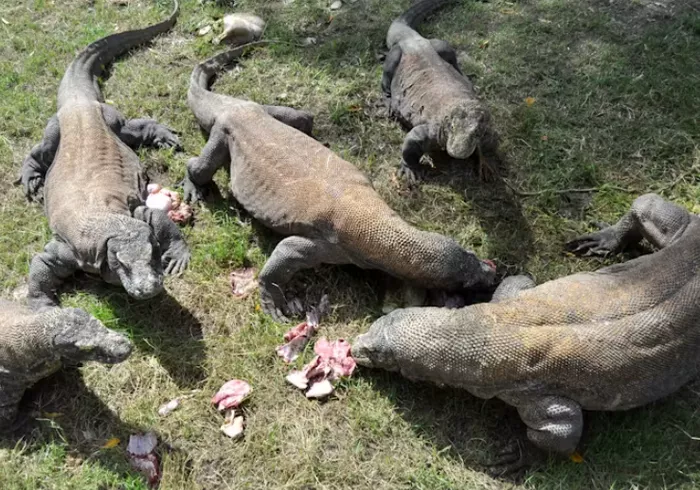
Komodo dragons are one of the most fascinating and ancient animals on Earth. Many people wonder if they are safe in the wild or if they are in danger of disappearing. This article explains their current protection status and the efforts being made to save them.
Introduction to Komodo Dragons
The Komodo dragon is the largest living lizard in the world. It can grow up to 10 feet long and weigh more than 150 pounds. Komodo dragons live in Indonesia, mainly on the islands of Komodo, Rinca, Flores, and Gili Motang. They are top predators and play a big role in their environment.
Komodo dragons eat animals like deer, wild pigs, and sometimes even water buffalo. They are known for their sharp teeth and powerful jaws. They are also known for being dangerous and aggressive when they feel threatened.
Species classification: Varanus komodoensis
The Komodo dragon belongs to the monitor lizard family. It is a reptile and a cold-blooded animal. It has rough skin and a strong tail that it uses for balance and defense.
Are Komodo Dragons Protected by Law?
Yes, Komodo dragons are protected by law in Indonesia. They are listed as a vulnerable species, which means they are at risk of becoming endangered in the future. Several laws and rules have been made to protect them.
National protection: Indonesian law
The government of Indonesia declared Komodo dragons a protected species in 1915. It is illegal to harm or kill a Komodo dragon. People are also not allowed to take them out of their natural habitat. This helps to keep them safe from hunting and poaching.
International protection: CITES
Komodo dragons are also protected under international law. They are listed in Appendix I of the Convention on International Trade in Endangered Species of Wild Fauna and Flora (CITES). This means that no international trade of Komodo dragons is allowed unless for scientific purposes.
Habitat protection: National parks
Komodo National Park was created in 1980 to protect the Komodo dragon and its environment. The park includes several islands where Komodo dragons live. It is a safe place where they are protected from harm. Rangers and park staff watch over the animals and their homes.
Threats Faced by Komodo Dragons
Even though Komodo dragons are protected, they still face many dangers. Some of these threats come from people, while others are due to changes in the environment.
Loss of habitat: Human activities
One of the biggest threats is habitat loss. As more people build homes, farms, and roads, the natural environment of the Komodo dragon shrinks. This makes it harder for them to find food and safe places to live.
Climate change: Rising temperatures and sea levels
Komodo dragons live on small islands. If sea levels rise due to climate change, parts of their habitat could go underwater. This would reduce their living space and make it harder to survive.
Poaching and human conflict: Illegal hunting
Some people still try to hunt Komodo dragons or take their eggs. Others may kill them if they feel threatened. Sometimes, Komodo dragons wander into villages and are seen as dangerous. This leads to conflict with humans.
Decline in prey: Lack of food
If there are fewer deer and wild pigs in the area, Komodo dragons may not have enough food. When prey is scarce, the dragons may become weaker or may die out.
Conservation Efforts to Save Komodo Dragons
Many steps have been taken to help protect Komodo dragons and ensure their survival. These efforts involve both the government and conservation groups.
Protected areas: Komodo National Park
Komodo National Park is one of the most important places for Komodo dragon conservation. It is managed by the Indonesian government and supported by international partners. The park provides a safe and natural environment for the dragons to live.
Monitoring programs: Tracking populations
Scientists and park staff keep track of Komodo dragon numbers. They study their behavior, health, and movement. This helps them understand how to protect the species better.
Community involvement: Local support
The people who live near Komodo dragons are part of the conservation effort. They are taught about the importance of saving the dragons. Many work as park rangers or guides. This gives them a reason to protect the animals.
Ecotourism: Responsible tourism
Tourism brings money to the area and helps support conservation. However, it must be done in a safe way. Tourists are only allowed to visit certain areas and must be guided by trained staff. This keeps both people and dragons safe.
Education and awareness: Teaching the public
Public education plays a big role in Komodo dragon conservation. Schools, museums, and media campaigns help people learn why Komodo dragons are important. The more people know, the more likely they are to help.
Why Komodo Dragons Matter
Komodo dragons are not just interesting animals. They are also very important to the ecosystem where they live.
Top predator: Balancing the food chain
As top predators, Komodo dragons help control the number of other animals. This keeps the balance of nature in their environment. If they disappeared, other animals might grow in number and cause problems.
Unique species: Ancient and rare
Komodo dragons have lived on Earth for millions of years. They are one of the last large lizards still alive today. Their survival helps us learn more about evolution and nature.
Tourism and culture: Local pride
Komodo dragons are a source of pride for Indonesia. They attract visitors from around the world. This helps the local economy and gives people a reason to protect their natural heritage.
Can Komodo Dragons Still Be Saved?
The future of Komodo dragons depends on continued effort. Although they are protected, the threats they face are still real. If we keep working to protect their homes, stop illegal hunting, and fight climate change, there is hope.
Government action: Stronger laws and enforcement
The Indonesian government continues to support Komodo dragon conservation. They are working on new plans to protect more land and stop illegal activities. Strong laws and active enforcement are key to success.
Scientific research: New discoveries
Scientists are always learning more about Komodo dragons. Their work helps us understand how to protect them better. More research leads to better plans and stronger protection.
Global support: Working together
Saving the Komodo dragon is not just Indonesia’s job. People and groups from around the world also help. Donations, partnerships, and education all play a role.
Conclusion
Komodo dragons are protected by both national and international laws. They live in special areas where they are watched and cared for. But they still face many dangers, such as losing their homes and changes in the climate.
To keep Komodo dragons safe, we must continue to protect their land, stop illegal activities, and teach others about their importance. Everyone can play a role, from scientists and government leaders to local communities and tourists.
Komodo dragons are powerful, rare, and ancient. They deserve a chance to live safely in the wild. By protecting them, we are also protecting a unique part of our world.
Related topics