
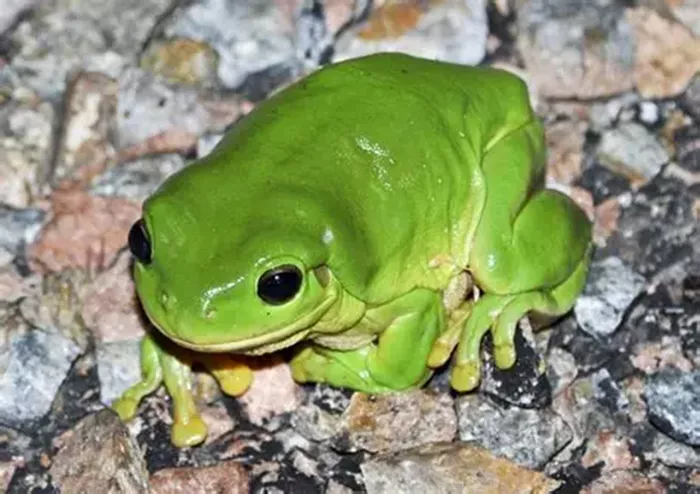
The Australian green tree frog is one of the most recognizable amphibians in the world. Many people see it in zoos, documentaries, and even private homes as a pet. Its calm nature and bright green color make it attractive. However, a common question often arises: is the Australian green tree frog poisonous?
The short answer is that the Australian green tree frog is not dangerously poisonous to humans. However, it does produce mild skin secretions that can cause irritation. Understanding what this means requires a closer look at the species, its biology, and how it protects itself in the wild.
This article will provide a detailed and scientifically grounded explanation. We will explore the frog’s natural habitat, its defensive mechanisms, the chemistry of its skin secretions, potential risks to humans and pets, and how to handle it safely. The goal is to give clear and reliable information using simple language while maintaining scientific accuracy.
What Is the Australian Green Tree Frog
The Australian green tree frog, scientifically known as Litoria caerulea, is a large tree-dwelling amphibian native to Australia and New Guinea. It is also sometimes called the White’s tree frog, named after the British naturalist John White.
This frog belongs to the family Hylidae, which includes many tree frog species. It is known for its smooth skin, large toe pads, and expressive eyes. Adults can grow up to 4 to 5 inches in length. Females are usually larger than males.
The frog’s color ranges from bright green to bluish-green. Sometimes it appears brown depending on temperature and stress levels. The belly is usually pale white or cream.
Natural Habitat and Behavior
In the wild, the Australian green tree frog lives in northern and eastern Australia. It prefers warm climates and can be found in forests, wetlands, and suburban gardens.
Unlike many frog species, it adapts well to human environments. It often hides in water tanks, bathrooms, and outdoor light fixtures. It is nocturnal, meaning it is active at night.
During the day, it rests in cool and moist areas. At night, it hunts insects, spiders, and small invertebrates. It sometimes eats small reptiles and even other frogs.
Understanding the Term Poisonous
Before answering the main question, it is important to understand what “poisonous” means. A poisonous animal releases toxins that can harm another organism when touched or eaten. This is different from venomous animals, which inject toxins through bites or stings.
The Australian green tree frog does not bite with venom. Instead, it produces skin secretions. Therefore, if it poses any risk, it would be considered poisonous rather than venomous.
Skin Secretions and Their Purpose
The skin of amphibians plays many roles. It helps with breathing, moisture control, and protection. In the Australian green tree frog, specialized glands in the skin produce a milky secretion.
This secretion serves several purposes:
- It protects against bacteria and fungi.
- It discourages predators from eating the frog.
- It keeps the skin moist.
The secretion contains bioactive compounds. These compounds can taste unpleasant and may irritate the mouth or eyes of predators.
Are the Skin Secretions Dangerous to Humans
For healthy adults, the skin secretions of the Australian green tree frog are not dangerous. However, they can cause mild irritation if they come into contact with sensitive areas such as the eyes or mouth.
Some people may experience:
- Temporary skin redness
- Mild itching
- Eye irritation
These reactions are usually short-lived. Washing hands after handling the frog is enough to prevent problems.
Risks to Children
Children are naturally curious. If a child handles a frog and then rubs their eyes or puts their fingers in their mouth, irritation may occur.
In rare cases, nausea could happen if a child accidentally ingests the secretion. However, serious poisoning cases involving this species are extremely uncommon.
Supervision and simple hygiene practices eliminate most risks.
Risks to Pets
Dogs and cats may be more sensitive than humans. If a dog bites or mouths the frog, it may drool excessively. The unpleasant taste usually causes the animal to release the frog quickly.
Symptoms in pets may include:
- Foaming at the mouth
- Pawing at the face
- Mild vomiting
These symptoms are typically temporary. However, if severe symptoms appear, veterinary attention should be sought.
Comparison with Truly Poisonous Frogs
To understand the safety level of the Australian green tree frog, it helps to compare it with highly toxic frogs such as the poison dart frogs of Central and South America.
Species like Phyllobates terribilis produce potent toxins that can cause serious harm or death. In contrast, the Australian green tree frog produces mild defensive chemicals that are not life-threatening.
This comparison shows that the Australian species is far less dangerous.
Why the Frog Produces Defensive Chemicals
In the wild, frogs face many predators. Birds, snakes, and mammals hunt them. Skin toxins discourage predators by making the frog taste unpleasant.
When a predator bites the frog, the secretion is released. The predator learns to avoid similar frogs in the future. This is an evolutionary defense strategy.
Handling the Frog Safely
If you encounter an Australian green tree frog, follow these simple guidelines:
- Wash your hands before and after handling.
- Avoid touching your face.
- Handle gently to avoid stressing the frog.
- Do not squeeze or restrain it tightly.
Stress can increase secretion production. Gentle handling reduces this response.
Keeping the Frog as a Pet
The Australian green tree frog is popular in the pet trade because of its calm temperament. It tolerates occasional handling better than many other frog species.
Even so, frequent handling is not recommended. Amphibian skin is delicate. Oils and chemicals from human skin can harm the frog.
Owners should provide:
- A humid enclosure
- Clean water
- Proper temperature control
- A balanced diet of insects
Medical and Scientific Interest
Interestingly, the skin secretions of the Australian green tree frog have attracted scientific research. Some compounds show antimicrobial properties.
Researchers study these compounds for potential medical applications. The frog’s natural defense system may inspire new treatments in the future.
Myths and Misconceptions
Some people believe all brightly colored frogs are deadly. This is not true. While bright coloration can signal toxicity in some species, the Australian green tree frog does not possess dangerous levels of toxins.
Another myth is that touching any frog will cause warts. Warts are caused by viruses in humans, not by frogs.
Environmental Importance
The Australian green tree frog plays an important role in its ecosystem. It controls insect populations and serves as prey for larger animals.
Healthy frog populations indicate a healthy environment. Because amphibians are sensitive to pollution, their presence reflects ecosystem quality.
Legal and Conservation Status
In many parts of Australia, the species is protected by wildlife regulations. It is not considered endangered, but habitat loss and pollution can threaten local populations.
Responsible interaction helps preserve this species for future generations.
Conclusion
The Australian green tree frog is not dangerously poisonous. It produces mild skin secretions that serve as a natural defense mechanism. These secretions may cause slight irritation but do not pose serious risks to healthy humans.
With basic hygiene and respectful handling, interactions with this frog are safe. Compared with truly toxic frog species, it is relatively harmless. Understanding its biology removes fear and replaces it with informed appreciation.
This species remains an important and fascinating part of Australia’s natural heritage.