
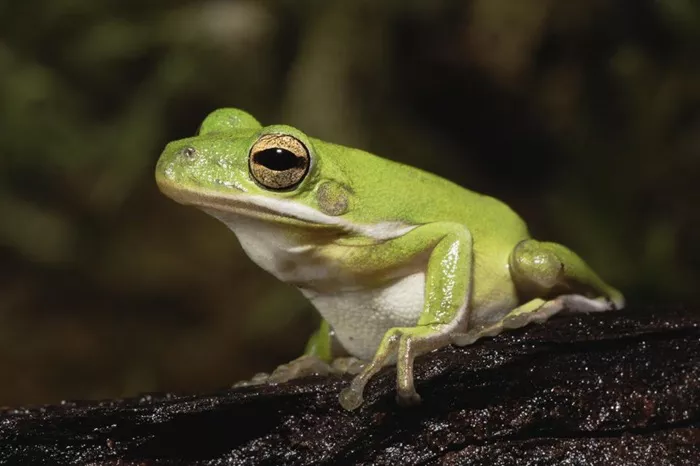
The Green tree frog is a familiar amphibian in many warm and humid regions. In North America, the species commonly known as the American green tree frog is scientifically called Hyla cinerea. In Australia, a different species often called the green tree frog is known as Litoria caerulea. Although these species live on different continents, they share many biological features. One of these shared features is how they produce and eliminate waste.
Many frog owners, gardeners, and wildlife observers often ask a simple question: what does green tree frog poop look like? This question may seem unusual at first. However, understanding frog feces is important. It helps identify the presence of frogs in a garden. It helps pet owners monitor health. It also prevents confusion with droppings from reptiles, rodents, or insects.
This article explains in detail what green tree frog poop looks like. It describes its size, color, texture, and composition. It also explains why frog droppings look the way they do. Health indicators, environmental influences, and common misconceptions will also be discussed. The goal is to provide clear, accurate, and practical information in simple language.
Basic Digestive System of a Green Tree Frog
Mouth and Swallowing
Green tree frogs are carnivorous. They eat insects, spiders, and other small invertebrates. They do not chew food. Instead, they use a sticky tongue to catch prey and swallow it whole. Because of this feeding method, parts of insects such as wings and exoskeleton fragments pass through the digestive system largely intact.
Stomach and Intestines
After swallowing, food moves to the stomach. Digestive acids and enzymes break down soft tissues. The intestines absorb nutrients. However, hard materials such as chitin from insect shells are not fully digested. These indigestible parts influence the texture and appearance of the feces.
The Cloaca
Like other amphibians, green tree frogs have a cloaca. The cloaca is a single opening used for waste elimination and reproduction. Both feces and urine exit through this opening. This fact explains one of the most noticeable characteristics of frog droppings.
General Appearance of Green Tree Frog Poop
Overall Shape
Green tree frog poop usually appears as a small, dark, cylindrical pellet. It is often slightly curved. The shape may resemble a short piece of dark brown or black rice, but thicker. In some cases, it looks like a small sausage-shaped dropping.
The ends are usually rounded rather than sharply pointed. Because frogs swallow food whole, undigested fragments can make the surface uneven.
Size
The size depends on the frog’s age and body size. An adult green tree frog typically produces droppings that are about 0.5 to 1 inch long. They are usually a few millimeters thick. Juvenile frogs produce much smaller droppings.
If the frog has eaten a large meal, the feces may be slightly larger. If it has not eaten recently, droppings will be smaller.
Color
Fresh green tree frog feces are usually dark brown to almost black. The dark color comes from digested insect material and bile pigments. As the feces dry, the color may become lighter brown or grayish.
One of the most distinctive features is a white or off-white portion attached to the darker mass. This white part is not mold. It is uric acid, which is the solid form of nitrogenous waste in amphibians.
Texture
Fresh frog poop is moist and soft. It may appear glossy. After several hours, it dries and becomes firm and crumbly. Because insect exoskeletons are present, small shiny fragments may be visible inside the feces.
The White Portion Explained
What Is Uric Acid
Green tree frogs excrete nitrogenous waste mainly as uric acid. Uric acid is a semi-solid white material. It is more water-efficient than liquid urine. This adaptation helps amphibians conserve water.
Why It Is Attached to the Feces
Because waste exits through the cloaca, feces and uric acid are expelled together. This creates a two-part dropping: a dark section and a white section. The white portion often appears as a cap or smear on one end.
This combination can confuse people. Some mistake frog droppings for lizard droppings because many reptiles also excrete uric acid in this way.
Comparison With Other Animal Droppings
Frog vs. Lizard
Lizard droppings also have a dark portion and a white uric acid tip. However, lizard feces are often more elongated and may have a sharper end. In areas where both animals live, it can be difficult to tell them apart without observing the animal directly.
Frog vs. Rodent
Rodent droppings do not have a white uric acid cap. They are usually dry and uniformly dark. They are also produced in larger quantities. If you see many small pellets without white tips, they are unlikely to be from a frog.
Frog vs. Bird
Bird droppings are typically more liquid and splattered. They contain white uric acid, but the white portion is more mixed with the darker material. Frog droppings are more compact and pellet-like.
Location Where You May Find Frog Poop
On Leaves and Walls
Green tree frogs are arboreal. They climb plants, walls, and windows. Their droppings are often found on leaves, near porch lights, or on outdoor walls where insects gather.
Inside Terrariums
Pet frogs usually defecate in moist areas of their enclosure. Owners may find droppings in water bowls, on substrate, or attached to decorative plants.
How Diet Influences Appearance
Insect Type
A frog that eats mostly crickets may produce feces with visible exoskeleton fragments. A frog that eats soft-bodied insects like moths may produce smoother droppings.
Feeding Frequency
Frequent feeding leads to regular bowel movements. In healthy adult frogs, defecation may occur every few days. Larger meals may result in larger droppings.
Signs of Healthy Frog Poop
Normal Characteristics
Healthy green tree frog feces should be:
Dark brown or black in color.
Firm but not rock hard.
Moist when fresh.
With a clearly visible white uric acid portion.
No Strong Odor
Frog droppings usually have a mild odor. A very strong or foul smell may indicate infection or poor enclosure hygiene.
Abnormal Droppings and Health Concerns
Runny Stool
Watery feces may indicate stress, parasites, or bacterial infection. Persistent diarrhea requires veterinary attention.
Red or Bloody Stool
Blood in feces is abnormal. It may indicate internal injury or parasites. Immediate professional care is necessary.
No White Portion
If the white uric acid portion is absent over multiple bowel movements, hydration or kidney function may be compromised.
Cleaning and Safety Considerations
Hygiene
Although green tree frogs are generally harmless, their feces may contain bacteria. Gloves should be used when cleaning terrariums. Hands should be washed afterward.
Outdoor Areas
In gardens, frog droppings are usually harmless and even beneficial. Frogs control insect populations. Their waste breaks down naturally in soil.
Why Frog Poop Is Important for Observation
Frog droppings provide evidence of presence. Even if you do not see the frog, finding characteristic dark pellets with a white cap suggests that a green tree frog may be nearby.
For researchers and wildlife enthusiasts, fecal analysis can reveal diet composition. In scientific studies, examining insect fragments in feces helps determine feeding habits.
Conclusion
Green tree frog poop is small, dark, and cylindrical. It usually measures less than one inch in length. The most distinctive feature is the attached white uric acid portion. Fresh droppings are moist and soft, while older ones become dry and firm. Their appearance reflects the frog’s insect-based diet and unique cloacal anatomy.
Understanding what green tree frog feces look like helps distinguish them from those of lizards, rodents, and birds. It also helps pet owners monitor health. By observing size, color, texture, and frequency, one can gain valuable insight into the well-being of these fascinating amphibians.