
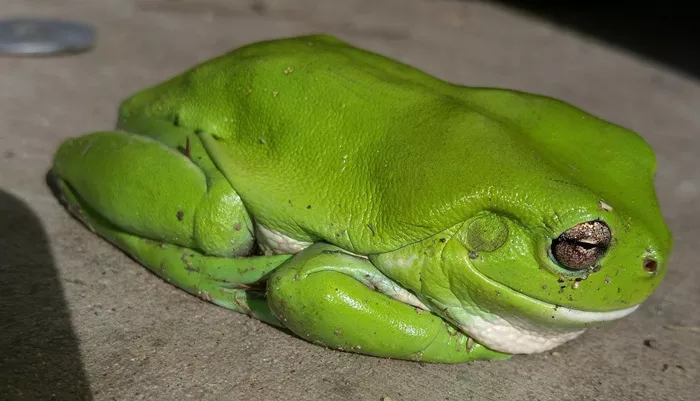
Many people enjoy seeing green tree frogs in gardens, forests, and even near their homes. Their bright green color, wide eyes, and gentle appearance make them seem harmless. However, a common question often arises: can green tree frogs be poisonous to humans? This concern is understandable. In nature, bright colors often signal danger. Some frogs around the world are indeed highly toxic. Therefore, it is important to clearly understand the facts.
Green tree frogs are generally not dangerous to humans. They do produce mild skin secretions, but these are not considered poisonous in the way that some tropical frogs are. Still, there are details that every reader should know. In this article, we will explore the biology of green tree frogs, the meaning of poison and venom, how their skin secretions work, possible risks to humans, safety guidelines, and common myths.
What Is a Green Tree Frog
The term “green tree frog” commonly refers to species such as the American Green Tree Frog (Hyla cinerea) and the Australian Green Tree Frog (Litoria caerulea). These frogs belong to the tree frog family. They are arboreal, which means they spend much of their time in trees and shrubs.
Green tree frogs are amphibians. Amphibians have smooth, moist skin. They can breathe through their skin as well as through their lungs. Because of this, their skin plays a very important biological role. It is sensitive and active. It is not like the dry scales of reptiles.
Most green tree frogs are small to medium in size. They are usually bright green, but their color can change slightly depending on temperature, humidity, and mood. Their gentle behavior makes them popular in both the wild and as pets.
Understanding the Difference Between Poisonous and Venomous
Before discussing whether green tree frogs are poisonous, we must define two important scientific terms: poisonous and venomous.
A poisonous animal causes harm when it is touched or eaten. The toxin is usually absorbed through the skin or digestive system. A venomous animal injects toxins directly into another organism through a bite or sting.
Frogs, including green tree frogs, are not venomous. They do not bite and inject toxins. Instead, some frogs are poisonous because they produce chemicals in their skin.
However, not all frogs produce strong toxins. Many species only produce mild defensive chemicals. These substances are meant to discourage predators, not to harm humans.
Do Green Tree Frogs Produce Toxins
Yes, green tree frogs produce mild skin secretions. This is normal for most amphibians. Their skin contains glands that release protective substances. These chemicals help prevent infections. They also make the frog taste unpleasant to predators.
In species like the American green tree frog and the Australian green tree frog, these secretions are very mild. They are not considered dangerous to healthy humans.
If a predator such as a bird or snake tries to eat the frog, the bad taste may cause the predator to spit it out. This defense system increases the frog’s chance of survival.
Are Green Tree Frogs Dangerous to Humans
For healthy adults and children, green tree frogs are not dangerous. Touching one briefly will not cause poisoning. There are no recorded cases of serious toxicity from normal contact with these species.
However, direct contact can sometimes cause mild skin irritation. This is rare and usually temporary. People with very sensitive skin may notice slight redness.
If a person touches a frog and then rubs their eyes, nose, or mouth without washing their hands, irritation can occur. The chemicals in the frog’s skin may cause stinging in the eyes or mild discomfort.
These effects are not life-threatening. They are similar to touching a mild plant irritant.
Comparing Green Tree Frogs to Highly Poisonous Frogs
It is important not to confuse green tree frogs with highly toxic species like the Poison Dart Frog (Dendrobatidae family). Poison dart frogs live in Central and South America. Some species contain powerful toxins called batrachotoxins. These chemicals can affect the nervous system and heart.
Green tree frogs do not produce batrachotoxins. Their chemical defenses are much weaker. They cannot cause serious poisoning through skin contact.
The bright colors of poison dart frogs often signal high toxicity. Green tree frogs, although colorful, do not carry the same level of danger.
What Happens If You Touch a Green Tree Frog
In most cases, nothing serious happens. The frog may feel cool and moist. It may try to jump away. If handled gently and briefly, there is no major risk.
However, it is not recommended to handle wild frogs frequently. Human hands contain oils, salts, and chemicals. These substances can harm the frog’s sensitive skin.
If you touch a green tree frog, wash your hands afterward with soap and water. This protects both you and the frog.
What If a Dog or Cat Licks a Green Tree Frog
Pets are more sensitive than humans. If a dog licks a green tree frog, it may drool excessively. This happens because the frog’s skin secretions taste unpleasant. The drooling is usually temporary.
In rare cases, mild vomiting may occur. Severe reactions are extremely uncommon with green tree frogs. If symptoms last more than a short time, a veterinarian should be consulted.
Again, this reaction is not true poisoning. It is a response to a bad taste and mild irritation.
Can Green Tree Frogs Bite
Green tree frogs do not bite in a harmful way. They may gently grab food with their mouths. Their teeth are tiny and not designed for defense. A human bite from a green tree frog would not break the skin.
Therefore, they are not venomous and cannot inject toxins.
Are Green Tree Frogs Safe as Pets
Species such as the Australian green tree frog are popular pets. They are generally calm and easy to care for. With proper hygiene, they are safe to keep.
Owners should always wash hands before and after handling. This prevents bacterial transfer. Amphibians can carry bacteria such as Salmonella, which can infect humans if hygiene is poor.
The risk comes from bacteria, not poison.
Understanding Amphibian Skin Chemistry
Amphibian skin contains specialized glands. These glands produce antimicrobial peptides. These compounds protect frogs from infections in moist environments.
Scientists study frog skin secretions for medical research. Some peptides show promise in fighting bacteria. This demonstrates that frog secretions are biologically active, but not necessarily dangerous.
The chemicals in green tree frogs are mild compared to those in highly toxic species.
Common Myths About Green Tree Frogs
One myth is that all bright green frogs are poisonous. This is not true. Color alone does not determine toxicity.
Another myth is that touching a frog will cause warts. Warts are caused by viruses, not frogs. This belief has no scientific basis.
Some people believe frogs can spray poison. Green tree frogs cannot spray toxins.
Situations Where Caution Is Needed
Although green tree frogs are not dangerous, caution is still wise. People with allergies or very sensitive skin should avoid handling wild animals.
Children should be supervised when interacting with wildlife. They should learn to observe rather than touch.
Always avoid touching your face after handling any amphibian.
Ecological Role of Green Tree Frogs
Green tree frogs play an important role in ecosystems. They eat insects such as mosquitoes and flies. This helps control pest populations.
They are also prey for birds and snakes. Their mild toxins provide just enough protection to discourage predators without disrupting the food chain.
Their presence often indicates a healthy environment.
How to Safely Observe Green Tree Frogs
The best way to enjoy green tree frogs is through observation. Use a flashlight at night to watch them hunt insects. Maintain distance. Avoid sudden movements.
If relocation is necessary, use gloves and handle them gently. Always release them in a safe area.
Medical Attention and When It Is Needed
Medical attention is rarely required after contact with a green tree frog. Seek help only if severe allergic reactions occur. Symptoms such as difficulty breathing, swelling, or intense pain are not typical and would be extremely rare.
Most minor irritations disappear after washing with clean water.
Scientific Consensus on Toxicity
Herpetologists agree that green tree frogs are not significantly poisonous to humans. Their defensive chemicals are mild. They serve ecological functions rather than posing danger.
The overall risk level is considered very low.
Conclusion
Green tree frogs are not poisonous to humans in any serious or life-threatening way. While they do produce mild skin secretions for defense, these chemicals may only cause minor irritation in rare cases. They are neither venomous nor highly toxic. Compared to truly poisonous frogs such as poison dart frogs, green tree frogs are very safe.
With proper hygiene and respectful observation, humans and green tree frogs can safely share the same environment. Understanding the difference between myth and scientific fact helps reduce unnecessary fear and promotes appreciation for these gentle amphibians.