
Many cat owners enjoy spending time outdoors with their pets. In gardens, parks, and rural areas, cats may encounter many small animals. One of these animals is the green tree frog. This raises an important question: are green tree frogs poisonous to cats?
Green tree frogs are small, bright amphibians that live in warm and humid regions. They often appear near ponds, gardens, rainwater tanks, and outdoor lights. Cats are natural hunters. They may chase, bite, or play with frogs. Because of this, pet owners need clear and reliable information.
In this article, we will examine whether green tree frogs are poisonous to cats. We will explain what “poisonous” really means. We will look at the biology of green tree frogs, how cats react to frog toxins, what symptoms may appear, and what actions owners should take. The goal is to provide accurate, practical guidance in simple language while maintaining scientific authority.
Understanding the Green Tree Frog
Scientific Identity
The species commonly known as the green tree frog is Ranoidea caerulea. It was previously classified as Litoria caerulea. It belongs to the amphibian family Hylidae. This species is native to Australia and New Guinea.
Physical Characteristics
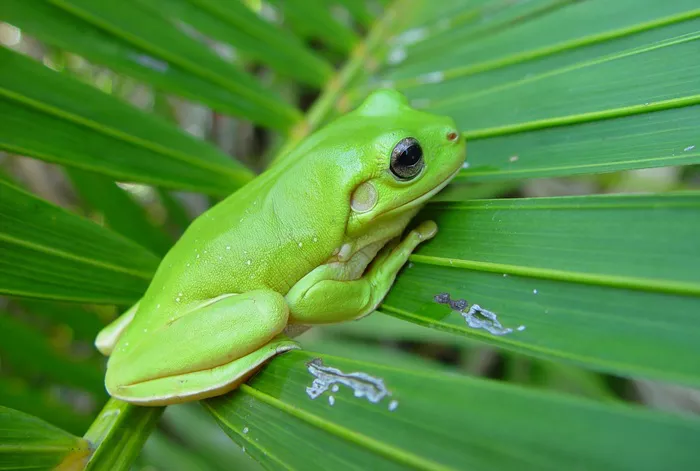
Green tree frogs are medium to large tree frogs. They usually have smooth, bright green skin. Sometimes their color may appear bluish-green or olive. They have large toe pads that help them climb. Their eyes are golden or copper-colored with horizontal pupils.
Their skin often appears slightly waxy. This is due to natural skin secretions. These secretions play an important role in defense, moisture control, and protection against infection.
Habitat and Behavior
Green tree frogs live in warm, moist climates. They are commonly found in parts of northern and eastern Australia. They prefer areas near water. However, they can also live close to human homes. They often hide in toilets, water tanks, sheds, and garden plants.
They are nocturnal animals. They are most active at night. This is also the time when many cats are active outdoors. Because of this overlap, encounters are common in certain regions.
Poisonous vs. Venomous: Important Definitions
Before answering the main question, it is important to understand two scientific terms: poisonous and venomous.
A poisonous animal releases toxins when it is touched, eaten, or handled. The toxin is usually absorbed through the skin or mouth of the predator.
A venomous animal injects toxin directly into another animal through a bite or sting.
Green tree frogs are not venomous. They do not bite and inject toxins. However, they do produce skin secretions. These secretions can be considered mildly poisonous if ingested or placed in the mouth.
Are Green Tree Frogs Toxic to Cats
The short answer is: green tree frogs are mildly toxic to cats, but they are not usually deadly.
When a cat bites or licks a green tree frog, the frog releases defensive chemicals from its skin. These chemicals are designed to taste bad and discourage predators. In most cases, these secretions cause drooling and discomfort rather than serious poisoning.
However, every cat is different. Some cats may have stronger reactions. Kittens, elderly cats, or cats with health problems may be more sensitive.
What Is in the Frog’s Skin Secretions
Green tree frogs produce several bioactive compounds. These include peptides and antimicrobial substances. Scientists have studied these compounds because some have potential medical value.
These skin chemicals help the frog fight bacteria and fungi. They also serve as a defense mechanism against predators.
In cats, these substances usually irritate the mouth and digestive system. They do not typically cause organ failure or severe systemic poisoning. This is very different from certain highly toxic toads.
Comparing Green Tree Frogs and Toxic Toads
It is important not to confuse green tree frogs with toxic toad species. For example, the cane toad, scientifically known as Rhinella marina, is highly toxic to pets.
Cane toads produce powerful toxins from large parotoid glands behind their heads. These toxins can cause seizures, heart problems, and even death in cats and dogs.
Green tree frogs do not have these large toxin glands. Their skin secretions are much milder. While they can cause temporary symptoms, they rarely cause life-threatening reactions.
What Happens If a Cat Bites a Green Tree Frog
If a cat catches and bites a green tree frog, the frog’s skin secretions are released into the cat’s mouth. The most common symptoms include:
Excessive Drooling
This is the most frequent sign. The cat may drool heavily. Saliva may drip from the mouth.
Pawing at the Mouth
The cat may scratch or paw at its face. This happens because the mouth feels irritated.
Foaming at the Mouth
Foamy saliva may appear. This is usually due to irritation and increased saliva production.
Vomiting
Some cats may vomit if they swallow part of the frog or its secretions.
These symptoms usually appear quickly, often within minutes. In most cases, they resolve within a short time after the mouth is rinsed.
Are Severe Reactions Possible
Severe reactions are rare but possible. A cat may experience:
- Persistent vomiting
- Weakness
- Tremors
- Lethargy
If these symptoms appear, veterinary care is necessary. Although green tree frogs are not highly toxic, any unusual or prolonged reaction should be taken seriously.
First Aid for Cats Exposed to Green Tree Frogs
Rinse the Mouth
Use clean, running water to gently rinse the cat’s mouth. Make sure the cat does not inhale water. This helps remove irritant substances.
Wipe the Gums
You may use a damp cloth to gently wipe the gums and tongue.
Monitor the Cat
Observe your cat for at least several hours. Look for changes in behavior or ongoing symptoms.
Contact a Veterinarian if Needed
If symptoms are severe or do not improve, contact a veterinary professional immediately.
Why Cats Are Attracted to Frogs
Cats are instinctive hunters. Moving objects attract them. Frogs hop and make sounds at night. This triggers the cat’s prey drive.
Some cats also enjoy the texture of amphibians. Frogs move unpredictably, which makes them exciting targets.
Understanding this behavior helps owners reduce risk. Keeping cats indoors at night can lower the chance of frog encounters.
Regional Considerations
Green tree frogs are especially common in Australia. In areas where both green tree frogs and cane toads exist, identification becomes important.
If you live in a region with highly toxic toads, any frog or toad exposure should be treated with caution. Quick identification can make a major difference in treatment decisions.
Preventing Frog and Cat Encounters
Limit Outdoor Access at Night
Most frogs are active after dark. Keeping cats indoors at night reduces exposure.
Reduce Garden Water Sources
Standing water attracts frogs. Remove unnecessary water containers.
Install Safe Lighting
Bright lights attract insects. Insects attract frogs. Adjusting outdoor lighting can reduce frog activity near entrances.
Veterinary Perspective
Veterinarians generally classify green tree frog exposure as a mild toxin event. Treatment is usually supportive. Rinsing the mouth and monitoring are often sufficient.
In rare cases, anti-nausea medication or fluid therapy may be needed. Most cats recover fully within hours.
Are Green Tree Frogs Dangerous in the Long Term
There is no strong evidence that brief exposure to green tree frog secretions causes long-term damage in healthy cats. The irritation is usually temporary.
Repeated exposure, however, may increase stress or risk of injury during hunting attempts. Cats may also be scratched or bitten during the encounter.
Conclusion
Green tree frogs are mildly poisonous to cats, but they are not usually life-threatening. Their skin secretions can cause drooling, mouth irritation, and sometimes vomiting. In most cases, symptoms are short-lived and resolve with simple first aid.
It is important to distinguish green tree frogs from highly toxic toads such as the cane toad. Severe poisoning is rare with green tree frogs but common with certain toads.
Cat owners should supervise outdoor activity, especially at night. If exposure occurs, rinse the mouth and monitor carefully. Seek veterinary care if symptoms are severe or persistent.
With proper knowledge and precaution, the risk to cats from green tree frogs remains low and manageable.