
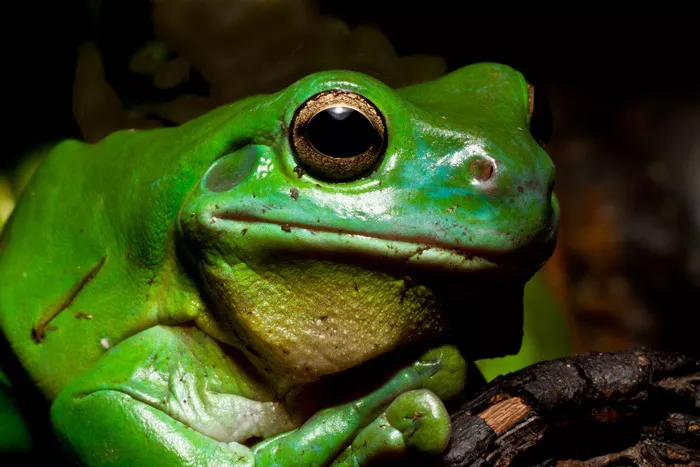
Many people wonder whether green tree frogs hibernate. These small, bright amphibians are often seen during warm months. They call loudly at night. They climb plants and windows. But when temperatures drop, they seem to disappear. This change leads to a common question: do green tree frogs hibernate?
To answer this clearly, we must understand their biology, their habitats, and how amphibians respond to cold weather. Green tree frogs do not hibernate in the same way mammals do. Instead, they enter a state called brumation. This is a period of dormancy triggered by environmental changes. In this article, we will explore what that means, how it works, and how it differs from true hibernation.
What Is a Green Tree Frog
The green tree frog most commonly discussed in North America is the American green tree frog, scientifically known as Hyla cinerea. It belongs to the tree frog family. It is slender, usually bright green, and often has a white stripe along its side. Its large toe pads help it climb smooth surfaces.
Green tree frogs live in warm, humid regions. They prefer swamps, ponds, marshes, and other wetlands. They are active mainly at night. During the day, they rest on leaves or other surfaces.
Hibernation Versus Brumation
To understand what green tree frogs do in winter, we must clarify two important terms: hibernation and brumation.
What Is Hibernation
Hibernation is a deep, prolonged sleep-like state. It occurs in many mammals. During hibernation, body temperature drops significantly. Heart rate and breathing slow down. The animal does not eat, drink, urinate, or defecate for long periods.
What Is Brumation
Brumation is similar but occurs in cold-blooded animals such as reptiles and amphibians. During brumation, the animal becomes inactive. Its metabolism slows. However, it may wake occasionally. It may move slightly or drink water if available.
Green tree frogs undergo brumation, not true hibernation. This distinction is important in amphibian physiology.
Why Green Tree Frogs Become Dormant
Green tree frogs are ectothermic animals. This means they rely on external heat sources to regulate body temperature. When air temperatures fall, their body temperature also drops. Cold conditions reduce their ability to move and digest food.
As winter approaches, shorter daylight hours and lower temperatures signal the frog to slow down. Food sources such as insects become scarce. Survival requires conserving energy. Entering brumation helps them survive periods when active feeding is impossible.
When Do Green Tree Frogs Enter Brumation
The timing depends on geographic location. In southern regions, where winters are mild, green tree frogs may remain active longer. In areas with colder winters, they begin brumation in late fall.
Typically, once nighttime temperatures consistently drop below about 50°F (10°C), activity decreases sharply. Frogs seek shelter and prepare for dormancy.
Where Do Green Tree Frogs Go in Winter
Green tree frogs choose sheltered, moist, and insulated environments. Common brumation sites include:
– Under leaf litter
– Inside tree bark crevices
– Beneath logs or rocks
– In dense vegetation
– Occasionally in mud near water bodies
Unlike fully aquatic frogs, green tree frogs are semi-arboreal. They do not typically spend winter at the bottom of ponds. Instead, they rely on terrestrial shelter.
Physiological Changes During Brumation
Several physiological changes occur during brumation:
Metabolic Slowdown
The metabolic rate drops significantly. Energy consumption becomes minimal. Stored fat reserves sustain the frog through winter.
Reduced Heart Rate
Heart rate slows. Oxygen demand decreases. Because amphibians can absorb some oxygen through their skin, this supports survival during inactivity.
Limited Movement
Frogs remain mostly motionless. However, they are not in a deep sleep. If temperatures briefly rise, they may become slightly active.
Cold Tolerance in Green Tree Frogs
Green tree frogs are not as freeze-tolerant as some northern frog species. Certain amphibians can survive partial freezing by producing cryoprotectants such as glucose. Green tree frogs, however, avoid freezing by seeking insulated microhabitats.
If exposed to prolonged freezing temperatures without shelter, they may not survive. This is why their geographic range is largely limited to warmer climates.
Do Green Tree Frogs Hibernate in Captivity
In captivity, conditions are controlled. Indoor temperatures usually remain stable. Artificial lighting can extend daylight hours. Because of this, captive green tree frogs often do not enter full brumation.
However, they may show reduced appetite and activity during winter months due to subtle environmental changes. Responsible keepers monitor temperature, humidity, and feeding patterns carefully.
How Long Does Brumation Last
The duration depends on climate. In mild southern regions, brumation may last only a few weeks. In cooler areas, it may last several months.
Once temperatures rise consistently in spring, frogs emerge. Increased warmth and longer daylight stimulate activity and breeding behavior.
Behavior After Emerging From Brumation
When green tree frogs awaken, they resume feeding quickly. They need to replenish depleted fat reserves. Soon after, breeding season begins. Males call loudly near water sources to attract females.
This rapid shift from dormancy to reproductive activity demonstrates the importance of seasonal timing in amphibian life cycles.
Environmental Factors That Influence Brumation
Several environmental variables influence whether and how green tree frogs brumate:
Temperature
Temperature is the primary trigger. Sustained cold initiates dormancy.
Photoperiod
Shorter daylight hours signal seasonal change. Frogs respond hormonally to this shift.
Humidity
Moisture is essential. Amphibians risk dehydration during winter. Suitable shelter must maintain adequate humidity.
Comparison With Other Frog Species
Not all frogs respond to winter the same way. Aquatic species may overwinter underwater. Some northern species tolerate partial freezing. Tropical frogs may not experience brumation at all.
Green tree frogs occupy an intermediate ecological niche. They avoid extreme cold rather than endure it.
Risks During Brumation
Although brumation conserves energy, it carries risks:
– Predation if shelter is inadequate
– Dehydration
– Sudden temperature drops
– Habitat disturbance by human activity
Urban development can reduce available overwintering sites. Conservation of wetlands and surrounding vegetation is essential.
Climate Change and Winter Survival
Climate change may alter winter patterns. Warmer winters could shorten brumation. Sudden temperature fluctuations could increase stress. Amphibians are sensitive indicators of environmental change.
Understanding brumation helps scientists predict how species will respond to shifting climates.
Common Myths About Green Tree Frog Hibernation
Myth 1 They Sleep All Winter Without Waking
This is incorrect. During brumation, frogs may briefly become active if conditions improve.
Myth 2 They Always Hide Underwater
Green tree frogs are primarily terrestrial during winter. They prefer insulated land shelters.
Myth 3 They Cannot Survive Any Cold
They tolerate mild cold but avoid freezing conditions through shelter selection.
Practical Advice for Observers
If you do not see green tree frogs in winter, this is normal. Avoid disturbing leaf litter or logs unnecessarily. These may serve as critical overwintering habitats.
In spring, listen for their calls near ponds and wetlands. Their reappearance signals seasonal renewal.
Conclusion
Green tree frogs do not hibernate in the strict mammalian sense. Instead, they enter brumation. This state allows them to survive cold periods by slowing metabolism and conserving energy. They seek protected, moist shelters and remain largely inactive until warmer weather returns. Understanding this seasonal adaptation provides insight into amphibian ecology and highlights the importance of preserving natural habitats. Through brumation, green tree frogs demonstrate a finely tuned response to environmental change, ensuring their survival year after year.