
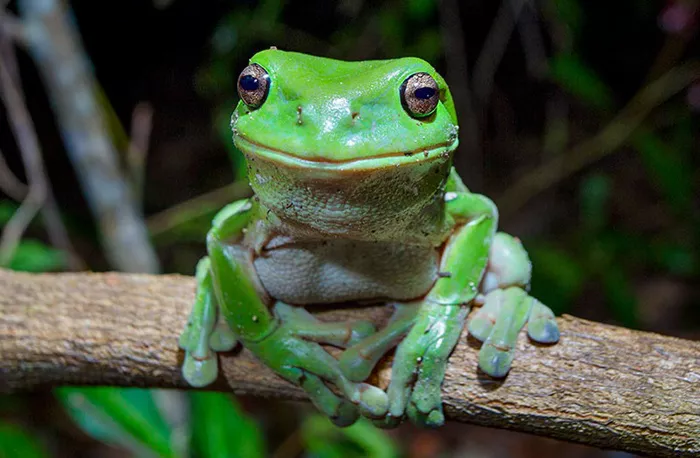
Green tree frogs are small, bright, and often charming amphibians. Many people see them resting on leaves, clinging to windows, or hiding near porch lights. Because of their gentle appearance, people often assume they eat only insects. However, the natural world is rarely that simple. A common question arises among pet owners, wildlife observers, and students of herpetology: do green tree frogs eat other frogs?
The short answer is yes, they can. While insects form the main part of their diet, green tree frogs are opportunistic predators. If the opportunity presents itself, and if the prey is small enough, they may consume other frogs. This behavior is not their primary feeding strategy, but it does occur under certain conditions.
To understand this topic fully, we must explore their biology, feeding mechanisms, natural habitat, and behavioral ecology. By examining these factors in detail, we can better understand when and why cannibalism or interspecies predation may happen.
Understanding the Green Tree Frog
Species Overview
The name “green tree frog” commonly refers to species such as the American Green Tree Frog (Hyla cinerea) in North America and the Australian Green Tree Frog (Litoria caerulea) in Australia. Though they live on different continents, they share similar traits. Both species are arboreal, meaning they spend much of their time in trees and shrubs.
They have adhesive toe pads that allow them to climb smooth surfaces. Their coloration ranges from bright green to olive or brownish green. This helps them blend into vegetation. Adults usually measure between 1.5 and 4 inches, depending on species and sex.
Habitat and Distribution
Green tree frogs live in warm climates. They prefer humid environments near water sources such as ponds, marshes, lakes, and slow-moving streams. These areas provide both moisture and abundant insect prey.
Because they are adaptable, they may also live near human settlements. Porch lights attract insects, and insects attract frogs. This proximity to human environments sometimes brings them into contact with other frog species.
The Natural Diet of Green Tree Frogs
Primary Food Sources
Green tree frogs are carnivorous. Their diet mainly consists of:
- Crickets
- Moths
- Flies
- Beetles
- Spiders
- Small grasshoppers
They are ambush predators. They wait patiently and strike quickly with a sticky tongue. Their feeding behavior relies on movement. If it moves and fits in their mouth, it is likely considered food.
Feeding Strategy
Green tree frogs use a sit-and-wait strategy. They remain still until prey comes within range. Then they lunge forward and capture it with a rapid tongue extension. Their jaws are not built for chewing. They swallow prey whole.
This feeding method explains why prey size matters. Anything small enough to fit in their mouth and be swallowed whole may become a target.
Do Green Tree Frogs Eat Other Frogs
Short Answer
Yes, green tree frogs can eat other frogs. However, this is not their preferred or common diet in the wild. It usually happens under specific circumstances.
When Does It Happen
There are several scenarios in which a green tree frog might eat another frog:
1. Size Advantage
If the green tree frog is significantly larger than another frog species or a juvenile frog, it may attempt to eat it. Frogs do not recognize species boundaries in the way humans do. If it fits in the mouth, it may be eaten.
2. Limited Food Availability
During droughts or seasonal insect declines, food becomes scarce. In such cases, frogs may become more opportunistic. Smaller frogs, especially newly metamorphosed juveniles, may become prey.
3. High Population Density
In crowded habitats, competition increases. Close proximity raises the chance of accidental predation or cannibalism. A frog might mistake a small moving frog for insect prey.
4. Captivity Conditions
In terrariums or enclosures, frogs kept together without proper size matching may prey on smaller tank mates. This is a common issue among inexperienced keepers.
Cannibalism in Green Tree Frogs
Is It True Cannibalism
Cannibalism refers to eating members of the same species. Green tree frogs are capable of cannibalism, though it is not typical behavior in stable wild environments.
Tadpoles of many frog species show cannibalistic tendencies under crowded conditions. Adult frogs may also consume smaller individuals if size difference is large.
Biological Explanation
From an evolutionary standpoint, cannibalism can serve survival purposes. It provides nutrition when resources are scarce. It may also reduce competition. While this behavior may seem harsh, it is a natural survival strategy.
Do They Prefer Other Frogs as Food
No. Insects remain the primary and preferred food source. Frogs are not active hunters of other frogs in the way that snakes or larger amphibians might be.
Eating another frog is usually opportunistic rather than intentional hunting behavior. Movement triggers feeding response. The frog does not plan or target specific prey types beyond size and motion.
Comparison with Other Frog Species
More Aggressive Frog Predators
Some frog species are more likely to eat other frogs. For example:
These frogs have large mouths and powerful jaws. They regularly consume smaller frogs, rodents, and even birds. In contrast, green tree frogs are smaller and less aggressive.
Relative Risk
Compared to bullfrogs, green tree frogs present a lower predatory threat to other amphibians. Their size limits what they can consume.
Implications for Pet Owners
Housing Considerations
If keeping green tree frogs in captivity, size matching is critical. Never house large frogs with significantly smaller frogs. This applies even if they are the same species.
Feeding Practices
Provide consistent and adequate insect prey. Hunger increases the likelihood of aggressive feeding behavior. A well-fed frog is less likely to attempt eating tank mates.
Ecological Role and Balance
Green tree frogs help control insect populations. Their occasional predation on smaller frogs does not significantly disrupt ecosystems. In natural systems, predator-prey relationships are balanced over time.
Other predators such as birds, snakes, and larger amphibians also prey on green tree frogs. They are both predator and prey within their environment.
Behavioral Triggers Behind Frog Predation
Frogs rely heavily on visual movement cues. A small hopping frog may resemble large insect prey. The feeding strike is rapid and often reflexive. Once the prey is in the mouth, the frog rarely releases it.
This means predation on other frogs may sometimes be accidental rather than deliberate.
Conclusion
Green tree frogs primarily eat insects. However, they can and sometimes do eat other frogs. This behavior is opportunistic and usually depends on size difference, food scarcity, and environmental conditions. It is not their preferred diet, nor is it common in balanced natural habitats. Understanding their feeding biology helps clarify why this behavior occurs. In both the wild and captivity, proper ecological balance and responsible care reduce the likelihood of frog-on-frog predation.