
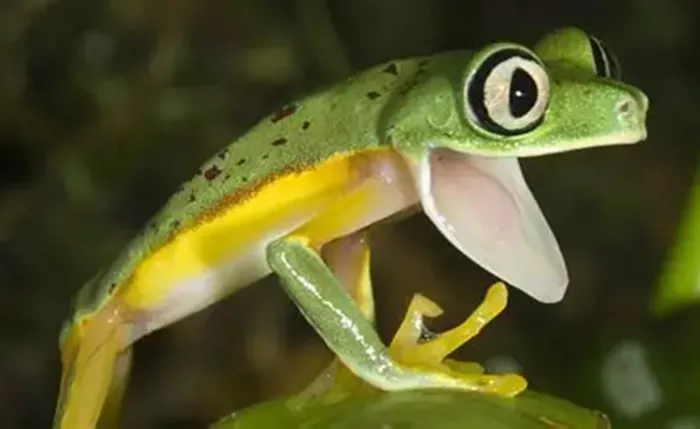
Green tree frogs are small, bright, and charming amphibians that often attract attention because of their vivid color and gentle appearance. Many people see them in gardens, wetlands, forests, or even as pets in terrariums. A common question quickly follows: do green tree frogs bite?
The short answer is yes, they can bite. However, the full explanation is more nuanced. Their bites are rare, mild, and usually harmless to humans. Understanding why they might bite, how their behavior works, and what this means for owners or wildlife observers requires a closer look at their biology and temperament.
In this article, we will explore the anatomy, behavior, defense strategies, and safety considerations of green tree frogs. We will explain when biting may occur, how strong their bite is, and whether it poses any risk. We will also provide practical guidance for handling and caring for these frogs.
What Is a Green Tree Frog
The name green tree frog refers to several species of arboreal frogs that share a similar bright green coloration and tree-climbing lifestyle. Two of the most well-known species are the American Green Tree Frog (Hyla cinerea) and the Australian Green Tree Frog (Litoria caerulea).
The American species is native to the southeastern United States. It is slender, smooth-skinned, and usually has a white or yellow stripe along its side. The Australian species is larger, more robust, and has a broader head and thicker body.
Despite differences in size and origin, both species share similar feeding habits and defensive behaviors. This similarity allows us to discuss their biting tendencies in a unified way.
Are Green Tree Frogs Aggressive
Green tree frogs are not aggressive animals. They are generally calm and shy. In the wild, they prefer to escape rather than confront a threat. If disturbed, their first reaction is usually to jump away or remain still to avoid detection.
As pets, they often tolerate gentle handling, though frequent handling is not recommended. Their skin is sensitive and absorbs moisture and chemicals easily. Because of this, stress from handling is more concerning than aggression.
Therefore, biting is not a common or primary defensive behavior. It is typically a secondary reaction under specific circumstances.
Do Green Tree Frogs Bite Humans
Yes, green tree frogs can bite humans, but such events are rare and usually accidental. Their bites are typically linked to feeding responses rather than aggression.
Frogs rely heavily on movement when identifying prey. When they see something small and moving, they may assume it is food. If a finger is placed too close during feeding, especially if it moves quickly, a frog may snap at it.
This reaction is instinctive. It is not an act of hostility. The frog is responding to what it perceives as prey.
How Strong Is a Green Tree Frog’s Bite
Green tree frogs have small jaws and tiny teeth called maxillary teeth. These teeth are not designed for tearing flesh. Instead, they help grip slippery prey such as insects.
The bite force of a green tree frog is extremely weak compared to mammals or reptiles. Most people describe the sensation as a light pinch or a gentle squeeze. In many cases, it does not even break the skin.
Because their teeth are small and not sharp in a cutting sense, injury is highly unlikely. Pain is minimal and short-lived.
Why Would a Green Tree Frog Bite
Feeding Response
The most common reason for biting is mistaken identity during feeding. Frogs are visual hunters. They detect movement and quickly extend their sticky tongues to capture prey. If a finger resembles moving prey, the frog may bite or attempt to grab it.
Defensive Reaction
If a frog feels trapped or threatened, it may attempt a small defensive bite. This is rare. More commonly, it will inflate its body, urinate as a stress response, or attempt to leap away.
Territorial Stress
While green tree frogs are not highly territorial compared to some reptiles, stress from overcrowding can lead to unusual behaviors. In captivity, improper enclosure conditions may increase defensive responses.
Do Green Tree Frogs Have Teeth
Yes, green tree frogs have small teeth along their upper jaw. These teeth are not used for chewing. Frogs swallow prey whole. The teeth function mainly to hold prey in place while swallowing.
They do not have large fangs or strong crushing jaws. Their dental structure is adapted for gripping insects, not for inflicting damage.
Can a Green Tree Frog Bite Break the Skin
In most cases, no. The bite is too weak to penetrate human skin. Very sensitive individuals might experience a tiny scratch if the frog clamps down firmly, but this is uncommon.
If skin is broken, basic hygiene is sufficient. Wash the area with clean water and mild soap. Infection risk is low, but cleanliness is always advisable.
Are Green Tree Frogs Poisonous
Green tree frogs are not poisonous in the way that some tropical poison dart frogs are. They do produce mild skin secretions as part of their natural defense system, but these secretions are generally harmless to humans.
However, their skin can carry bacteria. As with any amphibian, washing hands after contact is recommended. This protects both the human and the frog.
Differences Between American and Australian Species
American Green Tree Frog
The American Green Tree Frog is smaller and more slender. It is less likely to bite simply because its mouth is smaller and its feeding response is more delicate.
Australian Green Tree Frog
The Australian Green Tree Frog is larger and more food-motivated. Owners sometimes report accidental nips during feeding. Even so, these bites are still mild and rarely painful.
Handling Green Tree Frogs Safely
Proper handling reduces the chance of biting. Always wash your hands thoroughly before and after touching a frog. Avoid lotions, perfumes, or chemicals on your skin.
Move slowly. Avoid sudden gestures. Support the frog gently without squeezing. Limit handling time to reduce stress.
During feeding, use feeding tongs rather than fingers. This prevents accidental bites and helps maintain safe interaction.
Behavioral Signs Before a Bite
Green tree frogs rarely give aggressive warnings. However, signs of stress include:
– Rapid breathing
– Attempts to jump away
– Body inflation
– Darkened coloration
If these signs appear, allow the frog space. Stress management is more important than preventing a minor bite.
Common Myths About Frog Bites
Myth 1: Frog Bites Are Dangerous
This is incorrect. Green tree frog bites are not dangerous to humans.
Myth 2: All Frogs Are Toxic
Only certain species produce strong toxins. Green tree frogs are not among them.
Myth 3: A Bite Means the Frog Is Aggressive
Most bites are feeding mistakes. They do not reflect personality traits such as aggression.
Are Green Tree Frogs Good Pets
Green tree frogs are popular pets due to their calm nature and manageable size. They require proper humidity, temperature control, and vertical climbing space.
They are best suited for observation rather than frequent handling. Owners who respect their biological needs rarely encounter biting issues.
Green Tree Frogs in the Wild
In natural habitats, biting humans is extremely uncommon. Frogs encounter humans as potential predators. Their instinct is escape, not confrontation.
Wild frogs should not be handled unnecessarily. Observing from a distance protects both the animal and the ecosystem.
Conclusion
Green tree frogs can bite, but the behavior is rare, mild, and usually accidental. Their small teeth and weak jaw strength make their bites harmless to humans. Most biting incidents occur during feeding when fingers are mistaken for prey. With proper handling techniques and calm interaction, the risk becomes minimal. Understanding their biology and natural behavior allows owners and observers to appreciate these gentle amphibians without fear. Green tree frogs are not aggressive animals, and their occasional bite should be viewed as a natural instinct rather than a threat.