
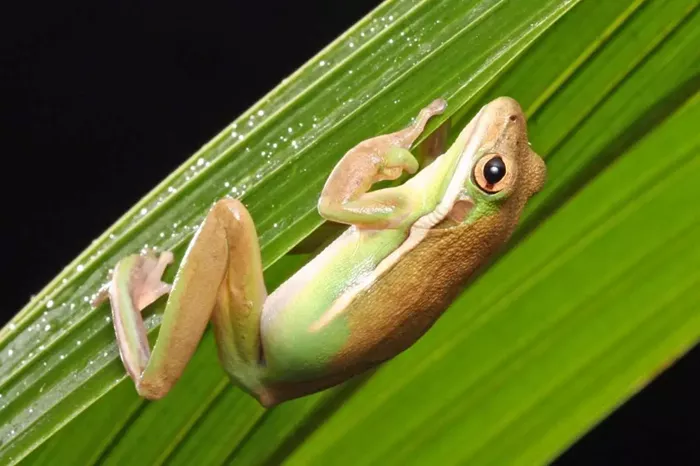
Green tree frogs are fascinating creatures, often admired for their vibrant color and unique behaviors. However, there is often confusion about the classification of animals, especially when it comes to distinguishing between different classes of animals. One common question that arises is whether a green tree frog is a mammal. To clarify this, it’s important to first understand the biological classification of animals and the defining features of mammals. In this article, we will delve into the differences between mammals and amphibians, explore the green tree frog‘s characteristics, and clarify why green tree frogs are not mammals.
Understanding Animal Classification
Animal classification, or taxonomy, is a system used to categorize organisms based on shared characteristics. This system divides animals into various groups, or classes, which are further subdivided into orders, families, genera, and species. The main groups of animals are vertebrates, which have a backbone, and invertebrates, which do not. Vertebrates are further categorized into five primary classes: mammals, birds, reptiles, amphibians, and fish. Understanding these groups is essential when discussing the classification of a green tree frog.
The Characteristics of Mammals
Mammals are a class of animals known for certain defining characteristics. These include:
- Warm-blooded: Mammals can regulate their body temperature internally, keeping it relatively constant regardless of the external environment.
- Hair or Fur: All mammals have some amount of hair or fur at some point in their life cycle.
- Live Birth: Most mammals give birth to live young (with the exception of monotremes, like the platypus, which lay eggs).
- Milk Production: Female mammals produce milk from specialized glands to feed their young.
- Vertebrates: Mammals have a backbone or spinal column.
These characteristics set mammals apart from other animal groups. Now, let’s examine whether green tree frogs share these features.
The Green Tree Frog: A Brief Overview
The green tree frog (Hyla cinerea) is a small amphibian found in parts of the United States, particularly in the southeastern regions. These frogs are known for their bright green color and their ability to live both in water and on land. Green tree frogs are often seen resting on plants, trees, or shrubs near ponds, streams, or other bodies of water. They are also nocturnal, coming out at night to hunt for insects and other small creatures.
What Are Amphibians?
Amphibians are a class of animals distinct from mammals. The word “amphibian” comes from the Greek words “amphi” meaning “both” and “bios” meaning “life,” reflecting the fact that these animals can live in both aquatic and terrestrial environments. Amphibians include frogs, toads, salamanders, and newts. Key characteristics of amphibians include:
- Cold-blooded: Amphibians are ectothermic, meaning they rely on external sources of heat to regulate their body temperature.
- Moist Skin: Amphibians have smooth, moist skin that helps them absorb oxygen and moisture from their environment.
- Eggs in Water: Most amphibians lay their eggs in water, and the eggs hatch into larvae before undergoing metamorphosis into adults.
- Dual Life: Amphibians typically start their lives in water (as larvae) and then transition to land as adults (though some species spend more time in water).
Green tree frogs exhibit all of these characteristics, placing them squarely in the amphibian category. They do not share the defining features of mammals, such as fur, live birth, or milk production. Therefore, green tree frogs are not mammals.
Why Is a Green Tree Frog Not a Mammal?
Let’s break down the key reasons why a green tree frog is not a mammal:
- Cold-Blooded Nature: As ectotherms, green tree frogs cannot regulate their internal temperature. They depend on external heat sources, unlike mammals, which are warm-blooded.
- Absence of Fur or Hair: Unlike mammals, which possess hair or fur, green tree frogs have smooth, moist skin. This adaptation is crucial for their survival in humid environments, helping them with oxygen absorption and moisture retention.
- Egg-Laying: Frogs, including green tree frogs, lay eggs in water, and their offspring undergo metamorphosis from larvae to adult frogs. This reproductive method differs significantly from mammals, most of which give birth to live young.
- No Milk Production: Green tree frogs do not have mammary glands to produce milk. Mammals, on the other hand, are characterized by their ability to nurse their young with milk.
Ecological Importance of Green Tree Frogs
While green tree frogs may not be mammals, they play an essential role in their ecosystem. As insectivores, they help control insect populations, particularly mosquitoes, which can spread diseases. Their presence is also an indicator of the health of the local environment. Green tree frogs are sensitive to changes in their habitat, especially pollution or water quality, making them an important species for monitoring environmental health.
Conclusion
In conclusion, a green tree frog is not a mammal. While mammals are defined by certain characteristics, such as having fur, giving live birth, and producing milk, green tree frogs are amphibians, cold-blooded creatures with moist skin and unique reproductive methods. Understanding the differences between mammals and amphibians not only clarifies the classification of species but also enhances our appreciation for the diverse and fascinating world of animals.