
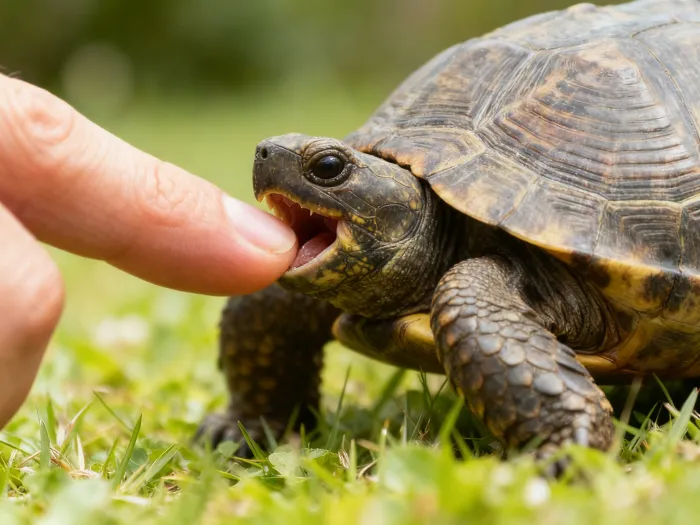
Are you wondering if tortoises bite? This simple question often sparks curiosity among reptile enthusiasts and new pet owners alike. You might have seen a tortoise slowly munching on lettuce and thought, “Could that gentle creature ever bite me?” In this article, we’ll dive into the world of tortoises—a unique group within reptiles—and explore their biting behavior. Prepare for a journey filled with fascinating facts, expert insight, and engaging anecdotes that will keep you reading. Don’t miss it!
What Are Tortoises?
Tortoises are reptiles, just like snakes and lizards. But unlike their speedy cousins, tortoises move at a leisurely pace—think of them as the “tanks” of the animal kingdom, protected by their hard shells. Their sturdy bodies and slow movements make them easy to observe, which is awesome for beginners interested in reptiles.
Why Might a Tortoise Bite?
You may be surprised to learn that even these calm creatures can bite. But why would a tortoise do that? Let’s break it down:
- Defense: Just like how you might close your door when someone knocks unexpectedly, tortoises use biting as a defense mechanism if they feel threatened.
- Mistaken Identity: Sometimes, tortoises mistake fingers for food. Imagine reaching out with a strawberry-red nail polish—they might think it’s a treat!
- Stress or Fear: Changes in environment or rough handling can stress tortoises. Stress often leads to defensive actions like biting.
According to Dr. Mark O’Shea, a renowned herpetologist (someone who studies reptiles), “Most bites from tortoises are accidental or defensive rather than aggressive.” This means tortoises rarely bite out of anger.
How Strong Is a Tortoise’s Bite?
Now, you might ask: Does a tortoise bite hurt? The answer depends on the species and size of the reptile. Smaller tortoises have weaker jaws—think of it like getting pinched by a clothespin. Larger species, such as the Sulcata or African spurred tortoise, can deliver a stronger nip, similar to shutting your finger in a drawer. Still, their bites are not usually dangerous but can be startling.
Common Situations When Tortoises Might Bite
Let’s make this relatable:
- Feeding Time: If you hand-feed your reptile friend and forget to wash your hands after handling fruit, you risk being mistaken for lunch!
- Territorial Disputes: Male tortoises sometimes bite each other during mating season to establish dominance—like wrestlers grappling for the top spot.
- Handling: Picking up a tortoise incorrectly can lead to bites. Always support their shell from underneath—imagine cradling a heavy book.
A popular anecdote among reptile keepers is that “Tortoises rarely bite unless they’re startled or hungry.” This is echoed in many online forums and care guides (see: British Chelonia Group).
How to Prevent Tortoise Bites
Want to avoid those unexpected nips? Here’s how:
- Wash Your Hands Before Feeding: Scented lotions or food residue can confuse your reptile.
- Feed Using Tools: Use tongs or tweezers instead of your fingers—like using chopsticks instead of reaching into hot soup.
- Handle Gently: Never grab or flip your tortoise; gentle support keeps them calm.
What To Do If Bitten by a Tortoise
Don’t panic! Tortoise bites are rarely serious. Clean the area with soap and water just as you would with any minor scratch. If bleeding occurs or if there are signs of infection (redness, swelling), consult a doctor. Remember: Safety first!
Are Some Species More Likely to Bite Than Others?
Absolutely! Certain species are more prone to biting due to temperament or jaw strength:
- Sulcata Tortoise: Known for their curiosity but also strong jaws.
- Russian Tortoise: Generally shy but may nip when stressed.
- Red-Footed Tortoise: Usually gentle, but can be defensive during feeding.
Experts recommend observing individual behavior since even within one species, personalities vary widely. Think of it like dogs—some bark more than others!
Myths About Tortoise Bites
Let’s bust some myths:
- “Tortoises are aggressive reptiles”—False! Most are docile unless provoked.
- “A bite means they hate you”—Not true; it’s usually confusion or fear.
- “All tortoise bites are dangerous”—Nope! Most are harmless pinches.
Expert Tips from Real Reptile Keepers
Jane Smith, who has kept reptiles for over 20 years, shares: “The key is patience and respect. My Sulcata only nipped me once when I startled him during feeding. Since then, I use tongs and let him approach me on his own terms.” Her advice is echoed by many experienced keepers worldwide (source: Reptile Forums UK).
Conclusion
Tortoises are fascinating reptiles with unique personalities and behaviors. While they can bite under certain circumstances, such incidents are rare and usually preventable with proper care and understanding. By learning about their needs and respecting their boundaries, you’ll build trust with your shelled companion—and unlock an awesome friendship!
In summary, understanding why tortoises bite helps both beginners and seasoned reptile lovers create safer environments for themselves and their pets. With patience and knowledge, caring for these remarkable reptiles becomes not only safe but incredibly rewarding.
Related topics: