
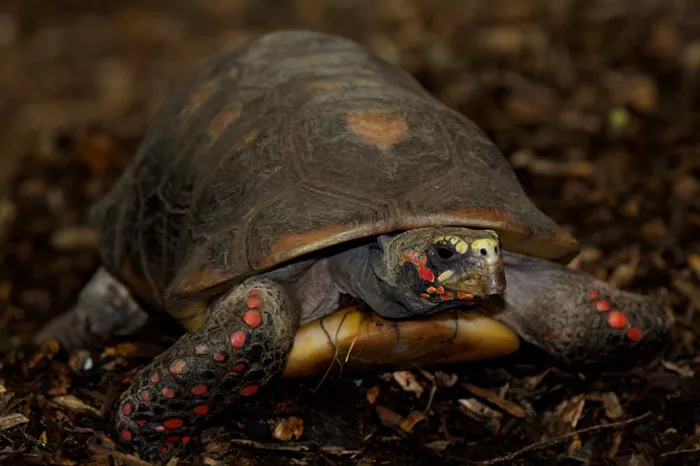
Imagine you’re lounging in a warm, sunny spot, enjoying your favorite meal, when suddenly, the temperature drops. You’d feel sluggish, right? Now, picture this happening to your pet red-footed tortoise. These creatures, native to the tropical regions of South America, thrive in warmth and humidity. So, how cold is too cold for them? Let’s dive into the specifics to ensure your shelled friend stays healthy and happy.
Understanding the Red-Footed Tortoise
Before we discuss temperature tolerance, it’s essential to know a bit about the red-footed tortoise. Scientifically named Chelonoidis carbonarius, this species is native to the tropical forests and grasslands of South America. They are known for the distinctive red or orange markings on their legs and head, which is how they got their name.
In the wild, red-footed tortoises experience a warm, humid climate year-round. Their bodies are adapted to these conditions, making them sensitive to temperature fluctuations outside their natural habitat.
Ideal Temperature Ranges
To keep your red-footed tortoise in optimal health, it’s crucial to replicate their natural environment as closely as possible. Here’s a breakdown of the ideal temperature ranges:
Daytime Temperature: 80–92°F (27–33°C)
Nighttime Temperature: 65–75°F (18–24°C)
These temperatures mimic the warm, humid conditions of their native habitat, promoting healthy digestion, activity levels, and overall well-being.
What Happens When It Gets Too Cold?
When the temperature drops below the ideal range, red-footed tortoises can experience several health issues:
Reduced Activity: Cold temperatures can make your tortoise lethargic, leading to decreased movement and feeding.
Digestive Problems: If the temperature falls below 80°F (27°C) for extended periods, your tortoise may struggle to digest food properly.
Respiratory Infections: Prolonged exposure to cold and damp conditions can lead to respiratory issues, which can be fatal if untreated.
It’s essential to monitor the temperature in your tortoise’s enclosure regularly to prevent these problems.
How Cold Is Too Cold?
While red-footed tortoises can tolerate brief drops in temperature, sustained cold can be harmful. Temperatures below 50°F (10°C) are considered risky. At these temperatures, your tortoise’s metabolism slows down significantly, and they may enter a state of dormancy. If they cannot warm up within 48 hours, digestion halts, leading to potential health complications.
Providing Warmth: Tips for Cold Weather
If you live in a region where temperatures drop, here are some tips to keep your tortoise warm:
Indoor Enclosures: During colder months, consider bringing your tortoise indoors. Use heat lamps and under-tank heaters to maintain the ideal temperature.
Heated Hide Boxes: Provide a heated hide box that maintains at least 60°F (16°C) at night. This allows your tortoise to regulate its body temperature.
Thermometers: Use reliable thermometers to monitor both daytime and nighttime temperatures in the enclosure.
By taking these steps, you can ensure your red-footed tortoise remains comfortable and healthy during colder periods.
Real-Life Experiences
Many tortoise owners have shared their experiences with temperature challenges. One owner noted, “When I noticed my red-footed tortoise becoming sluggish, I realized the room temperature had dropped below 70°F. After adjusting the heat, he perked up within hours.”
Such anecdotes highlight the importance of maintaining consistent warmth for these reptiles.
Conclusion
Red-footed tortoises are resilient creatures, but they are not immune to the effects of cold temperatures. By understanding their temperature needs and taking proactive measures, you can provide a safe and comfortable environment for your shelled companion. Remember, when it comes to temperature, a little warmth goes a long way in ensuring your tortoise’s health and happiness.
Related topics: