
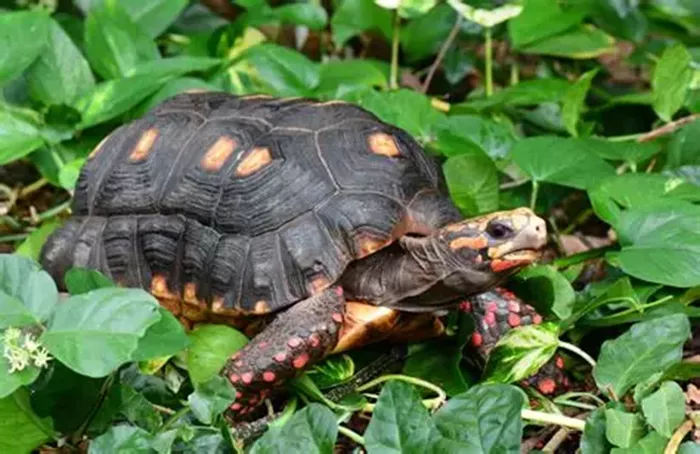
Imagine a pet that doesn’t bark, meow, or demand constant attention but instead moves slowly, enjoys basking in the sun, and has a colorful, patterned shell. Sounds intriguing, right? Meet the red-footed tortoise, a captivating reptile that has been gaining popularity among pet enthusiasts. But before you rush to adopt one, let’s delve into whether red-footed tortoises truly make good pets.
🌿 What Makes Red-Footed Tortoises Unique?
Origin and Appearance:
Native to the forests and grasslands of South America, particularly Brazil, red-footed tortoises are known for the vibrant red or orange markings on their legs and head. Their shells are typically dark with yellow or orange patterns, making them visually striking.
Size and Lifespan:
These tortoises can grow up to 16 inches in length and weigh between 10 to 30 pounds. With proper care, they can live for 50 years or more, making them a long-term commitment.
🏠 Housing: Creating a Comfortable Home
Indoor Enclosures:
For those living in cooler climates or without outdoor space, indoor enclosures are essential. A spacious tank or custom-built enclosure with a secure lid is necessary to prevent escapes. Ensure the enclosure has a basking area with temperatures around 90°F (32°C) and a cooler side ranging from 78°F to 82°F (25°C to 28°C). UVB lighting is crucial for their health, as it helps them metabolize calcium and prevent shell deformities.
Outdoor Enclosures:
In warmer climates, red-footed tortoises can thrive outdoors. A secure, predator-proof enclosure with shaded areas and access to water is ideal. Ensure the enclosure is escape-proof, as these tortoises are known to dig.
🍽️ Diet: What to Feed Your Tortoise
Red-footed tortoises are omnivores, meaning they eat both plant and animal matter. A balanced diet is crucial for their health.
Plant-Based Foods:
- Leafy greens like collard greens, dandelion greens, and hibiscus leaves.
- Fruits such as papaya, mango, and berries.
- Flowers like hibiscus and dandelion flowers.
Animal-Based Foods:
- Occasional protein sources like earthworms, snails, and insects.
- Hard-boiled eggs or lean meats can be offered sparingly.
Supplements:
To ensure proper nutrition, dust their food with calcium and vitamin D3 supplements a few times a week. This helps prevent metabolic bone disease and supports shell health.
💧 Water and Humidity: Keeping Them Hydrated
Red-footed tortoises require high humidity levels to thrive. Providing a shallow water dish for soaking and drinking is essential. Regular misting of their enclosure can help maintain humidity levels between 50% and 70%. In drier climates, a humidifier can be beneficial.
🧼 Hygiene and Health Maintenance
Cleaning:
Regular cleaning of the enclosure is vital to prevent the buildup of harmful bacteria. Spot clean daily to remove waste and uneaten food. A thorough cleaning with reptile-safe disinfectants should be done weekly.
Health Monitoring:
Regularly check for signs of illness, such as lethargy, loss of appetite, or abnormal shell growth. If any of these symptoms occur, consult a reptile veterinarian promptly.
🐢 Handling and Interaction
Red-footed tortoises are generally docile and can become accustomed to human presence. However, they are not cuddly pets and prefer minimal handling. Allow them to explore their environment at their own pace. Overhandling can lead to stress and health issues.
💰 Cost and Commitment
Initial Setup:
The cost of setting up an enclosure can range from $200 to $500, depending on size and materials. UVB lighting and heating equipment may add an additional $100 to $200.
Ongoing Expenses:
Monthly expenses include food, supplements, and electricity for heating and lighting, totaling approximately $50 to $100.
Long-Term Commitment:
With a lifespan of up to 50 years, owning a red-footed tortoise is a long-term commitment. Consider future arrangements for their care, especially as they age.
🐢 Pros and Cons of Owning a Red-Footed Tortoise
Pros:
- Unique and colorful appearance.
- Docile temperament.
- Long lifespan, allowing for a lasting bond.
- Low noise and odor levels.
Cons:
- Requires a large, secure enclosure.
- Needs a consistent temperature and humidity level.
- Limited interaction and handling.
- Long-term commitment due to their lifespan.
🧭 Final Thoughts
If you’re seeking a low-maintenance, visually striking pet that doesn’t require constant attention, a red-footed tortoise might be a suitable choice. However, they do require specific care and a long-term commitment. Ensure you have the resources and dedication to meet their needs before making the decision to adopt.
Related topics: