
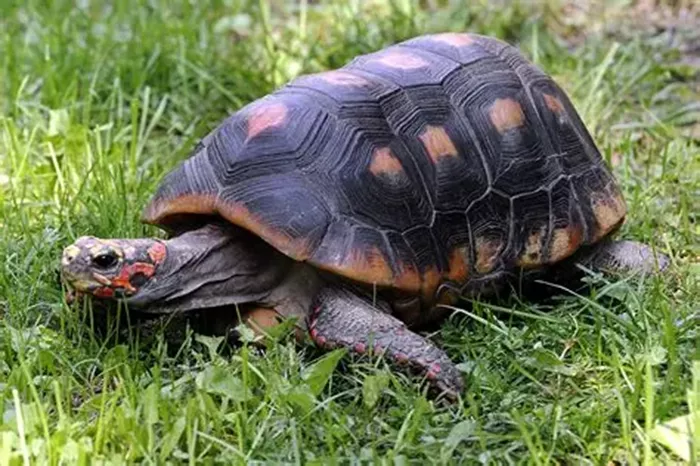
When you think of a tortoise, you might imagine a slow-moving creature with a hard shell. But have you ever wondered where these fascinating reptiles come from? Specifically, the red-footed tortoise (scientific name: Chelonoidis carbonarius) is a species that has captured the curiosity of many. Native to various regions in Central and South America, these tortoises are known for their vibrant red or orange scales on their legs, head, and tail.
In this article, we’ll embark on a journey to explore the native habitats of red-footed tortoises, understand the environments they thrive in, and learn about the challenges they face in the wild. Whether you’re a reptile enthusiast, a pet owner, or simply curious about wildlife, this guide will provide you with a comprehensive understanding of these remarkable creatures.
🐢 What Are Red-Footed Tortoises?
Before delving into their native habitats, let’s get to know the red-footed tortoise a bit better.
Physical Characteristics
Red-footed tortoises are medium-sized reptiles, with adults typically measuring between 10 to 16 inches in length. Their most striking feature is the bright red or orange scales on their legs, head, and tail, which stand out against their dark brown or blackish shells. This coloration not only adds to their beauty but also provides camouflage in their natural habitats.
Diet and Behavior
Unlike many other tortoise species that are strictly herbivores, red-footed tortoises are omnivorous. Their diet includes a variety of plants, fruits, fungi, and even small invertebrates like insects and earthworms. They are diurnal creatures, meaning they are active during the day, especially after rainfall when food is abundant.
🌎 Native Range of Red-Footed Tortoises
Red-footed tortoises have a broad native range that spans across southern Central America and northern South America, primarily east of the Andes Mountains. Their distribution includes countries such as Panama, Colombia, Venezuela, Guyana, Suriname, French Guiana, Ecuador, Peru, Bolivia, Brazil, Paraguay, and northern Argentina.
Central America
In Central America, red-footed tortoises are found in Panama, where they inhabit tropical forests and adjacent open areas.
South America
Moving southward, these tortoises are prevalent in countries like Colombia, Venezuela, and the Guyanas. Their presence extends to Brazil, where they are commonly found in the eastern regions. In Bolivia, Paraguay, and northern Argentina, red-footed tortoises are also native, though their populations may be less dense.
Caribbean Islands
Interestingly, red-footed tortoises have been introduced to several Caribbean islands, including Trinidad and Tobago, Barbados, and the Virgin Islands. While they are not native to these areas, they have established populations due to human introduction.
🌿 Natural Habitats of Red-Footed Tortoises
Red-footed tortoises are adaptable creatures that thrive in a variety of habitats, ranging from dense rainforests to open savannas. Their ability to inhabit diverse environments contributes to their widespread distribution.
Tropical Rainforests
One of the primary habitats of red-footed tortoises is the tropical rainforest. These lush, humid forests provide ample food sources and shelter. The dense vegetation offers protection from predators and harsh weather conditions.
Savannas and Grasslands
Red-footed tortoises are also found in savannas and grasslands, particularly in regions like Brazil and Paraguay. These open areas allow for easy movement and access to a variety of plants. The tortoises often seek shelter under shrubs or fallen trees to escape the heat.
Forest Edges and Transitional Zones
The edges of forests, where the forest meets open land, are another preferred habitat. These transitional zones offer a mix of shaded areas and open spaces, providing a balance between food availability and protection.
🐢 Adaptations to Their Environment
Red-footed tortoises have developed several adaptations that enable them to thrive in their native habitats.
Camouflage
Their dark shells with bright red or orange markings help them blend into the forest floor’s dappled light, providing camouflage from predators.
Diet Flexibility
Being omnivorous allows them to take advantage of a wide range of food sources, from fruits and plants to small invertebrates.
Behavior
Their diurnal nature means they are active during the day, especially after rainfall, when food is abundant. This activity pattern helps them gather food and avoid nocturnal predators.
⚠️ Conservation Status and Threats
Despite their adaptability, red-footed tortoises face several threats in the wild.
Habitat Loss
Deforestation and land development have led to the loss of their natural habitats, reducing their living spaces and food sources.
Illegal Trade
The pet trade has significantly impacted wild populations, with many tortoises being captured and sold illegally.
Hunting
In some regions, red-footed tortoises are hunted for their meat and shells, further decreasing their numbers.
Conservation efforts are underway to protect these tortoises, including habitat preservation and stricter regulations on trade.
🐢 Fun Facts About Red-Footed Tortoises
Lifespan: Red-footed tortoises can live up to 50 years in captivity.
Social Behavior: They have been observed sharing food and showing social interactions, which is rare among reptiles.
Communication: Males often make clucking sounds during the mating process.
🧭 Conclusion
Red-footed tortoises are remarkable reptiles with a wide distribution across Central and South America. Their ability to adapt to various habitats, from dense rainforests to open savannas, showcases their resilience. However, they face significant challenges due to habitat loss, illegal trade, and hunting. Conservation efforts are crucial to ensure that future generations can continue to marvel at these fascinating creatures.
Related topics: