
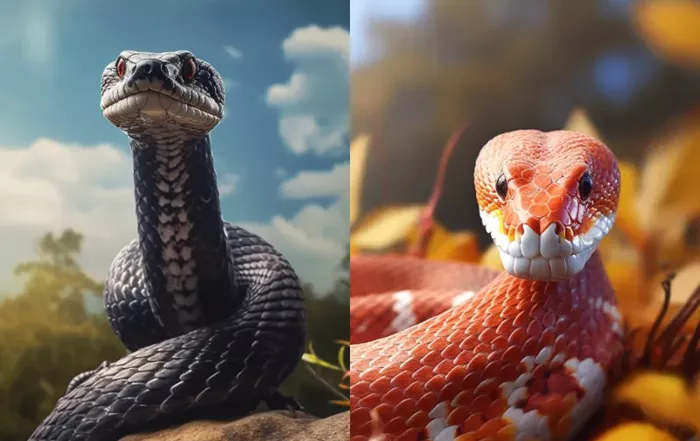
When it comes to reptiles, snakes are often the most fascinating and mysterious creatures. Among the vast variety of snake species, two often get confused by many snake enthusiasts, especially those new to the world of reptiles: the rat snake and the corn snake. Both are relatively common in the pet trade, and though they share some similarities, they have distinct characteristics that set them apart.
In this article, we’ll break down the differences between these two snakes in a way that’s easy to understand, even if you’re just starting your reptile journey. From appearance to behavior, diet, and even their roles in the wild, we’ll explore all aspects of the rat snake and corn snake to help you tell them apart.
What Are Rat Snakes and Corn Snakes?
Before diving into the differences, let’s define these two species:
Rat Snake: A common name for several species in the genus Pantherophis, rat snakes are non-venomous constrictors. They are excellent hunters, feeding mostly on small mammals like rats, hence their name. They’re found across North America, with some species extending into parts of Central America.
Corn Snake: Also part of the Pantherophis genus, the corn snake (Pantherophis guttatus) is another non-venomous constrictor. They’re famous for their beautiful coloration and docile temperament, which makes them one of the most popular pet snakes. Their name comes from their appearance, which resembles the patterns on corn kernels.
Both snakes are relatively gentle, making them suitable for beginners in the reptile world, but they differ in various ways that are worth noting.
Key Differences Between Rat Snakes and Corn Snakes
1. Physical Appearance
Size and Shape:
One of the easiest ways to distinguish a rat snake from a corn snake is by looking at their size. Rat snakes, in general, tend to be larger. Some species, like the Eastern Rat Snake (Pantherophis alleghaniensis), can grow up to 8 feet long. On the other hand, corn snakes are typically smaller, usually reaching lengths between 3 to 5 feet.
Color and Pattern:
Corn snakes are known for their vibrant colors and distinct patterns. Their coloration can range from reddish-orange to yellow and white, with black and white patterns that resemble corn kernels. These patterns are often described as “checkerboard” or “stripe-like,” which are an essential part of their name.
Rat snakes come in a variety of colors, but they typically have a more uniform appearance. Many rat snakes are black, gray, or brown, with subtle patterns along their backs and sides. Their color isn’t as flashy as the corn snake’s vibrant hues. Eastern rat snakes tend to be a solid, glossy black with faint gray or white patterns on their bellies.
Head Shape:
Both snakes have long, slender bodies, but a rat snake’s head is generally a bit broader, especially when compared to the more streamlined corn snake.
2. Habitat and Distribution
Rat Snake Habitat:
Rat snakes are more widespread than corn snakes. They can be found across much of North America, including forests, grasslands, and even suburban areas. They prefer areas where they can hide and climb, often using trees and shrubs to find shelter or hunt.
Corn Snake Habitat:
Corn snakes are native to the southeastern United States, specifically in areas like Florida, Georgia, and the Carolinas. They prefer dry, open woodlands, farmlands, and abandoned buildings. Corn snakes can often be found in places with abundant rodent populations, which makes them especially useful for controlling pests.
3. Behavior and Temperament
Both rats and corn snakes are known for being gentle and non-aggressive. However, there are subtle differences in how they behave:
Corn Snakes:
Corn snakes are often described as “calm” and “docile.” They tend to be less shy, which makes them easier to handle for snake enthusiasts and pet owners. In the wild, they often seek shelter in burrows or hollow logs and can be found hiding during the day and active at night.
Rat Snakes:
Rat snakes can be slightly more shy and more defensive than corn snakes. They may coil up when threatened and will often attempt to escape rather than engage. However, once they are used to their environment and the presence of humans, they can be just as docile as corn snakes.
4. Diet and Hunting Habits
Both rat snakes and corn snakes are carnivorous and constrictors, meaning they kill their prey by wrapping around it and suffocating it. Their primary diet consists of small mammals, birds, and eggs.
Corn Snakes:
In the wild, corn snakes mostly prey on rodents, like mice and rats, but they will also hunt birds and small reptiles. The term “corn snake” comes from their preference for hunting around cornfields, where rodents are abundant.
Rat Snakes:
Rat snakes, as their name suggests, specialize in hunting rats, though they will also go after birds, amphibians, and eggs. They are excellent climbers and will often hunt in trees or along fences, searching for eggs or small animals.
5. Reproduction and Lifespan
Corn Snake Reproduction:
Corn snakes are oviparous, meaning they lay eggs. Female corn snakes typically lay 10 to 30 eggs per clutch, which will hatch after about 60 to 70 days. The baby corn snakes are independent right after hatching, though they may stay close to their mother for a short time.
Rat Snake Reproduction:
Like corn snakes, rat snakes are also oviparous. They usually lay smaller clutches of eggs, around 6 to 15, depending on the species. The eggs incubate for 50 to 80 days before hatching.
In terms of lifespan, both species can live for several years. Corn snakes usually live around 6 to 8 years in the wild, but they can reach up to 23 years in captivity. Rat snakes can live around 10 to 20 years in the wild, with some individuals living even longer in captivity.
6. Popularity as Pets
Both the corn snake and the rat snake are extremely popular as pet reptiles, though corn snakes have the edge in the pet trade due to their coloration and docile nature.
Corn snakes are often recommended for beginners due to their manageable size, ease of handling, and relatively simple care requirements. They are readily available in many pet stores and can be found in various morphs (color and pattern variations).
Rat snakes are also great pets but may be slightly harder to find, as they are less common than corn snakes in pet stores. They tend to require larger enclosures and more space to roam, especially since some species grow quite large.
Conclusion
If you’re wondering which snake is the best for you, consider your space, experience level, and preferences. If you prefer a snake that is easier to handle and has stunning colors, the corn snake might be the better choice. However, if you’re looking for a slightly larger, less commonly seen species with a more understated look, the rat snake could be a great fit.
Both snakes are non-venomous and require similar care, including a warm and safe environment, a proper diet of rodents, and regular cleaning of their enclosure. Whether you choose a corn snake or a rat snake, you’ll be adding a beautiful and fascinating creature to your home.
Related topics: