
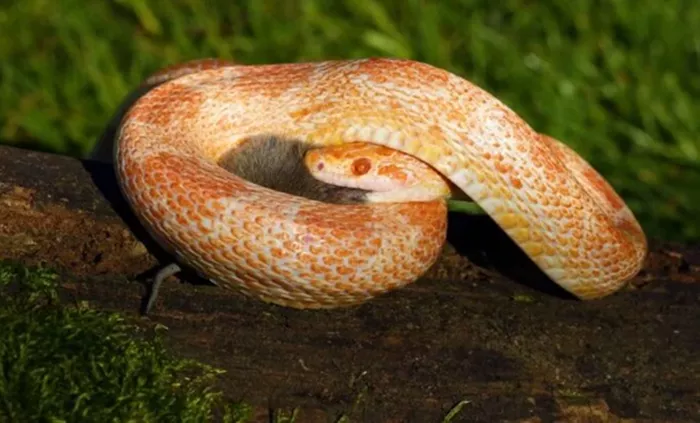
Corn snakes are fascinating reptiles that have captured the attention of both scientists and pet enthusiasts. If you have ever wondered how these snakes, which look so gentle and colorful, manage to catch and consume their prey, you’re about to discover some amazing insights. From the moment they detect a small rodent to the moment it disappears into the snake’s stomach, corn snakes showcase an intricate and highly effective hunting method.
The Sensory Superpowers of Corn Snakes
Corn snakes rely heavily on their senses to find prey. You might think snakes just slither around and stumble upon food, but that’s far from the truth. Their main tools are smell and heat detection. Corn snakes use a special organ called the Jacobson’s organ, located in the roof of their mouth. This organ allows them to “taste” the air. When a corn snake flicks its tongue, it collects tiny chemical particles and transfers them to the Jacobson’s organ. This is like you sniffing a delicious cake from across the room – they can detect the presence and direction of prey with remarkable accuracy.
They also have excellent vision, especially in dim light. Many prey species of corn snakes, like mice, are nocturnal. The snake’s eyes help it locate moving prey even in the dark. If you ever watch a corn snake hunt, you’ll notice it often pauses, flicks its tongue, and appears to be “thinking”. This is their sensory system in action, giving them the ability to zero in on prey before making a move.
Once the corn snake senses prey, it begins the next stage: approaching and striking. This is where their skill becomes truly impressive.
The Stealthy Approach
Corn snakes are ambush predators, which means they prefer to wait for prey to come close rather than chase it over long distances. You can imagine it like a cat hiding behind a curtain, waiting for a mouse to scurry by. The snake will slowly and silently move towards its target. Their slender bodies allow them to maneuver through tight spaces, making them excellent hunters in natural habitats like forests, fields, and even barns.
During this stage, patience is key. Corn snakes can spend minutes or even hours silently positioning themselves. They often rely on their camouflage to blend into the environment. For example, their patterned scales break up their outline, making them almost invisible among leaves or hay. Once they are in position, the moment of truth arrives: the strike.
The Strike: Precision and Speed
When a corn snake strikes, it happens incredibly fast. You might blink and miss it! Their strike is not about venom – corn snakes are non-venomous. Instead, they rely on speed and accuracy to grab their prey. The snake opens its mouth wide and lunges, biting the prey and securing a hold. Think of it as a skilled gymnast leaping to catch a swinging bar. The precision ensures that the prey cannot escape during the next crucial step: constriction.
Biting is only the beginning. To subdue prey, corn snakes use a method that is both effective and fascinating: constriction.
Constriction: The Power of Coiling
Constriction is the main method corn snakes use to kill their prey. After biting, the snake quickly coils its body around the animal. Each coil applies pressure, which prevents the prey from breathing. Essentially, the snake is using its muscles to create a powerful squeeze that leads to suffocation.
It’s important to note that this process is not about crushing bones – many people mistakenly believe snakes break their prey. Corn snakes are careful and deliberate. Their goal is to immobilize, not damage the meat they will later swallow. Research shows that constriction can kill prey in seconds to minutes depending on size. This method is incredibly energy-efficient compared to chasing or overpowering prey in other ways. Once the prey is immobilized, the final stage begins: ingestion.
Swallowing Whole: An Amazing Feat
Corn snakes have a jaw that can stretch impressively wide. Unlike humans, their jaws are not fused in the middle. This allows each side to move independently, enabling them to engulf prey much larger than their head. Think of it like an accordion stretching and bending to cover more space.
The snake starts swallowing from the head of the prey. This is practical because the limbs fold naturally backward, making the process smoother. Once inside, strong muscles move the prey down the esophagus into the stomach. Corn snakes produce digestive enzymes that break down proteins and fats efficiently. Even bones and fur are digested, leaving almost no waste. This incredible digestive ability allows them to survive on relatively infrequent meals in the wild. Experienced snake owners often share that watching their corn snake swallow prey is a mesmerizing sight, almost like witnessing a perfectly orchestrated dance.
Prey Selection and Dietary Preferences
Corn snakes are opportunistic feeders. They mainly hunt rodents such as mice and rats, but they will also consume birds, lizards, and amphibians if the opportunity arises. Younger snakes often target smaller prey like insects or small lizards, gradually moving to larger prey as they grow. In captivity, corn snakes can be trained to accept pre-killed or frozen-thawed rodents, which is safer for both the snake and the feeder. This shows their adaptability and intelligence in hunting strategies. Understanding what corn snakes prefer to eat helps you see why they hunt the way they do and why their methods are so efficient.
Hunting in Different Environments
In the wild, corn snakes face various challenges depending on their habitat. In forests, they may hunt among fallen leaves and logs, while in fields or barns, they might track rodents around stored grains. Their flexible hunting strategy and sensory abilities make them versatile predators. Some corn snake owners report that their snakes seem to recognize feeding times and even the presence of certain people. While it may seem like the snake is “smart” in a human sense, it’s more about learned behavior and sensory cues. Observing corn snakes in different environments highlights how adaptable and precise their hunting techniques are.
Safety and Hunting Ethics
For reptile enthusiasts, it’s essential to provide prey that is appropriate in size and safe. Overly large prey can harm a corn snake during ingestion. Additionally, offering live prey should be done cautiously, as rodents can bite and injure the snake. Many experienced keepers use pre-killed or frozen-thawed rodents to balance safety and natural feeding behaviors. By respecting these ethical considerations, you can enjoy observing corn snakes hunt while ensuring their well-being.
Conclusion
Corn snakes showcase a fascinating combination of sensory skill, stealth, speed, and muscular strength. From detecting prey with their Jacobson’s organ, approaching with careful patience, striking with precision, coiling to constrict, and swallowing whole, these snakes exemplify evolutionary mastery in hunting. Every step is a blend of efficiency and adaptation, demonstrating why corn snakes are successful predators in the wild and captivating creatures for reptile enthusiasts. Watching them hunt is not only educational but also a reminder of the incredible diversity and ingenuity of reptiles.
Related topics: