
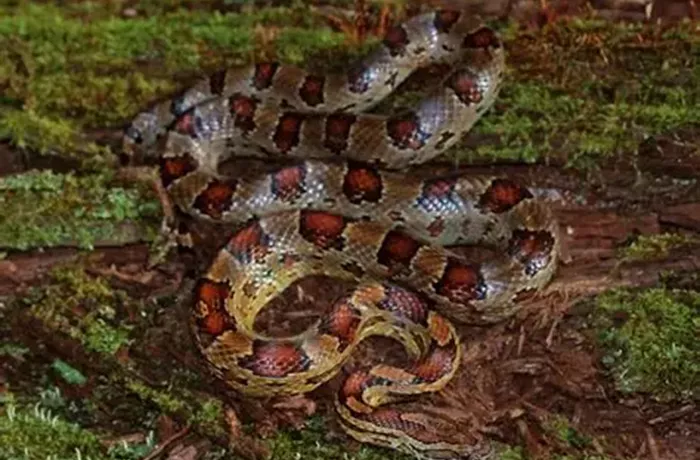
Have you ever looked at a beautiful corn snake and wondered, “Where did you originally come from?” These non-venomous snakes are famous for their striking patterns, calm temperament, and popularity among reptile lovers. But before they became household pets, corn snakes thrived in the wild.
Learning about their native habitats helps us understand their natural behavior, environmental needs, and how to care for them properly. Think of it like this: knowing where they come from is like knowing the hometown of a friend—you’ll understand them better and appreciate their uniqueness.
The Native Range of Corn Snakes
Corn snakes (Pantherophis guttatus) are native to North America, specifically the southeastern and central United States. Their natural range stretches from southern New Jersey down to Florida, and westward into Louisiana, Kentucky, Alabama, Mississippi, and Georgia.
In these areas, corn snakes enjoy mild to warm climates, plenty of food sources, and a variety of shelters. These conditions allow them to thrive in the wild and play an important ecological role as small mammal hunters.
Preferred Habitats of Corn Snakes
Corn snakes are highly adaptable, but they show preferences for specific types of habitats in the wild:
Forests and Woodland Edges
Corn snakes often live along forest edges and wooded groves. These areas provide excellent cover from predators and abundant prey like rodents and small birds. Imagine it as a natural buffet combined with a safe hideout—perfect for a small predator.
They use fallen logs, rock crevices, and dense shrubs as shelter, while open patches allow them to bask in the sun and regulate body temperature.
Meadows, Hillsides, and Open Fields
Open spaces like meadows and rocky hillsides are ideal for corn snakes to hunt and sunbathe. Basking is essential for these cold-blooded reptiles to stay active. If you’ve ever seen a lizard soaking in the sun on a rock, corn snakes do the same—they need external heat to maintain their energy levels.
Farms and Abandoned Buildings
Corn snakes are often found near human structures, such as barns, sheds, or abandoned buildings. Why? Because rodents love to live there, and corn snakes love rodents. This makes them excellent natural pest controllers, quietly reducing rodent populations.
Climate and Environmental Needs
Corn snakes are ectothermic, which means they rely on external heat to maintain body temperature. They thrive in areas with warm and moderately humid conditions, using sunlight and shaded spots to adjust their body temperature as needed.
If temperatures drop too low, corn snakes become sluggish and may stop hunting. That’s why you’ll rarely see them active in winter unless the climate remains warm.
Daily Life and Behavior of Corn Snakes
Understanding how corn snakes live in the wild helps us provide better care for them as pets.
Activity Patterns
Corn snakes are mostly nocturnal, active during twilight hours. During the day, they rest in hidden areas such as rock crevices, tree hollows, or dense vegetation. This helps them avoid predators and conserve energy for nighttime hunting.
Hunting and Diet
Corn snakes feed primarily on small mammals, birds, lizards, and frogs. They use constriction to subdue their prey, coiling around the target until it is immobilized. Imagine a tiny, silent guardian keeping the rodent population in check—corn snakes play a crucial ecological role.
Reproduction
Corn snakes are oviparous, meaning they lay eggs. During spring and summer, females lay 10 to 30 white eggs. Incubation lasts about 60–70 days, and the hatchlings emerge roughly 30 cm long, ready to hunt small prey independently.
Corn Snakes in Captivity: Creating a Comfortable Home
Although corn snakes are native to the southeastern U.S., they adapt well to artificial environments. Their calm nature and beautiful appearance make them ideal pets, but replicating their natural habitat is key to keeping them healthy.
Temperature and Humidity
Maintain a warm environment of 24–30°C (75–86°F) and moderate humidity. Use heat lamps or heating pads to create basking spots, just like the sunny patches they enjoy in the wild.
Hiding Spaces and Climbing Opportunities
Corn snakes love sheltered areas. Provide logs, rocks, or artificial caves for hiding. They also enjoy climbing, so branches or climbing structures help satisfy their natural instincts.
Diet and Water
Feed captive corn snakes appropriately sized rodents like mice. Offer clean water at all times. In the wild, their diet naturally includes small mammals and birds; in captivity, balanced feeding ensures healthy growth and activity.
Light and UV Exposure
While corn snakes do not require intense UV lighting, providing natural or simulated light helps them synthesize vitamin D3, aiding calcium absorption. Occasional access to sunlight is ideal if possible.
Fascinating Stories: Corn Snakes and Humans
A farm owner in the southern U.S., Emily, once discovered a corn snake in her barn. At first, she was nervous, but she quickly realized the snake was harmless and kept her barn free of mice. She named the snake Spike, and the two developed an unusual but friendly relationship.
Stories like this illustrate how corn snakes can coexist peacefully with humans, helping manage pests while becoming a part of the farm ecosystem.
Conservation and Ecological Importance
Corn snakes help maintain healthy rodent populations, reducing crop damage and disease spread. Understanding their natural habitats also emphasizes the importance of preserving forests, meadows, and wetlands. Protecting their native environments ensures corn snakes continue to thrive in the wild.
Summary
Corn snakes are native to the southeastern and central United States, inhabiting forests, meadows, rocky hillsides, and human structures. They are nocturnal hunters, ectothermic reptiles, and excellent controllers of small mammal populations.
Whether in the wild or in captivity, understanding their native range and habits allows you to provide better care or simply appreciate their ecological role.
Related topics: