
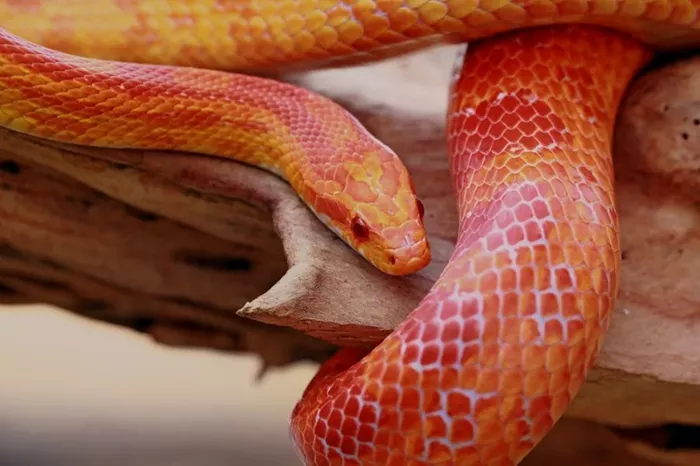
When most people think of snakes, they picture calm, slithering creatures—silent and graceful. But just like any other animal, corn snakes (Pantherophis guttatus) have their moods. And yes, they can get angry. While snakes don’t express emotions the way humans do, they do show clear signs when they’re stressed, frightened, or irritated. Understanding these signs can help you interact with your pet corn snake more safely and effectively.
In this article, we’ll dive deep into the behaviors and body language that indicate your corn snake is angry, stressed, or just plain irritated. This knowledge is not just helpful for experienced snake owners but also for beginners who are still learning how to read the subtle cues of their reptiles. So, let’s unravel the mystery behind a corn snake’s “anger”!
Recognizing the Subtle Cues: How Do Snakes Show Anger?
Unlike dogs or cats that may bark or hiss when upset, snakes have more subtle ways of expressing their discomfort or aggression. They don’t have vocal cords, so they rely on their body language to communicate their feelings. So, when you’re trying to figure out if your corn snake is angry, you need to observe its posture, movements, and even the subtle changes in its eyes.
1. Raised and Coiled Body: Watch Out for Defensive Posture
One of the most obvious signs of an angry corn snake is its posture. When a corn snake feels threatened or annoyed, it may coil its body tightly, sometimes even lifting part of it off the ground in a defensive posture. This is similar to how a dog might show its teeth or a cat might arch its back when it’s upset.
This coiling behavior is a snake’s way of preparing for either a confrontation or retreat. It’s a sign that your corn snake may be feeling cornered, stressed, or even ready to strike if it feels it needs to protect itself.
2. Hissing and Tongue Flicking: Is It Warning You?
Though corn snakes are generally not prone to aggressive hissing, they might use it as a warning signal when they’re feeling irritated. If you hear your snake hiss or see it flick its tongue more rapidly than usual, it’s trying to sense the environment and warn you of potential danger.
You can think of this as the reptilian equivalent of a human yelling “stay away!” The tongue flicking is an important sign that your snake is becoming agitated and trying to figure out how to respond to its surroundings.
3. The Strike: A Last Resort?
The corn snake is typically calm and non-aggressive, but if it feels extremely threatened, it may strike. It’s important to understand that a strike doesn’t always mean the snake is trying to hurt you; it’s often a defensive action. Just as a person might lash out verbally when upset, a snake strikes when it feels it has no other option to defend itself.
However, a corn snake will usually only strike if it has been handled improperly, or if it perceives a significant threat. If your corn snake strikes, it might be a sign that it feels cornered or is too stressed to handle the situation calmly.
4. Flickering Eyes and Pupils: A Window into the Snake’s Mood
The eyes of a corn snake can also tell you a lot about its emotional state. When a corn snake is angry or stressed, you might notice changes in its eyes. For example, the pupils of a corn snake will dilate when it’s agitated, making them appear larger than usual. This reaction is similar to how a human’s pupils dilate when they feel threatened or excited.
Furthermore, when a snake is in a heightened state of stress, its eyes may become more focused, almost as if it is intently watching something in the environment. If you notice these signs, it could indicate that your snake is upset and may be preparing to defend itself.
5. Slow, Erratic Movements: When the Snake Is Unsettled
While corn snakes are generally smooth, fluid movers, their behavior changes when they’re angry. They may become more erratic in their movements, exhibiting jerky, slow, or exaggerated movements. It’s as if they are pacing, unable to settle down, and this is often seen in snakes that are feeling threatened or agitated.
Imagine a person pacing around the room, breathing heavily when angry—it’s a sign that the snake is uneasy and may not want to be handled or interacted with. It’s best to avoid attempting to pick up your corn snake when it shows signs of erratic movement.
6. Hiding and Being Reclusive: When Your Corn Snake Seeks Escape
Another sign of a stressed or unhappy corn snake is its desire to hide. Snakes are naturally shy creatures that rely on hiding to feel safe. If your corn snake is retreating to its hide box or burrowing into bedding, it might be signaling that it is too stressed to interact and needs some alone time to calm down.
If your corn snake is angry, it may go into hiding even more often than usual. This could be because it’s overwhelmed by the environment or because it simply doesn’t want to be disturbed. Allow your snake to have some space and let it emerge when it feels comfortable.
How Can You Help Your Corn Snake?
Now that we’ve covered the signs of an angry corn snake, the next question is: How do you help your snake calm down? Here are some simple tips:
Respect Its Space: Never force your corn snake to interact if it’s showing signs of aggression. Give it space to settle down.
Adjust Its Environment: Make sure your snake’s enclosure is at the right temperature and humidity. A stressed snake might be reacting to an uncomfortable environment.
Handle Carefully: If you need to handle your corn snake, do so gently and calmly. Sudden movements or rough handling will only increase its stress.
Time It Right: Corn snakes are typically more relaxed after eating and when they’re in familiar, calm surroundings.
Conclusion
Understanding the behavioral signs of an angry or stressed corn snake is key to being a responsible snake owner. By paying close attention to your snake’s body language and environmental needs, you can ensure that your corn snake stays healthy and happy, while avoiding unnecessary stress or aggression.
Remember, snakes are incredibly sensitive to their surroundings, and their moods can change quickly. By observing, respecting, and responding appropriately, you can form a deeper bond with your corn snake and create an environment where both of you can thrive.
Related topics: