
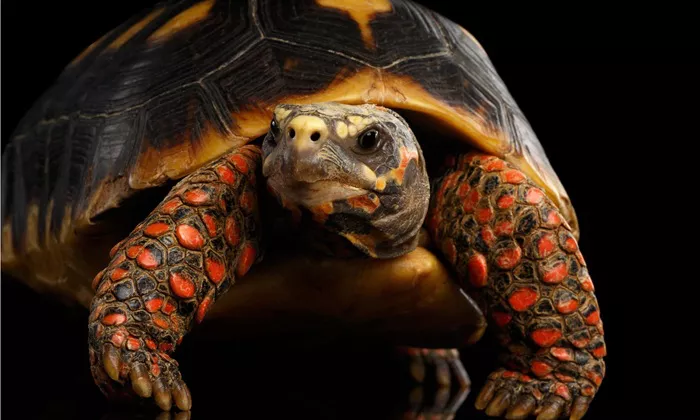
Red-footed tortoises are popular reptiles in the exotic pet trade. Their vibrant colors, manageable size, and generally gentle temperament make them a favorite among tortoise enthusiasts. But keeping a red-footed tortoise is not just about feeding it and providing space. These animals have specific care needs that must be met for them to thrive. One of the most misunderstood aspects of tortoise care is their social behavior. Many new keepers wonder: Do red-footed tortoises get lonely?
This article explores that question in detail. We will examine the behavior of red-footed tortoises in the wild and in captivity. We will look at their social structure, communication habits, and how they interact with one another. The aim is to provide a complete, scientifically accurate, and practical understanding of how these tortoises relate to others of their kind. By the end, you will have a clear picture of whether your red-footed tortoise would benefit from a companion—or if it prefers solitude.
Understanding Red-Footed Tortoises
The red-footed tortoise (Chelonoidis carbonarius) is native to South America. Its natural range extends across countries such as Brazil, Venezuela, Colombia, and parts of the Caribbean. It lives in a variety of habitats, including tropical forests, grasslands, and savannahs. These tortoises are known for the reddish or orange scales on their legs and faces, which give them their common name.
In the wild, red-footed tortoises are generally crepuscular. This means they are most active in the early morning and late afternoon. They spend much of their day foraging for food. Their diet includes fruits, flowers, leaves, and occasionally animal matter such as insects or carrion.
Unlike many reptiles that are entirely solitary, red-footed tortoises show a degree of social tolerance. They can often be found in loose groups, especially around food sources. However, this does not necessarily mean they form strong social bonds. To understand if they get lonely, we need to dive deeper into their behavior.
What Is Loneliness in Animals?
Before we answer the main question, we must understand what “loneliness” really means. In human terms, loneliness refers to emotional distress caused by social isolation. It is closely tied to our cognitive and emotional development. Humans are social creatures by nature, so being alone for long periods often leads to emotional discomfort.
Animals, on the other hand, experience the world differently. Not all species are social. Some, like wolves or primates, live in tightly knit groups and depend on social bonds for survival. Others, like many species of cats or snakes, are solitary by nature. For solitary animals, isolation does not lead to emotional suffering because their biology does not require social interaction for emotional well-being.
So, to ask whether red-footed tortoises get lonely is really to ask: Do they have the capacity to form emotional attachments? Do they need social interaction to be healthy and content?
Social Behavior in Red-Footed Tortoises
In their natural habitat, red-footed tortoises show occasional social interaction. However, this interaction is usually linked to environmental factors rather than emotional needs. For example, multiple tortoises may gather around a fruiting tree because it provides food. They may also congregate near water sources or nesting areas.
These gatherings are not the result of group planning or emotional bonding. Rather, they happen because resources are available in one place. Once the food or water is gone, the tortoises tend to go their separate ways.
There are some reports of red-footed tortoises tolerating each other for longer periods, especially in environments where food is abundant. In captivity, they may be housed together without significant conflict. However, tolerance is not the same as social bonding. Just because they don’t fight does not mean they form friendships or suffer when alone.
Do Red-Footed Tortoises Get Lonely in Captivity?
In captivity, the environment is very different from the wild. There are no food trees, no seasonal migrations, and no competition for space or resources—provided the tortoise is cared for properly. Some tortoise keepers believe that their pets might get lonely if kept alone. They notice behaviors such as lethargy, loss of appetite, or lack of movement and interpret these as signs of emotional distress.
However, most of these behaviors are not signs of loneliness. They are usually symptoms of poor husbandry. A red-footed tortoise kept in an enclosure that is too small, too cold, or lacking enrichment will become less active. This is not because it misses another tortoise. It is because it is not receiving the proper environmental stimuli.
Veterinary experts and reptile behaviorists agree that red-footed tortoises do not require companions to remain emotionally healthy. They do not show distress when kept alone, as long as all their physical needs are met. In fact, introducing a second tortoise can sometimes lead to stress or conflict.
Risks of Keeping More Than One Red-Footed Tortoise
Although red-footed tortoises are more tolerant of conspecifics than many other tortoise species, housing them together is not always recommended. There are several potential risks involved.
Aggression and Dominance:
Male tortoises often compete for dominance, especially during mating season. They may bite, ram, or push each other. Even females can show territorial behavior, especially in small enclosures. If one tortoise is more dominant, it might prevent the other from accessing food or basking areas.
Space Requirements:
Tortoises need a lot of space. Keeping more than one in a small enclosure increases stress. They need enough room to escape each other and to establish their own territories within the shared space. Without this space, they can become agitated or sick.
Disease Transmission:
When housing multiple tortoises together, there is always a risk of spreading parasites, bacteria, or viruses. A healthy-looking tortoise can still be a carrier of disease. Introducing a new tortoise without quarantine increases the risk of infection.
Resource Competition:
Even if there is no direct aggression, two tortoises might compete silently for food, heat, and shelter. The stronger or more assertive tortoise may get what it needs, while the weaker one may slowly decline in health.
Because of these risks, most experts recommend keeping red-footed tortoises alone unless the keeper is experienced and has the space and resources to manage a group properly.
Enrichment Without Companionship
If you are concerned that your red-footed tortoise may be bored or unstimulated, there are better solutions than adding another tortoise. Providing environmental enrichment is key to your tortoise’s mental and physical health.
Varied Diet:
Offer a diverse range of fruits, vegetables, flowers, and protein sources. Changing up the menu stimulates your tortoise’s interest in foraging.
Physical Environment:
Include logs, rocks, tunnels, and shaded areas in the enclosure. These structures encourage exploration and exercise.
Scent and Texture Exploration:
Scatter food in different parts of the enclosure to encourage natural foraging. Introduce new materials such as leaves, mulch, or branches for tactile exploration.
Outdoor Time:
If the weather and climate allow, supervised outdoor time in a secure area can greatly enrich your tortoise’s life. Natural sunlight and the opportunity to walk on grass or soil are very beneficial.
Visual Barriers:
Add plants or walls within the enclosure so the tortoise can move from place to place without always being in an open area. This helps mimic the natural environment.
These methods are far more effective at improving a tortoise’s quality of life than introducing another animal.
When Can Red-Footed Tortoises Be Kept Together?
In certain situations, red-footed tortoises can be housed together safely. However, this is only recommended under specific conditions.
Sufficient Space: The enclosure must be large enough to allow each tortoise its own territory.
Same Size and Age: Housing tortoises of similar size reduces the risk of bullying.
Regular Health Checks: Both animals must be healthy and parasite-free.
Observation Period: New tortoises should be quarantined and then introduced gradually.
Even under these ideal conditions, the tortoises must be monitored closely for signs of stress or aggression. If either tortoise begins to hide excessively, lose weight, or show unusual behavior, they may need to be separated.
Emotional Perception in Reptiles
The concept of emotional attachment is still being studied in reptiles. Unlike mammals, reptiles do not have a neocortex—the part of the brain responsible for complex emotions in humans. This does not mean reptiles are emotionless, but their emotions are likely simpler and tied closely to survival needs.
Red-footed tortoises recognize certain patterns. They may learn to associate their keeper with food or basking time. But this is more likely conditioning than affection. Their behavior is driven by routine and instinct rather than emotional bonding. They do not mourn the loss of a companion or show signs of depression from being alone.
Some keepers report their tortoises following them or responding to their voice. These behaviors are real, but again, they are usually based on learned associations, not emotional need.
Conclusion: Do Red-Footed Tortoises Get Lonely?
Based on current scientific understanding and practical experience, red-footed tortoises do not get lonely in the human sense. They are not social animals that require companionship to be happy or healthy. While they may tolerate others of their kind, they do not form deep social bonds or emotional connections. Their needs are physical and environmental, not emotional.
If your tortoise is inactive or appears dull, look first to its habitat. Is it warm enough? Is there enough light? Are you offering a varied and nutritious diet? Is the enclosure interesting and stimulating?
Adding another tortoise will not solve these issues and may create new problems. Focus on enriching your red-footed tortoise’s life through proper care, environmental complexity, and healthy routines. That is the best way to ensure your tortoise lives a long, healthy, and content life—on its own terms.
Related topics: