
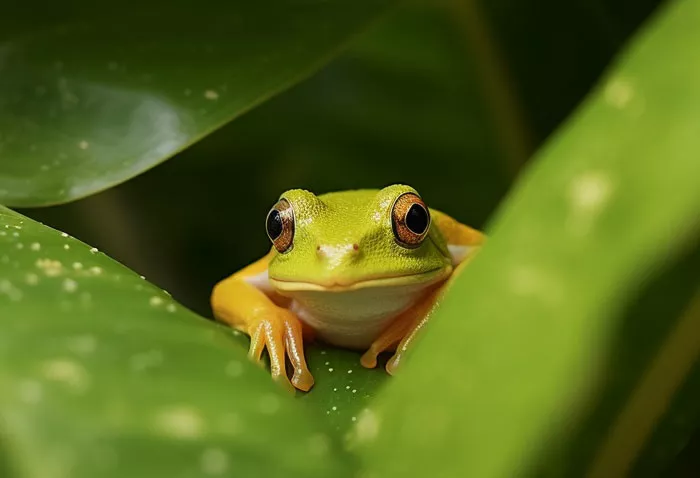
Many people are curious about frogs. Some people love them as pets. Others see them in their gardens or near ponds. One common question is simple but serious: can a green tree frog kill you?
This question usually comes from fear of poison. Many people know that some frogs are toxic. Brightly colored poison dart frogs can produce strong toxins. So it is natural to wonder whether green tree frogs are also dangerous.
In this article, we will examine the facts in a clear and logical way. We will discuss the biology of green tree frogs, their defense mechanisms, and the real risks they pose to humans. We will also compare them with truly dangerous amphibians. By the end, you will understand whether a green tree frog can kill you and why the answer is what it is.
What Is a Green Tree Frog
The name “green tree frog” usually refers to species in the genus Hyla or closely related genera. In North America, the most well-known species is the Hyla cinerea, commonly called the American green tree frog. In Australia, the large and popular species is the Litoria caerulea, often known as the Australian green tree frog or White’s tree frog.
These frogs are amphibians. They belong to the order Anura, which includes frogs and toads. They are not reptiles, although many people confuse the two groups. Amphibians have moist skin and typically depend on water for reproduction.
Green tree frogs are usually small to medium in size. They have smooth skin, bright green coloration, and sticky toe pads. These pads allow them to climb plants, walls, and even glass surfaces.
Natural Habitat and Behavior
Green tree frogs live in warm and humid environments. In the United States, Hyla cinerea is common in the southeastern states. It prefers swamps, marshes, ponds, and wet forests.
The Australian species Litoria caerulea lives in northern and eastern Australia. It often stays near human homes, especially in gardens and near outdoor lights where insects gather.
These frogs are mostly nocturnal. They hunt at night and rest during the day. Their diet consists of insects such as flies, mosquitoes, moths, and small beetles.
Do Green Tree Frogs Have Poison
All frogs produce skin secretions. These secretions help keep their skin moist. Some species also produce mild toxins as a defense mechanism. Green tree frogs are no exception.
However, the key word is “mild.” The skin secretions of green tree frogs are not considered dangerous to healthy humans. They are designed to discourage predators such as snakes, birds, and small mammals.
Unlike poison dart frogs, green tree frogs do not produce powerful neurotoxins. Their skin chemicals are weak and mainly serve as a warning to predators, not as a lethal weapon.
Can Green Tree Frog Kill You Directly
The short answer is no. A green tree frog cannot kill a healthy adult human through direct contact.
They do not have venomous fangs. They do not inject toxins. They do not bite in a way that causes serious injury. Even if you touch one with your bare hands, the risk of severe poisoning is extremely low.
There are no documented medical cases showing that contact with Hyla cinerea or Litoria caerulea has caused human death.
What Happens If You Touch One
If you touch a green tree frog, you may feel its moist skin. In rare cases, a person with sensitive skin may develop mild irritation. This can include redness or slight itching.
If you rub your eyes after handling a frog, you may feel burning or irritation. This happens because the skin secretions can irritate sensitive tissues.
Washing your hands with soap and water after handling a frog is usually enough to prevent problems.
Can Green Tree Frogs Be Dangerous to Children
Children are more vulnerable than adults. A small child who puts a frog in their mouth could swallow bacteria or small amounts of skin secretion.
This would most likely cause stomach upset rather than poisoning. Vomiting or mild diarrhea could occur. Severe toxicity is extremely unlikely.
Supervision is important. Children should be taught not to put wild animals in their mouths.
Risk of Bacterial Infection
The real risk from handling amphibians is not poison. It is bacteria.
Like many reptiles and amphibians, frogs can carry Salmonella bacteria on their skin. Salmonella can cause food poisoning symptoms in humans. These include diarrhea, fever, and stomach cramps.
This infection can be serious in elderly people, infants, or individuals with weak immune systems. However, it is not specific to green tree frogs. Many reptiles and amphibians carry similar bacteria.
Proper hygiene greatly reduces this risk.
Comparison With Truly Dangerous Frogs
To understand the difference, consider poison dart frogs. These frogs belong to the family Dendrobatidae. Some species produce strong toxins such as batrachotoxin.
Batrachotoxin can interfere with nerve signals. In high doses, it can cause paralysis or heart failure. Indigenous people in parts of South America have used these toxins on blow darts for hunting.
Green tree frogs do not produce these types of toxins. Their defensive chemicals are mild and not lethal to humans.
Can Allergic Reactions Be Fatal
In theory, any biological substance can trigger an allergic reaction. A person with a severe allergy could experience anaphylaxis after contact with animal proteins.
However, confirmed cases of life-threatening allergic reactions to green tree frogs are extremely rare. They are not recognized as a common cause of fatal allergies.
If someone has known severe allergies, they should avoid handling wild animals.
What About Pets
Dogs or cats that bite or chew a green tree frog may drool excessively. They may paw at their mouth. This reaction is usually due to irritation from the frog’s skin secretions.
Most pets recover quickly. Rinsing the mouth gently with water is often helpful. Severe poisoning is not typical with green tree frogs.
Ecological Role of Green Tree Frogs
Green tree frogs are beneficial animals. They help control insect populations. By eating mosquitoes and other pests, they contribute to ecological balance.
They also serve as prey for larger animals. This makes them an important part of the food web.
Common Myths About Green Tree Frogs
One myth is that all brightly colored frogs are deadly. This is not true. While bright colors can signal toxicity in some species, green tree frogs use camouflage more than warning coloration.
Another myth is that touching any frog can kill you instantly. There is no scientific evidence to support this claim for green tree frogs.
Scientific Perspective
From a herpetological standpoint, green tree frogs are considered non-dangerous to humans. Their toxins are classified as mild defensive secretions.
Medical literature does not list them among hazardous amphibians. Standard hygiene precautions are considered sufficient when handling them.
When Should You Seek Medical Help
You should seek medical attention if you experience severe symptoms after contact. These symptoms include difficulty breathing, swelling of the face or throat, or persistent vomiting.
However, such reactions are highly unusual with green tree frogs.
Conclusion
Green tree frogs cannot kill a healthy human. They do produce mild skin secretions, but these are not lethal. The primary risks associated with handling them are minor skin irritation and possible bacterial infection such as Salmonella.
With basic hygiene and common sense, green tree frogs are safe to observe and even handle carefully. They are fascinating amphibians that play an important ecological role. Fear of death from contact with a green tree frog is not supported by scientific evidence.