
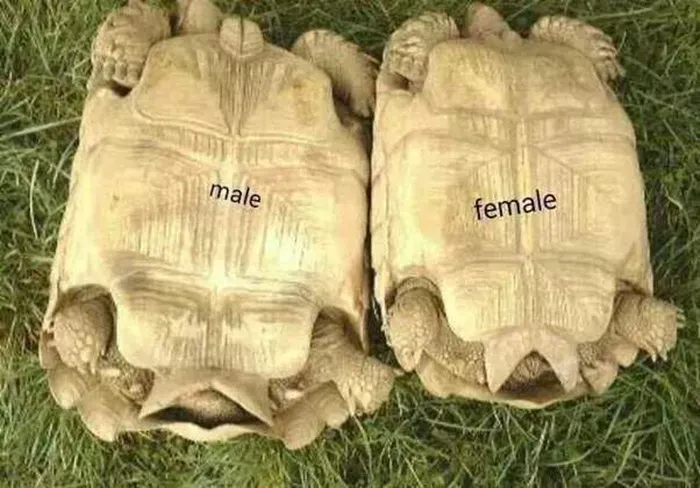
Ever stared at your tortoise and wondered, “Is my shelled friend a boy or a girl?” You’re not alone! For many reptile lovers, especially beginners, figuring out the sex of a tortoise can feel like solving a mystery. But don’t worry—by the end of this article, you’ll know exactly what signs to look for. Let’s dive into the fascinating world of reptiles and discover how to tell if a tortoise is male or female.
Why Sexing Tortoises Matters
Knowing whether your tortoise is male or female isn’t just about curiosity. It helps you understand their behavior, plan for breeding, and provide better care. For example, male tortoises might compete more aggressively for territory, while females may need special attention during nesting periods. The differences between male and female tortoises are subtle, but once you know where to look, it becomes much easier.
Shell Shape: Nature’s Clue
One of the first things to check is the shell—specifically, the underside called the plastron. Imagine the plastron as the flat bottom of a suitcase. In most species of tortoise (like the Russian tortoise or Hermann’s tortoise), males have a plastron that curves inward (concave), while females have a flat or slightly convex plastron. This adaptation helps males mount females during mating. So, next time you gently pick up your reptile (always with care!), peek at the plastron. A curved shape likely means you have a male.
Tail Talk: The Secret Indicator
Check out your tortoise’s tail—the difference is often as clear as comparing a pencil to an eraser! Male tortoises usually sport longer, thicker tails that they tuck to one side. Females have shorter, stubbier tails. This trait is especially obvious in species like the sulcata tortoise and red-footed tortoise. The tail also houses reproductive organs: males hide their penis inside the tail, while females use their tail for laying eggs.
Cloacal Position: Location Matters
The cloaca is the opening under the tail used for excretion and reproduction—a bit like an all-in-one bathroom and nursery! In male tortoises, the cloaca sits farther from the base of the tail; in females, it’s closer. This difference is important for breeders and keepers who want to be sure about their reptile’s sex.
Size and Shape: Sometimes Bigger Means Female
In many reptile species, including some tortoises like leopard tortoises and Greek tortoises, females tend to grow larger than males. Why? Bigger bodies help them lay more eggs! However, this isn’t always true—so don’t rely solely on size unless you’re comparing mature adults of the same species.
Behavioral Differences: Actions Speak Louder Than Words
Have you noticed your tortoise pacing back and forth or bobbing its head? Males often display more territorial behaviors, such as ramming objects or other tortoises. Females are usually calmer—especially when not nesting. Real keepers often share stories about their male sulcata tortoises “bulldozing” through enclosures during mating season—a hilarious but telling sign!
Anal Scutes: The Back-End Clue
Look at the plates near your tortoise’s tail—these are called anal scutes. In males, these scutes are wider apart to help with mating maneuvers; in females, they’re closer together to make room for egg-laying. It’s like checking if a car trunk opens wide enough to fit luggage!
Species-Specific Tips: Every Tortoise Is Unique
Remember that not all reptiles follow the same rules. For example:
- Russian Tortoise: Males are smaller with longer tails and concave plastrons.
- Greek Tortoise: Females are bigger with shorter tails.
- Sulcata Tortoise: Males have pronounced femoral pores on their legs—tiny dots that secrete scent.
Consulting guides from experienced breeders (Smith et al., 2018) can help you learn what’s normal for your species.
When Should You Sex Your Tortoise?
Baby reptiles are tricky! Young tortoises (under 3 years) often lack clear differences. Experts recommend waiting until your pet is mature before attempting to determine sex reliably (Jones & Brown, 2020). Awesome patience pays off!
Anecdotes from Real Keepers
One keeper shared how her red-footed tortoise “Max” turned out to be “Maxine” after laying eggs unexpectedly—proving that nature sometimes keeps us guessing! Another noted how his male Greek tortoise always led “headbutt parades” during spring—a fun way behavior can signal sex.
Conclusion: Unlocking Your Tortoise’s Secret
Determining if your shelled companion is male or female isn’t rocket science—it just takes careful observation and knowing what clues to look for in reptiles like Russian tortoises or sulcata tortoises. By checking shell shape, tail length, cloacal position, and behavior—and learning from other keepers—you’ll unlock one of nature’s cool secrets! Don’t miss out on this essential step in caring for your reptile.
Whether you’re planning to breed your animals or simply want to know more about their personalities, understanding these signs will deepen your bond with these remarkable creatures. Now go ahead—take another look at your tortoise and see if you can solve the mystery!
Related topics: