
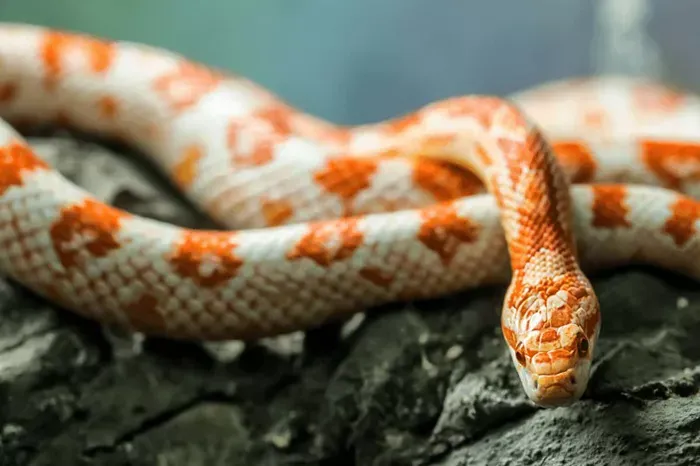
Have you ever wondered how corn snakes, those captivating reptiles, actually catch and eat their food? The question—do corn snakes strangle their prey?—is one that often intrigues both new reptile owners and curious animal lovers. Let’s dive into this topic together and discover how these gentle serpents manage their meals. (Don’t miss this awesome journey into the world of corn snakes!)
What Is a Corn Snake?
Before we answer our core question, it’s important to know what a corn snake is. Corn snakes (Pantherophis guttatus) are slender, non-venomous reptiles native to North America. They are popular pets due to their docile nature and vibrant colors. Think of them as the “friendly neighbor” among snakes—safe to handle and easy to care for, especially for beginners.
How Do Corn Snakes Hunt?
Corn snakes are constrictors, which means they use their bodies to capture and subdue prey. But what does “constrictor” mean? Imagine you wrapping a scarf around your neck—not too tight, just enough to feel snug. A corn snake wraps its body around its prey in a similar way, using gentle but firm pressure.
Unlike venomous reptiles that inject toxins, corn snakes rely solely on physical strength. When you see a corn snake hunting, it will first strike quickly at its target—often a mouse or small rodent—using its mouth to grab hold. Then, it coils around the animal, applying just enough pressure to stop it from breathing. This process is called constriction, not strangulation. Strangulation implies cutting off blood flow or air with excessive force; corn snakes are much more methodical and precise.
“My pet corn snake wraps around his dinner with surprising speed, but never squeezes hard enough to injure himself,” shares Mark, a seasoned reptile keeper from Florida.
Constricting vs. Strangling: What’s the Difference?
Let’s break it down with an analogy: Imagine holding a water balloon gently until it stops moving versus squeezing it until it bursts. Constrictors like corn snakes use the gentle approach—enough to immobilize but not destroy.
- Constriction: The snake coils around the prey, tightening slightly each time the prey exhales, preventing it from taking another breath.
- Strangling: Implies forceful pressure that could damage or crush organs—a behavior not seen in corn snakes.
So, while corn snakes do “squeeze” their prey, they do not strangle in the way humans might imagine. The process is efficient and designed by nature for quick results.
Why Is This Important for Reptile Owners?
If you’re considering adopting a corn snake or already have one slithering happily in your home terrarium, understanding how they eat helps you provide better care. Knowing that corn snakes are constrictors—not stranglers—can reassure you about their safety and temperament.
Corn snakes only constrict small mammals like mice or birds; they do not pose a threat to humans or larger animals. This behavior is natural and necessary for survival in the wild, but in captivity, it’s also fascinating to observe.
“Watching my corn snake eat is like witnessing nature’s engineering at work,” says Sarah, who’s been breeding reptiles for over ten years. “It’s swift, purposeful—and surprisingly gentle.”
The Science Behind Constriction
Studies (see Boback et al., 2015) show that constrictor snakes like corn snakes monitor the heartbeat of their prey during feeding. Once the heartbeat stops, they know it’s safe to begin swallowing. This adaptation ensures minimal suffering for their food source—a truly remarkable evolutionary trait among reptiles.
Are There Risks Involved?
For beginner reptile keepers: Don’t worry! Corn snakes are considered one of the safest pet species in the reptile world. Their method of feeding poses no danger to humans when handled responsibly.
However, if you’re feeding live prey (which some experts recommend avoiding), always supervise closely. Most keepers opt for pre-killed or frozen-thawed mice for safety and ease—a practice endorsed by reputable organizations like The Reptile Database.
Conclusion: Nature’s Gentle Constrictor
In summary, while corn snakes do wrap around and “squeeze” their prey—a process called constriction—they do not strangle in the harsh sense of the word. Their method is both elegant and effective, demonstrating why these reptiles continue to captivate scientists and pet owners alike.
Understanding how your corn snake eats unlocks new appreciation for this fascinating species. Next time you watch your reptile feed, remember: You’re witnessing one of nature’s most amazing designs in action!
Related topics: