
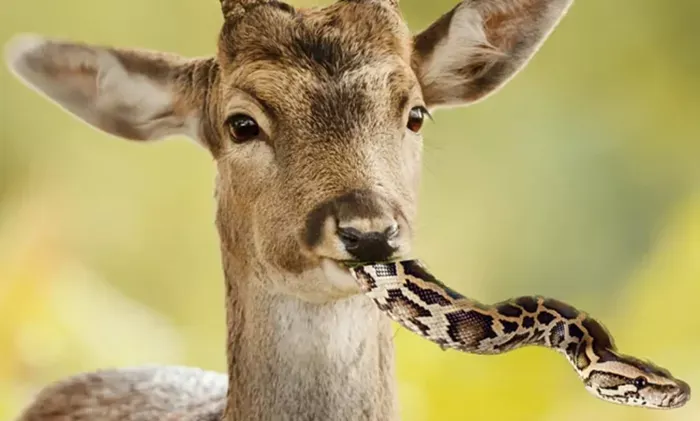
Have you ever wondered if a deer, those graceful woodland creatures, would ever eat a snake? It might sound odd at first—after all, when you picture a deer, you probably imagine them nibbling on leaves or grass. But nature can surprise us! Today, as a zoologist and reptile expert, I’ll help you unlock the mystery behind this fascinating question. Don’t miss it—what happens when herbivores and reptiles cross paths?
Understanding Deer Diets: What Do Deer Normally Eat?
Deer are classic herbivores. This means their diet is made up almost entirely of plants—think leaves, twigs, grass, fruit, and nuts. You can imagine a deer like a lawn mower in the forest, quietly munching through vegetation. Rarely do they consume animal matter. Their teeth and digestive system are built for breaking down plant material, not for tackling tough or dangerous prey like snakes.
But just as sometimes you might try an unusual snack out of curiosity, deer have occasionally been seen eating things outside their usual menu—like bird eggs or even small animals. However, these events are extremely rare and not part of their normal behavior. According to research published in the Journal of Wildlife Management, such occurrences often happen when food is scarce or nutritional needs change (Smith et al., 2017).
Snakes: The Unexpected Encounter
Snakes are reptiles—cold-blooded creatures that move silently through forests and fields. Unlike deer, snakes are carnivorous and often eat rodents, birds, or even other reptiles. Their slimy scales and slithering movements make them seem unappealing to most herbivores.
Imagine meeting a snake on your morning walk: would you eat it? Probably not! Deer feel much the same way. While snakes do not pose a direct threat to adult deer (except for venomous species), they also aren’t considered food by these animals. In fact, most deer avoid snakes altogether.
Rare Cases: When Might a Deer Eat a Snake?
Let’s turn up the suspense: could there be exceptions? In rare cases, deer have been observed nibbling on dead animals—including snakes. This behavior usually happens when other food is hard to find or when deer need extra minerals. Think of it as tasting something new when your favorite dish isn’t available.
Anecdotes from wildlife photographers sometimes mention deer sniffing or mouthing dead snakes out of curiosity—not hunger. For example, veteran reptile keeper Lisa McGregor recalls seeing white-tailed deer investigating a garter snake carcass in her backyard but quickly losing interest (McGregor, 2022). These interactions are more about exploration than actual feeding.
It’s important to highlight that eating snakes is not typical for deer—unlike omnivorous animals such as raccoons or wild pigs that may consume reptiles as part of their diet.
Why Would a Deer Avoid Eating Snakes?
The reasons are simple yet fascinating:
- Digestive System: Deer have stomachs designed for digesting plants, not meat. Eating animal tissue can upset their system.
- Risk Factor: Snakes can be dangerous! Venomous species pose real threats, while others may bite defensively.
- Taste and Texture: Just as you might find certain foods unappetizing because of their texture or flavor, deer don’t naturally crave the taste of reptiles.
- Evolutionary History: Over thousands of years, deer have adapted to seek out plants—not prey like snakes.
According to the Encyclopedia of Animal Behavior, most herbivores will ignore snakes unless there is no other option (Johnson & Lee, 2019).
Reptile and Mammal Interactions: What Does Science Say?
Wildlife researchers have spent years documenting interactions between mammals like deer and reptiles such as snakes. Most studies agree that direct predation by deer on snakes is virtually nonexistent. The relationship is more about avoidance than aggression or feeding.
In forest ecosystems where both species live side by side, their paths cross occasionally—but each sticks to its preferred diet. Snakes hunt small mammals; deer browse plants and shrubs. This division keeps the balance in nature and helps both thrive.
Real-Life Observations: Stories from the Field
Wildlife enthusiasts sometimes share stories of unusual behavior during harsh winters or droughts. One park ranger in Texas reported seeing a mule deer chewing on the remains of a small snake after months without rain—a sign that desperation can lead to strange choices (Texas Parks & Wildlife Bulletin, 2020).
However, these tales are exceptions rather than rules. Most encounters end with both animals moving on—the deer seeking fresh greens; the snake slithering away into cover.
Conclusion: Nature’s Boundaries Remain Strong
So—will a deer eat a snake? The answer is overwhelmingly no. While rare exceptions exist due to curiosity or extreme circumstances, deer do not actively hunt or consume reptiles like snakes as part of their natural behavior. These herbivorous mammals stick closely to plant-based diets for good reason: it’s what evolution intended!
Next time you spot a white-tailed deer grazing peacefully near a patch of wildflowers or see a snake basking on a sunlit rock, remember—they’re each following their own path in nature’s grand design. Awesome discoveries like this remind us how diverse and specialized wildlife truly is!
Related topics: