
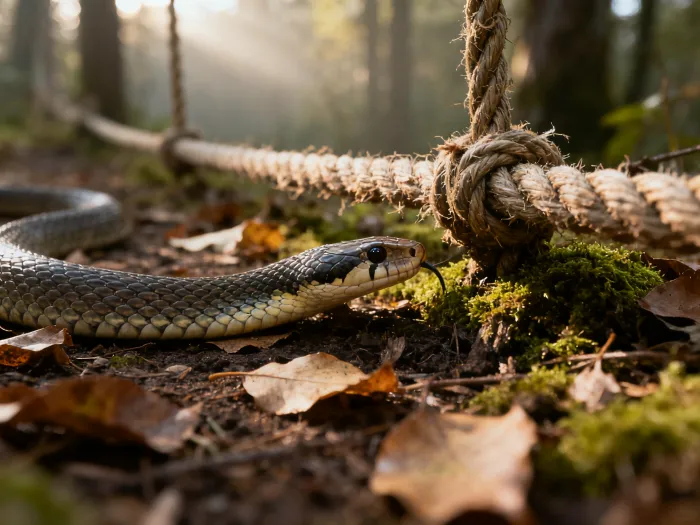
When it comes to reptiles, especially snakes, one common question pops up again and again: Will snakes cross a rope? You might have heard stories from farmers or campers who lay ropes around their tents, hoping to keep these slithery creatures away. But does this technique actually work, or is it just an old wives’ tale? Let’s dive into this fascinating question and discover what science—and real-life reptile keepers—have to say.
Understanding Snake Behavior
Before we answer whether snakes will cross a rope, it’s important to understand how snakes move. Snakes, like the common corn snake or the agile king cobra, use their muscles and scales to push against surfaces. Imagine pulling yourself across a smooth floor using only your elbows—snakes do something similar, but with their whole body! Their movement is called “serpentine locomotion,” which means they wiggle in an S-shape to get around obstacles.
The Rope Barrier: Fact or Fiction?
The idea behind using a rope as a barrier is simple: people believe that snakes dislike crossing rough or unfamiliar textures. It’s almost like you preferring not to walk barefoot on gravel—uncomfortable and awkward! However, scientific studies and expert observations show that most snakes are not bothered by ropes at all. According to Dr. Mark O’Shea, a renowned herpetologist (that’s a reptile expert!), “Snakes will cross ropes, sticks, and even small fences if they are motivated enough.” In other words, if there’s something appealing on the other side—like food or shelter—a snake won’t hesitate.
Why Do People Believe in Rope Barriers?
So why do so many people think this trick works? The answer lies in tradition and anecdotal evidence. Farmers in rural areas often use whatever is available to protect their homes from reptiles like vipers and rat snakes. Sometimes it seems effective simply because there aren’t many snakes around in the first place! It’s a bit like putting up a scarecrow to keep birds away—the results depend more on luck than science.
Comparing Snake Senses to Everyday Life
Snakes don’t see the world like we do. They rely heavily on their sense of smell (using their tongue!) and vibrations through the ground. A rope doesn’t give off any special scent or vibration that would warn them away. If you think about walking across a garden hose lying on your driveway, you probably wouldn’t even notice it unless you tripped! For most snakes—including the popular ball python and dangerous rattlesnake—a rope is just another part of the landscape.
Anecdotes from Reptile Keepers
Many reptile enthusiasts have tried the “rope trick” at home or in outdoor enclosures. According to Jane Miller, who keeps over twenty species of snakes, “I’ve seen my corn snakes glide over ropes without hesitation—they’re more interested in exploring than avoiding obstacles.” Awesome, right? Her experience matches scientific findings: snakes are naturally curious and will investigate new objects rather than avoid them out of fear.
Environmental Factors: More Than Just Ropes
If you’re worried about reptiles getting too close for comfort, it’s better to focus on cleaning up food scraps, sealing gaps in walls, and keeping grass trimmed short. These steps are proven to reduce snake encounters far more effectively than laying down ropes. Experts from the National Wildlife Federation recommend habitat management as the top way to keep both snakes and humans safe.
Snake Species Differences: Not All Reptiles Behave Alike
Some might wonder if certain species—like the timid garter snake or the bold black mamba—are more likely to avoid ropes. The truth is that while personality varies between species, most snakes will cross a rope if they want to reach something beyond it. Don’t miss this important detail: individual curiosity matters more than species!
Debunking Myths with Evidence
In summary, scientific research and real-world experience agree: ropes do not form an effective barrier against reptiles like snakes. Whether you’re dealing with a friendly corn snake or a wary rattlesnake, they simply don’t see ropes as obstacles worth avoiding.
Conclusion: What Should You Do Instead?
So, next time you hear someone suggest putting down a rope to ward off snakes, you’ll know it’s just a myth! The best way to keep reptiles at bay is through good housekeeping and understanding their natural habits. By learning more about these amazing creatures—and respecting their role in nature—you’ll be better prepared for any reptilian encounter.
Remember: curiosity drives both you and snakes! And when it comes to crossing ropes, science says they’re up for the challenge.
Related topics: